Chintamani Plastics
- Chintamani Plastics
- Chapter 1: The Beginning of an Entrepreneurial Vision
- Chapter 2: Understanding the Need for ISO 9001:2008
- Chapter 3: Building the Quality Management System
- Chapter 4: The Transformation of Production
- Chapter 5: Raw Materials and Supplier Control
- Chapter 6: Customer Requirements Become the Starting Point
- Chapter 7: Serving Multiple Industries and Expanding Market Confidence
- Chapter 8: Employees and the Human Side of Quality
- Chapter 9: From Correction to Prevention
- Chapter 10: Internal Audits and the New Management Perspective
- Take the Next Step Today

Chapter 1: The Beginning of an Entrepreneurial Vision
The story of Chintamani Plastics is a story of such entrepreneurial determination.
Located at A/112, Krishna Industrial Estate, Near 66 KVA, Station Amli, Silvassa – 396230, DNH, India, the company developed its business around the manufacturing, processing and supply of packing materials, particularly through vacuum forming processes. Its products served a diverse range of industries, including pharmaceuticals, cosmetics, stationery and food-related businesses.
For the promoter, entering the plastics and packaging sector was not merely a commercial decision. It was an opportunity to create a company that could become known for dependable products, responsive service and long-term customer relationships.
The industrial environment of Silvassa provided an important foundation for this vision. The region had developed into an active manufacturing destination, bringing together companies from different sectors. Such an environment created opportunities for suppliers who could understand industrial requirements and consistently provide products according to customer specifications.
In the early stages, like many growing manufacturing enterprises, Chintamani Plastics depended heavily on practical experience and direct supervision. The promoter was closely involved in the day-to-day activities of the business. Customer requirements were discussed personally. Production activities were monitored closely. Suppliers were selected through experience and business relationships. Employees learned many processes through practical exposure.
This approach had advantages.
When the organization was relatively small, decisions could be taken quickly. A customer could communicate directly with management. If there was a production problem, the promoter could immediately become involved. If a customer required a modification, the production team could be instructed directly.
However, as the business started developing, the limitations of an informal management system became increasingly visible.
Manufacturing is a process in which small variations can create significant differences in the final product. In vacuum forming and plastic packaging, factors such as material quality, tooling, forming conditions, dimensions, finishing and handling can influence the final result. A customer may require hundreds or thousands of pieces that must remain consistent with an approved specification.
Therefore, the company needed more than individual experience.
It needed consistency.
The promoter gradually realized that a business could not depend forever on personal supervision. If the company wanted to increase its customer base, expand production and serve more demanding industries, its working methods had to become more organized.
This realization marked the beginning of an important transformation.
The company started paying greater attention to customer specifications and production requirements. Instead of treating each order as an isolated activity, management began viewing every order as part of a larger process.
The question was no longer simply, “Can we manufacture this product?”
The more important question became, “Can we manufacture this product consistently according to the customer’s requirements?”
That distinction represented a major change in thinking.
The promoter understood that customers in different industries had different expectations. Pharmaceutical customers could require dependable packaging with strict dimensional and quality requirements. Cosmetic companies could place greater emphasis on appearance, presentation and consistency. Stationery manufacturers could require packaging that was practical, durable and attractive. Food-related applications could demand careful attention to cleanliness, suitability and product requirements.
Serving such customers required discipline.
A single manufacturing mistake could lead to rejection, rework, delayed delivery or loss of customer confidence. Therefore, quality had to become a planned activity rather than something checked only after production.
The promoter began considering how the organization could establish a structured approach to quality.
Employees needed clearer responsibilities.
Production activities needed better control.
Raw materials needed greater attention.
Inspection needed defined criteria.
Customer requirements needed proper communication.
Complaints needed systematic investigation.
Records needed to be maintained.
And improvements needed to be monitored.
This thinking gradually introduced the company to the concept of a formal Quality Management System.
The decision to pursue ISO 9001:2008 certification became a natural extension of this growing awareness.
For Chintamani Plastics, certification was not intended merely to place a certificate on the office wall. The larger objective was to build an organization in which quality became part of everyday working.
The promoter understood that obtaining certification could provide external recognition, but maintaining a quality culture would require continuous effort from everyone.
This required a change in mindset.
Employees had to understand that quality was not the responsibility of one department.
The purchasing team influenced quality through supplier selection.
Stores personnel influenced quality through material handling.
Production employees influenced quality through process control.
Inspection personnel influenced quality through verification.
Management influenced quality through leadership and resources.
Customer service influenced quality through communication.
Everyone was connected.
This realization became one of the most important foundations of the company’s development.
The journey toward ISO 9001:2008 encouraged Chintamani Plastics to move gradually from an experience-driven organization toward a process-driven organization. Experience remained valuable, but it was increasingly supported by procedures, records and defined responsibilities.
The promoter’s own role began changing as well.
Instead of personally controlling every activity, the focus shifted toward creating a system in which trained employees could perform their responsibilities effectively.
It was the beginning of a new entrepreneurial phase.
The company had started with a simple objective: manufacture and supply quality packing materials to customers.
Now the vision was becoming larger.
The objective was to build a reliable manufacturing organization capable of satisfying customers consistently, improving its processes and creating a foundation for sustainable growth.
The journey toward ISO 9001:2008 would become one of the important milestones in that transformation.
The certificate would eventually represent recognition of the company’s quality management efforts.
#ChintamaniPlastics
Chapter 2: Understanding the Need for ISO 9001:2008
As Chintamani Plastics continued developing its manufacturing activities, the promoter began to recognize that business growth brought new responsibilities. Increasing customer expectations, greater competition and the need for consistent product quality made it necessary to move beyond informal methods of working.
The company had already gained valuable practical experience in manufacturing and supplying packing materials through vacuum forming and related processes. However, experience alone could not guarantee consistency when the number of customers, orders, employees and product requirements increased.
The promoter began asking a fundamental question: how could Chintamani Plastics ensure that the quality achieved through personal supervision could be maintained even when the business expanded?
The answer gradually emerged through the concept of a formal Quality Management System.
At that time, ISO 9001 was becoming an important reference for organizations that wanted to demonstrate their ability to consistently provide products meeting customer and applicable requirements. For Chintamani Plastics, the decision to pursue ISO 9001:2008 was therefore closely connected with its desire to become a more systematic organization.
The promoter understood that the certificate itself would not create quality. The real benefit would come from implementing the principles behind the standard.
This meant examining the complete flow of work.
A customer requirement had to be received correctly. The requirement then had to be reviewed. Production had to understand what was expected. Raw materials had to be available and suitable. Machinery and tooling had to be capable of producing the required product. Inspection activities had to verify conformity. Finished products had to be properly handled and dispatched. If something went wrong, the cause needed to be investigated.
The company therefore began looking at quality as a chain.
If one link was weak, the final result could be affected.
This was particularly important because Chintamani Plastics served different industries. Pharmaceutical, cosmetic, stationery and food-related customers could have different expectations regarding dimensions, appearance, strength, packaging, delivery and product suitability.
A single generic approach was not sufficient.
The organization needed a flexible system that could accommodate different customer specifications while maintaining consistent control over its basic processes.
The ISO 9001:2008 framework provided an opportunity to establish such a system.
One of the first areas that required attention was customer communication.
In a manufacturing business, misunderstanding an order can be expensive. A small difference in dimension, material specification or design interpretation can result in significant quantities of rejected products.
The promoter therefore recognized the importance of reviewing requirements before production began.
Customer drawings, specifications, quantities, delivery requirements and other relevant information needed to be clearly understood.
This created greater confidence within the organization.
Production personnel could work with clearer instructions.
Inspection personnel could understand what needed to be checked.
Management could evaluate whether the organization had the necessary resources to meet the order.
Another important area was purchasing.
The company realized that finished-product quality could be affected by the quality of incoming materials. If raw materials did not meet expectations, production could experience difficulties even when machines and employees were performing correctly.
Supplier selection and evaluation therefore became increasingly important.
Instead of considering purchasing only from the perspective of price and availability, the organization began recognizing quality and delivery performance as important factors.
This was an important change in business thinking.
The cheapest material was not necessarily the most economical material if it caused production problems, wastage or customer complaints.
Similarly, a supplier who delivered late could affect the company’s ability to meet its own commitments.
The quality management approach therefore encouraged stronger coordination between purchasing, stores and production.
Production itself became another major area of attention.
Vacuum forming and plastic processing require consistency. Heating, forming, tooling, material behavior, trimming and finishing can influence the final product.
The company began identifying the important stages of its manufacturing process and considering how they could be controlled.
Employee knowledge was also recognized as a valuable resource.
Experienced workers possessed practical knowledge about machines, materials and production conditions. The objective was not to replace this experience with documentation but to strengthen it.
Procedures and work instructions could capture important information and help ensure that essential practices were followed consistently.
Training became increasingly important.
Employees needed to understand not only what they were expected to do but why their work mattered.
A person working in production might not directly communicate with the customer, but the quality of that person’s work could ultimately influence the customer’s satisfaction.
This helped establish the idea that quality was everyone’s responsibility.
The company also began understanding the importance of records.
Previously, information could remain in the memories of individuals. But as the organization grew, relying entirely on memory became risky.
Records could provide evidence of what had happened.
Inspection records could show product verification.
Training records could demonstrate employee development.
Supplier records could support evaluation.
Complaint records could reveal recurring issues.
Corrective-action records could demonstrate improvement.
This created an organizational memory that could survive employee changes and business expansion.
The promoter gradually began seeing ISO 9001 not as a compliance exercise but as a management tool.
It encouraged the organization to ask questions that were important for long-term growth:
Are our processes working?
Are customers satisfied?
Where are defects occurring?
Why are they occurring?
Are suppliers performing effectively?
Are employees adequately trained?
Are we meeting our delivery commitments?
What can we improve?
These questions encouraged a culture of continuous improvement.
The journey was not always easy.
Employees accustomed to informal methods initially had to adapt to documentation, records and defined procedures. Management had to spend time explaining the purpose of the changes. New responsibilities had to be established, and existing practices had to be reviewed.
But the promoter remained committed.
The objective was not simply to obtain a certificate.
The objective was to create a stronger company.
By the time Chintamani Plastics moved toward certification, the organization had begun to understand that quality was not an inspection activity performed at the end of production. Quality had to be built into the entire process.
This understanding became the foundation for the next stage of the company’s journey.
The implementation of ISO 9001:2008 would require Chintamani Plastics to convert its experience into documented processes, its expectations into measurable objectives and its commitment to customers into a systematic quality management culture.
The certificate would eventually become visible evidence of that effort.
#Entrepreneurship
Chapter 3: Building the Quality Management System
Courtesy: Digital E-Learning
After deciding to pursue ISO 9001:2008 certification, Chintamani Plastics entered a new phase of organizational development. The company had already accumulated practical knowledge through years of manufacturing and customer interaction, but the next challenge was to convert that experience into a structured Quality Management System.
For the promoter, this was an important moment. The objective was not simply to prepare documents for an external assessment. The objective was to understand how every major activity in the company contributed to customer satisfaction.
The first step was to examine the existing way of working.
Customer orders came into the organization, materials were purchased, production was planned, products were manufactured, inspections were performed and finished goods were dispatched. Although these activities were already taking place, many of them depended on personal experience and verbal communication.
The ISO 9001:2008 approach encouraged the organization to connect these activities into defined processes.
The company began identifying its key processes and responsibilities. Customer-related activities, purchasing, stores, production, inspection, maintenance, dispatch, employee training, document control, corrective action and management review all became parts of the broader management system.
This exercise gave management a clearer understanding of the organization.
Instead of seeing the factory as a collection of departments, the promoter began seeing it as a network of interconnected processes.
Sales influenced production.
Production depended on purchasing.
Purchasing depended on supplier performance.
Inspection depended on defined specifications.
Dispatch depended on production completion and product acceptance.
Customer satisfaction depended on the performance of the entire chain.
This process-based approach was one of the most important lessons of the certification journey.
Defining Responsibilities
As the company grew, it became increasingly important for employees to understand who was responsible for each activity.
In an informal organization, employees could often solve problems simply by asking someone nearby. But such an approach could become inefficient as the business expanded.
Chintamani Plastics therefore began defining responsibilities more clearly.
Employees needed to understand their roles in relation to quality.
Production personnel were responsible for following defined processes.
Inspection personnel were responsible for verifying products against requirements.
Stores personnel had responsibilities related to material identification and handling.
Purchasing personnel had to consider approved suppliers and purchasing requirements.
Management had to provide resources and review system performance.
This clarity reduced confusion and created greater accountability.
The promoter also realized that responsibility had to be accompanied by authority.
If an employee was responsible for identifying a nonconforming product, that employee needed the authority to stop or segregate the material when necessary.
This encouraged a healthier quality culture.
Documentation Becomes Organizational Memory
One of the biggest changes involved documentation.
At first, some employees viewed documentation as additional administrative work. They wondered why information that everyone already knew needed to be written down.
Management gradually explained its importance.
People change.
Orders change.
Customers change.
Employees may be absent.
Machines may be replaced.
Suppliers may change.
Without documented information, important knowledge can disappear.
A procedure therefore became more than a piece of paper. It became a method of preserving organizational knowledge.
The company developed documents and records appropriate to its quality management activities. These could include procedures, work instructions, inspection records, purchasing records, training records, complaint records, corrective-action records and audit reports.
The purpose was not to create unnecessary paperwork.
The purpose was to ensure that important activities could be performed consistently and that management had evidence for evaluating performance.
Controlling Customer Requirements
Customer requirements became one of the central elements of the new system.
Chintamani Plastics served customers from several industries, each with potentially different expectations.
A pharmaceutical customer might require carefully defined dimensions and consistency.
A cosmetics customer might emphasize appearance and presentation.
A stationery customer might require a practical and attractive packaging solution.
A food-related customer might have specific expectations regarding cleanliness and suitability.
The company therefore needed to ensure that requirements were understood before manufacturing began.
Order review became an important activity.
Could the company meet the customer’s specification?
Was the required material available?
Was appropriate tooling available?
Could the production schedule support the required delivery?
Were any special inspection requirements involved?
These questions helped prevent misunderstandings.
The promoter began to recognize that many quality problems could be prevented before production even started.
Strengthening Production Control
The next major challenge was controlling manufacturing processes.
Vacuum forming involves converting plastic sheet or other suitable material into a defined shape using heat, forming and tooling. The final product can be influenced by material characteristics, forming conditions, tooling quality, trimming and finishing.
The company therefore began focusing more closely on process consistency.
Production instructions and inspection requirements helped employees understand what was expected.
The objective was not to eliminate operator experience but to support it with a system.
An experienced operator could continue using practical knowledge, but important requirements would no longer exist only in that person’s memory.
This created greater repeatability.
Managing Nonconforming Products
Another important part of the system was the control of nonconforming products.
Manufacturing organizations inevitably encounter situations where a product does not meet requirements.
The important question is how the organization responds.
Chintamani Plastics began developing a more structured approach to identifying, segregating and dealing with nonconforming products.
Instead of allowing questionable material to move forward automatically, it could be identified and evaluated.
Depending on the situation, the product could be reworked, corrected, accepted under appropriate authorization where applicable, or rejected.
This prevented defective products from being unintentionally delivered to customers.
More importantly, nonconformities could provide information for improvement.
If a particular defect occurred repeatedly, management could investigate its cause.
Corrective Action and Learning
Corrective action became another important part of the quality system.
A defect was no longer viewed only as an isolated event.
The organization could ask:
Why did it happen?
Why was it not detected earlier?
What caused it?
What action could prevent recurrence?
This changed the organizational attitude toward mistakes.
Instead of focusing only on identifying who was responsible, the company could examine the process itself.
Sometimes the cause could be inadequate training.
Sometimes it could be unclear instructions.
Sometimes it could be material variation.
Sometimes it could be equipment condition.
Sometimes it could be an incomplete customer specification.
This approach helped transform problems into learning opportunities.
Management Begins Looking at the Bigger Picture
The implementation of the Quality Management System also changed the promoter’s role.
Instead of spending all of the time responding to individual operational problems, management could begin reviewing broader information.
Customer complaints.
Inspection results.
Supplier performance.
Audit findings.
Production problems.
Training requirements.
Corrective actions.
These indicators provided a clearer picture of the health of the business.
The promoter increasingly understood that a strong company needed to detect problems early and improve systematically.
The Quality Management System therefore became a management tool rather than simply a certification requirement.
Preparing for Certification
As the system developed, Chintamani Plastics moved closer to its ISO 9001:2008 certification assessment.
Employees became familiar with procedures.
Records began providing evidence of implementation.
Responsibilities became clearer.
Processes became more structured.
The company started operating with greater awareness of quality requirements.
The certification journey had already created an important internal transformation even before the certificate was formally achieved.
The organization was becoming more disciplined.
The promoter could see that the company’s future could not depend entirely on individual supervision.
A growing company required systems that could support growth.
ISO 9001:2008 was helping Chintamani Plastics build those systems.
The next stage would be the critical test: demonstrating that the documented Quality Management System was not merely written on paper but was actually functioning throughout the organization.
For Chintamani Plastics, the journey toward certification was therefore becoming a journey toward organizational maturity.
The company was learning that quality is not created at the inspection table.
It is created through every decision, every process, every employee and every customer interaction.
#Manufacturing
Chapter 4: The Transformation of Production

As Chintamani Plastics moved closer to ISO 9001:2008 certification, one of the most significant areas of transformation was its production function. Manufacturing had always been the heart of the company, but the quality management journey encouraged the organization to look at production from a different perspective.
Earlier, much of the production knowledge existed through practical experience. Skilled employees understood the behavior of materials, machinery and tooling through years of hands-on work. Their experience was extremely valuable, but management realized that sustainable growth required this knowledge to be supported by defined processes.
The question was no longer simply whether the company could manufacture a product.
The question became whether it could manufacture the same product consistently, repeatedly and according to the customer’s specified requirements.
This distinction became increasingly important as Chintamani Plastics continued serving customers from pharmaceuticals, cosmetics, stationery and food-related industries.
Understanding the Manufacturing Process
Vacuum forming and plastic processing involve several interconnected stages. The quality of the final product can be influenced by the quality of incoming material, tooling condition, heating, forming, trimming, finishing, inspection and handling.
A small variation at one stage can affect the final result.
For example, inconsistent material behavior could influence forming. Improper forming conditions could affect dimensions. Tooling problems could influence shape and appearance. Inadequate trimming could create finishing defects.
The ISO 9001:2008 implementation encouraged Chintamani Plastics to identify these important stages and understand where controls were necessary.
Production could no longer be viewed as one large activity.
It had to be understood as a sequence of controlled processes.
This approach helped employees recognize the importance of their individual responsibilities.
Standardizing Important Activities
Standardization became an important objective.
Wherever practical, production activities were supported through defined instructions and established methods.
The purpose was not to restrict the experience of operators.
Instead, standardization helped ensure that critical practices were not dependent on memory alone.
An experienced operator might know exactly how a particular product should be processed. But if that operator was absent, another person still needed sufficient information to understand the process.
This became particularly important as the company expanded its workforce and product range.
Defined procedures also helped supervisors monitor activities more effectively.
They could compare actual production practices against established requirements and identify areas where improvement was necessary.
Improving Process Discipline
The introduction of a quality management system gradually created greater discipline on the production floor.
Employees became more conscious of following defined requirements.
Materials were handled more carefully.
Product identification became more important.
Inspection stages were given greater attention.
Nonconforming products were identified rather than being allowed to move forward without evaluation.
This discipline helped create a stronger relationship between production and quality.
Instead of viewing inspection as something separate from manufacturing, employees began understanding that quality had to be built into the process itself.
A product should not be manufactured incorrectly and then expected to be made acceptable through final inspection.
The better approach was to prevent defects wherever possible.
The Importance of Tooling
For vacuum forming operations, tooling is an important element of the manufacturing process.
The shape, dimensions and overall appearance of a formed product can depend significantly on the condition and suitability of the tooling.
Chintamani Plastics therefore developed greater awareness regarding tooling management.
Tools needed to be properly identified, maintained and used according to requirements.
If a tool showed signs of deterioration or created dimensional problems, the issue needed to be addressed.
This approach helped reduce the risk of recurring defects.
The promoter increasingly understood that maintenance was not merely an expense.
It was an investment in consistency.
A well-maintained machine or tool could reduce interruptions, improve productivity and contribute to stable product quality.
Inspection Becomes Part of Production
The quality system also strengthened the role of inspection.
Inspection was no longer treated simply as a final activity.
Checks could be performed at appropriate stages to identify problems earlier.
This was important because detecting a defect after an entire batch had been manufactured could be costly.
Early identification allowed the company to take corrective action before larger quantities were affected.
Inspection criteria were therefore increasingly connected with customer specifications.
Dimensions, appearance, workmanship and other applicable requirements could be verified according to defined acceptance criteria.
This created greater confidence in the finished product.
Reducing Rework and Waste
One of the practical benefits of improved process control was the opportunity to reduce rework and waste.
Every defective piece consumed resources.
Material had already been purchased.
Machine time had already been used.
Employees had already invested effort.
Energy had already been consumed.
If the product had to be reworked or rejected, those resources were partly lost.
The company therefore began viewing quality improvement as a productivity improvement as well.
Reducing defects could reduce costs.
Better planning could reduce delays.
Improved tooling could reduce interruptions.
Better employee awareness could reduce avoidable mistakes.
This created a direct connection between ISO 9001 principles and business performance.
Quality was not simply an administrative requirement.
It could contribute directly to efficiency.
Employee Involvement
Production improvement could not succeed without employee participation.
The promoter recognized that employees working directly with machines often had the most practical understanding of production challenges.
They knew where delays occurred.
They knew which products required additional attention.
They knew which machines behaved differently.
They could identify unusual sounds, material behavior or process variations before these became major problems.
Management therefore encouraged greater communication.
Employees were expected to report abnormalities rather than ignore them.
This helped develop a culture in which identifying a problem was viewed positively.
The objective was not to blame someone for a problem.
The objective was to prevent the problem from becoming larger.
Preventive Thinking
One of the major changes in production thinking was the shift from correction toward prevention.
Earlier, a defect might simply have been corrected and production continued.
Under the developing quality management system, repeated problems were increasingly investigated.
If the same dimensional issue occurred several times, management could ask what was causing it.
If material-related defects appeared repeatedly, supplier or incoming inspection could be reviewed.
If a machine created inconsistent results, maintenance or process parameters could be examined.
This approach helped the organization learn from experience.
Every recurring problem became a signal that something in the process needed attention.
Production as the Foundation of Customer Trust
Ultimately, all these changes had one purpose: customer satisfaction.
A customer did not see the company’s internal procedures.
The customer saw the product.
The customer experienced the delivery.
The customer judged the consistency.
The customer remembered how the company responded when something went wrong.
Therefore, production quality became directly connected with the company’s reputation.
The promoter understood that every package supplied by Chintamani Plastics represented the organization.
A good product strengthened confidence.
A defective product could weaken it.
This made production discipline a strategic business issue.
A New Production Culture
As the ISO 9001:2008 system became more established, the production environment gradually changed.
Employees became more conscious of specifications.
Supervisors became more systematic.
Inspection became more structured.
Maintenance received greater attention.
Documentation supported important activities.
Problems were investigated more carefully.
Continuous improvement became a practical objective.
The company was moving from a production culture based primarily on experience toward one supported by both experience and systems.
This transformation provided a stronger foundation for future expansion.
Chintamani Plastics was no longer thinking only about producing today’s order.
It was building the capability to meet tomorrow’s requirements.
That was the real significance of the production transformation.
The machines remained important.
The materials remained important.
The tools remained important.
But the greatest change was in the way people thought about manufacturing.
Production was no longer simply the act of making a product.
It had become a controlled process through which customer requirements were converted into consistent, reliable and valuable products.
#PlasticPackaging
Chapter 5: Raw Materials and Supplier Control
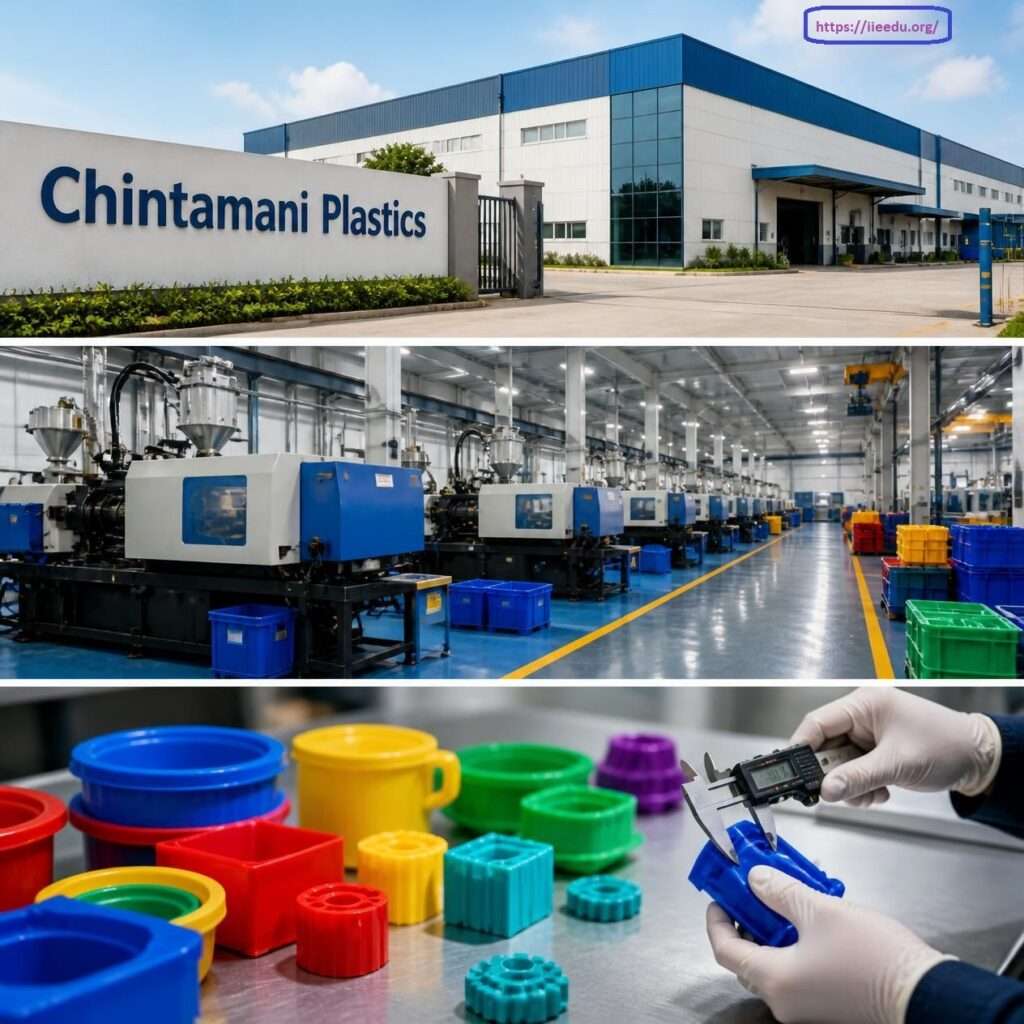
As the Quality Management System at Chintamani Plastics became more structured, management realized that consistent finished-product quality could not be achieved through production controls alone. The quality of the final packing material was closely connected with the quality of the materials, services and components entering the organization.
This realization brought greater attention to purchasing and supplier management.
Before the ISO 9001:2008 journey, purchasing decisions could naturally be influenced by factors such as price, availability, delivery time and existing business relationships. As the company developed its quality system, another factor became increasingly important: supplier capability to consistently meet requirements.
For the promoter, this represented an important change in thinking.
A manufacturing company does not begin its quality journey at the production machine. It begins much earlier, with the materials and services it purchases.
The Importance of Raw Materials
Chintamani Plastics operated in the plastics and packaging sector, where material characteristics could influence manufacturing performance and finished-product quality.
Material variation could affect processing behavior, appearance, dimensions, strength and overall product consistency.
If an incoming material was unsuitable, the production team could face difficulties even when the machine and operator were performing correctly.
This made incoming material control an important part of the Quality Management System.
The organization began giving greater attention to material specifications and purchasing requirements.
The objective was straightforward: materials entering the factory should be suitable for their intended use and should meet the requirements established by the organization and its customers.
This approach helped connect purchasing with production.
Moving Beyond Price
One of the important lessons learned during the quality journey was that purchase price alone does not determine the real cost of material.
A low-cost material may appear attractive during purchasing.
But if it creates production difficulties, the organization may experience additional expenses through wastage, rework, machine downtime, delayed deliveries and customer complaints.
The promoter therefore began looking at purchasing decisions from a broader perspective.
The real question became:
“What is the overall value and reliability of this supplier?”
Quality, delivery performance, responsiveness and consistency became important considerations.
This approach helped the company develop a more mature purchasing philosophy.
Supplier Evaluation
As the Quality Management System developed, supplier evaluation became an important activity.
Suppliers could be considered according to their ability to meet the company’s requirements.
Factors such as product quality, delivery performance, consistency, communication and response to problems could provide useful information.
The purpose of supplier evaluation was not simply to classify suppliers.
It was to understand supplier performance and identify opportunities for improvement.
A supplier that consistently delivered acceptable material on time could become a dependable business partner.
A supplier that repeatedly created problems could require closer monitoring or corrective action.
This created greater accountability throughout the supply chain.
Incoming Material Inspection
Supplier control was supported by attention to incoming materials.
When material arrived at Chintamani Plastics, it could be checked against applicable requirements before being released for production.
The nature and extent of inspection could depend on the material and its intended use.
The principle was that questionable material should not automatically enter the production process.
If an incoming material did not meet requirements, it could be identified and controlled.
This prevented unsuitable material from becoming a larger production problem.
The promoter recognized the financial value of this approach.
It was much better to identify a material problem at the receiving stage than after significant processing had already taken place.
Material Identification and Traceability
Another area of growing importance was material identification.
In a manufacturing environment handling different materials, customer orders and product specifications, confusion can create serious problems.
Proper identification helps employees know what material is available, what it is intended for and whether it has been accepted for use.
This supported better control inside the factory.
The organization gradually understood that even simple identification practices could prevent expensive mistakes.
The objective was not to create unnecessary complexity.
It was to ensure that employees could confidently answer basic questions:
What is this material?
Where did it come from?
For which purpose is it intended?
Has it been inspected?
Can it be released for production?
These questions strengthened process discipline.
Storage and Handling
Material quality can also be affected by how materials are stored and handled.
Poor storage conditions can result in damage, contamination, deterioration or confusion.
Chintamani Plastics therefore gave greater attention to material handling practices.
Materials needed to be protected from avoidable damage.
Different materials and products needed appropriate identification.
The stores function became an important link between purchasing and production.
Good storage practices helped ensure that the material purchased from a supplier remained suitable until it reached the manufacturing process.
This demonstrated an important principle of quality management:
Quality must be preserved throughout the process.
Supplier Communication
The development of the Quality Management System also improved communication with suppliers.
When requirements were clearly defined, suppliers could better understand what was expected.
If a problem occurred, the company could communicate the issue more systematically.
Instead of simply saying that material was “not good,” the organization could identify the specific requirement that had not been met.
This made problem-solving more effective.
Suppliers could investigate their own processes and take corrective measures where necessary.
Over time, such communication could strengthen business relationships.
The company was not merely buying material.
It was developing a quality-oriented supply chain.
The Relationship Between Supplier Quality and Customer Satisfaction
The promoter increasingly understood that customers did not distinguish between internal and external causes of a problem.
If a customer received a defective product, it was Chintamani Plastics that was responsible from the customer’s perspective.
The fact that a supplier had provided unsuitable material did not remove the company’s responsibility to its customer.
Therefore, supplier management became a critical part of customer satisfaction.
This encouraged the company to become more careful in selecting and monitoring suppliers.
The organization also recognized that long-term supplier relationships could be valuable.
A dependable supplier could understand the company’s requirements, respond quickly and support continuity.
This was particularly important when customer demand increased.
Preventing Problems Before Production
The stronger supplier-control system helped Chintamani Plastics move further toward preventive thinking.
Instead of waiting for a production problem to occur, the company could try to prevent the problem at an earlier stage.
If a particular material repeatedly created defects, the issue could be investigated.
If supplier delivery performance became unreliable, management could address it.
If specifications were unclear, purchasing communication could be improved.
This approach reduced the likelihood of repeated problems.
It also demonstrated the broader value of ISO 9001:2008.
The standard encouraged the company to examine processes before problems reached customers.
Developing a Reliable Supply Chain
As Chintamani Plastics grew, the importance of a reliable supply chain became even greater.
A company cannot promise consistent delivery if essential materials are not available.
Therefore, purchasing had to work closely with production planning.
Material requirements needed to be considered in advance.
Supplier lead times needed attention.
Stock levels had to be managed appropriately.
Unexpected shortages could disrupt production and affect delivery commitments.
The quality management approach encouraged better coordination between departments.
Purchasing was no longer an isolated activity.
It became part of the overall production and customer-satisfaction process.
A New Understanding of Quality
The company’s experience with supplier control created a broader understanding of quality.
Quality was not created only by machines.
It was created through the entire chain.
The customer specification influenced purchasing.
Purchasing influenced incoming material.
Incoming material influenced production.
Production influenced inspection.
Inspection influenced dispatch.
Dispatch influenced customer satisfaction.
Every stage was connected.
The promoter realized that strengthening one process could improve the performance of several others.
This systems-thinking approach became increasingly important as the company matured.
Building a Stronger Foundation for Growth
The improved control over raw materials and suppliers helped create a stronger foundation for future growth.
When a company knows that its inputs are controlled, production planning becomes easier.
When suppliers are dependable, customer commitments become easier to manage.
When materials are properly identified and inspected, production problems can be reduced.
When supplier performance is monitored, recurring problems can be addressed.
All of these improvements contributed to the company’s overall reliability.
For Chintamani Plastics, supplier control therefore became much more than a purchasing function.
It became part of the company’s quality strategy.
The promoter had begun the ISO journey with the goal of creating a more systematic organization.
Now that system was extending beyond the factory walls.
The company was learning that sustainable quality depends on cooperation across the entire supply chain.
From the supplier delivering raw material to the employee operating the production process, from the inspector verifying the finished product to the customer using the packaging solution, every participant had a role.
This understanding strengthened Chintamani Plastics’ quality culture and prepared the organization for the next stage of its journey: placing the customer firmly at the center of every business decision.
#ISO9001
Chapter 6: Customer Requirements Become the Starting Point
As Chintamani Plastics continued strengthening its Quality Management System, one principle became increasingly clear to the promoter: quality begins with understanding the customer.
A company may have modern equipment, skilled employees, dependable suppliers and carefully controlled production processes, but if it does not understand what the customer actually requires, the final product may still fail.
This realization changed the way Chintamani Plastics approached customer orders.
Previously, an order could be viewed primarily as a production requirement. With the implementation of ISO 9001:2008, management increasingly began viewing an order as a commitment.
The company was not simply agreeing to manufacture a quantity of packing material.
It was agreeing to provide a product that met defined requirements, within an expected time frame and with a level of quality acceptable to the customer.
That difference created a new level of responsibility.
Understanding Different Customer Expectations
Chintamani Plastics served customers from several industries, including pharmaceuticals, cosmetics, stationery and food-related businesses.
Each industry could have different priorities.
A pharmaceutical customer might be particularly concerned about consistency, dimensions, cleanliness and dependable supply.
A cosmetics customer might pay close attention to appearance, presentation and product finish.
A stationery manufacturer might require practical packaging that protects the product while remaining attractive and economical.
Food-related applications could involve additional expectations concerning suitability, cleanliness and handling.
The company therefore needed to understand that “quality” did not mean exactly the same thing to every customer.
Quality had to be connected with the specific requirements of the product and its intended application.
This encouraged the organization to improve its order-review process.
The Importance of Clear Specifications
One of the most common sources of manufacturing problems is misunderstanding.
A dimension can be interpreted incorrectly.
A drawing can be misunderstood.
A material requirement can be overlooked.
A delivery date can be incorrectly communicated.
A revision can fail to reach the production floor.
The consequences can be expensive.
Chintamani Plastics therefore began placing greater emphasis on documenting and reviewing customer requirements before production.
Drawings, specifications, quantities, delivery expectations and other relevant information needed to be understood.
When a customer requirement was unclear, clarification became important.
The promoter increasingly understood that asking a question before production was much better than discovering a misunderstanding after production.
This simple philosophy helped prevent avoidable errors.
Order Review Becomes a Management Tool
The organization began treating order review as more than an administrative activity.
Before accepting a commitment, management could consider whether the company had the necessary capability.
Did the required material exist or need to be purchased?
Was appropriate tooling available?
Was production capacity sufficient?
Could the required quantity be manufactured within the customer’s requested time?
Were there special inspection requirements?
Could the organization meet the specification consistently?
These questions allowed the company to make more informed commitments.
The promoter recognized that saying “yes” to every customer request without evaluating capability could create problems later.
A responsible supplier must understand its limitations.
This created greater honesty in customer relationships.
If clarification or additional time was required, it could be discussed before production began.
Communication Between Sales and Production
Another important improvement involved internal communication.
Customer requirements received by one person had to reach the people responsible for manufacturing.
A sales or customer-service employee might understand what the customer wanted, but the production team needed accurate information to manufacture it.
The inspection team also needed to know the acceptance requirements.
The stores department needed to understand material requirements.
Purchasing needed to know what materials or services were required.
This created a chain of communication.
A breakdown at any point could create a quality problem.
The Quality Management System therefore encouraged clearer communication between functions.
The customer requirement had to travel successfully from the customer to management, from management to production and from production to inspection.
Changes in Customer Requirements
Customers do not always maintain the same requirements forever.
Designs can change.
Dimensions can be revised.
Quantities can increase or decrease.
Packaging applications can evolve.
Delivery schedules can change.
New specifications can be introduced.
Chintamani Plastics therefore needed a method for handling changes.
The organization became more conscious of controlling revised documents and updated requirements.
This reduced the possibility of producing according to an outdated specification.
For the promoter, document control became particularly valuable in such situations.
It provided confidence that employees were working with current information.
Customer Feedback
Customer feedback also became an important source of information.
Positive feedback could show that the company was meeting expectations.
Suggestions could reveal opportunities for improvement.
Complaints could reveal weaknesses.
Instead of treating feedback as something external to the manufacturing process, Chintamani Plastics increasingly viewed it as part of the Quality Management System.
A complaint could trigger an investigation.
The company could determine whether the problem was isolated or recurring.
It could review the relevant production records.
It could examine material information.
It could communicate with employees involved in the process.
It could identify corrective action.
This created a feedback loop.
Customer experience entered the organization and became information for improvement.
Customer Complaints Become Learning Opportunities
One of the most important changes in organizational thinking was the treatment of customer complaints.
In a traditional manufacturing environment, a complaint can create immediate pressure.
The natural response may be to replace the product and move on.
But replacing a defective product does not necessarily prevent the problem from happening again.
The ISO approach encouraged Chintamani Plastics to look deeper.
Why did the problem occur?
Was the customer requirement misunderstood?
Was there a material issue?
Was the process not controlled?
Was inspection insufficient?
Was the employee properly trained?
Was the equipment operating correctly?
By asking these questions, the organization could identify root causes.
Corrective action could then be directed toward the cause rather than merely the symptom.
This was a major step toward process maturity.
Building Trust Through Responsiveness
Customer satisfaction depends on more than perfect products.
Customers also judge suppliers by how they respond when problems occur.
A supplier who avoids communication can quickly lose confidence.
A supplier who accepts responsibility, investigates problems and communicates corrective action can strengthen the relationship.
Chintamani Plastics therefore began seeing responsiveness as an important part of quality.
If a customer raised an issue, it needed attention.
If clarification was required, it needed to be requested.
If a delivery challenge appeared, communication needed to happen early.
This approach helped build professionalism.
The Promoter’s Changing Perspective
The promoter’s understanding of customers evolved during this period.
Customer satisfaction was no longer viewed simply as “the customer received the product.”
Instead, satisfaction included several dimensions:
The product should meet requirements.
The quality should be consistent.
The delivery should be reliable.
Communication should be clear.
Problems should be addressed responsibly.
Feedback should lead to improvement.
This broader understanding helped management develop a stronger customer-oriented culture.
Customer Focus Supports Business Growth
Customer focus also had a direct connection with business growth.
A satisfied customer is more likely to place repeat orders.
A reliable supplier is more likely to be considered for additional requirements.
A company that responds professionally is more likely to develop long-term relationships.
Therefore, quality management and business development were not separate activities.
They were connected.
When Chintamani Plastics improved customer satisfaction, it strengthened its foundation for repeat business.
Repeat business provided stability.
Stability supported investment.
Investment supported capability.
Capability supported further growth.
This cycle gradually strengthened the organization.
From Supplier to Trusted Partner
The ultimate objective was to become more than a company that simply supplied packaging material.
Chintamani Plastics wanted to become a dependable business partner.
A customer should feel confident that the company understood requirements, could manufacture consistently and would respond responsibly when challenges arose.
ISO 9001:2008 provided a structured framework for supporting this objective.
The certificate itself could demonstrate commitment to a quality management system.
But customer relationships would ultimately be determined by actual performance.
Every order became an opportunity to strengthen trust.
Every successful delivery reinforced confidence.
Every resolved complaint demonstrated responsibility.
Every improvement demonstrated commitment.
The Beginning of Customer-Centric Growth
By strengthening its understanding of customer requirements, Chintamani Plastics was developing one of the most important foundations for sustainable growth.
The organization was learning to start with the customer’s needs and work backward through the process.
What does the customer require?
What material is necessary?
What process is required?
What controls are needed?
What should be inspected?
How should the product be handled?
How will delivery be managed?
How will feedback be captured?
These questions connected the entire organization to the customer.
The promoter began to understand that a truly quality-focused company does not manufacture first and think about the customer afterward.
It starts with the customer.
It converts requirements into processes.
It controls those processes.
It verifies the result.
It learns from feedback.
And then it improves.
For Chintamani Plastics, this customer-focused philosophy became another important milestone in the journey that began with ISO 9001:2008 certification.
The company was no longer simply building products.
It was building relationships.
And those relationships would become one of the strongest foundations for its continuing growth.
#QualityManagement
Chapter 7: Serving Multiple Industries and Expanding Market Confidence
As Chintamani Plastics strengthened its Quality Management System after moving toward ISO 9001:2008 certification, another important opportunity began to emerge. The company was not dependent on a single type of customer or one narrow application. Its manufacturing capabilities allowed it to serve customers from several industries, including pharmaceuticals, cosmetics, stationery and food-related businesses.
This diversity became an important part of the company’s growth story.
At the same time, it created a responsibility. Different industries had different expectations, and the company needed to understand those expectations without compromising its fundamental quality principles.
The promoter gradually realized that market diversity could become a competitive advantage if supported by a strong quality management system.
Entering Different Customer Segments
A packaging manufacturer often becomes part of a customer’s larger production chain.
The packaging may not be the final product, but it can play an important role in protecting, presenting, organizing or handling that product.
This meant that Chintamani Plastics had to understand the application for which its products were being manufactured.
A pharmaceutical customer might require packaging that consistently conforms to defined dimensions and specifications.
A cosmetics company might place considerable importance on presentation, appearance and finishing.
A stationery manufacturer might look for packaging that provides protection while also supporting attractive product presentation.
Food-related applications could bring additional expectations concerning suitability, cleanliness and careful handling.
The company therefore learned that every customer requirement had a context.
Understanding that context helped employees appreciate why quality mattered.
The Pharmaceutical Sector
Pharmaceutical-related customers represented an important area of responsibility.
Products connected with pharmaceuticals require dependable packaging solutions because the packaging can contribute to the protection and presentation of the product.
For Chintamani Plastics, this meant greater attention to consistency.
Dimensions had to be controlled.
Product appearance had to be maintained.
Handling had to be disciplined.
Customer specifications had to be clearly understood.
The company recognized that even a relatively small dimensional variation could create difficulties for a customer using the packaging as part of a larger manufacturing or packing operation.
The ISO 9001:2008 system helped create a structured environment for controlling such requirements.
Rather than depending solely on individual experience, the organization could rely on documented specifications, production controls and inspection activities.
Opportunities in Cosmetics
The cosmetics industry presented another type of opportunity.
Packaging in the cosmetics sector can influence the customer’s perception of the final product.
Appearance, shape, finish and presentation can be important.
Chintamani Plastics therefore had to recognize that technical conformity and visual quality could both influence customer satisfaction.
The company’s vacuum forming and plastic-processing capabilities provided opportunities to support different packaging requirements.
The promoter began seeing customization as an important business capability.
Customers might require different shapes, dimensions and designs.
The challenge was to provide flexibility while maintaining process control.
This became easier as the organization developed stronger systems.
Stationery Packaging
Stationery products represented another area where packaging could combine practical and commercial requirements.
Packaging needed to protect products during handling and transportation.
At the same time, it could contribute to presentation and product visibility.
The company learned to work with customers to understand these expectations.
This broadened the organization’s experience.
Every new customer requirement provided an opportunity to learn.
A different product shape might create a new tooling challenge.
A different material requirement might create a new purchasing consideration.
A different delivery schedule might require better production planning.
In this way, market diversity became a source of organizational learning.
Food-Related Applications
Food-related packaging applications brought another level of responsibility.
Customers could have specific expectations regarding material suitability, cleanliness, handling and consistency.
Chintamani Plastics therefore needed to pay close attention to the intended application communicated by customers.
The company recognized that packaging should not be treated as a generic product.
Its suitability depends on how and where it will be used.
This reinforced the importance of customer communication and order review.
The better the company understood the application, the better it could align its manufacturing process with customer expectations.
Flexibility Without Losing Control
Serving multiple industries created an important management challenge.
The company needed flexibility.
But too much flexibility without control could create inconsistency.
The promoter therefore emphasized a balance.
The organization could manufacture different products and serve different customers, but the basic quality principles had to remain consistent.
Customer requirements had to be reviewed.
Materials had to be controlled.
Production processes had to be managed.
Inspection had to be performed.
Nonconforming products had to be controlled.
Records had to be maintained.
Corrective action had to be taken when required.
This created a stable framework within which customization could take place.
The Role of Employee Experience
Serving different industries also increased the importance of employee knowledge.
Employees had to understand that different products could have different critical requirements.
Training therefore became increasingly valuable.
An employee working on one product might need to understand why another product required a different inspection approach.
Supervisors needed to communicate product-specific requirements.
Inspection personnel needed to understand applicable specifications.
This encouraged a culture of learning.
Employees were not simply performing repetitive tasks.
They were developing broader manufacturing knowledge.
Building Confidence Through Consistency
As the company served more customers, market confidence became increasingly important.
A new customer might initially select Chintamani Plastics based on capability, price, location or recommendation.
But continued business would depend on performance.
Could the company consistently meet specifications?
Could it deliver on time?
Could it respond to problems?
Could it handle changing requirements?
Could it maintain quality when order quantities increased?
These questions were increasingly answered through the company’s performance.
ISO 9001 certification provided a supporting framework, but the organization knew that certification alone would not retain customers.
Actual results mattered.
This encouraged the company to focus on consistent execution.
From One Order to Long-Term Relationships
A major change in the company’s thinking was the shift from transactional business toward long-term relationships.
A single order could become the beginning of a customer relationship.
If the product performed well, the customer could return with additional requirements.
If communication was effective, trust could develop.
If complaints were handled professionally, confidence could strengthen.
If the company consistently delivered, the relationship could become stable.
The promoter understood that repeat business was one of the strongest indicators of customer confidence.
Therefore, every order mattered.
Even a small order represented an opportunity to demonstrate reliability.
Market Diversity Supports Stability
Serving multiple industries also helped create a broader business base.
If demand from one sector changed, opportunities could exist in another.
This could provide greater resilience.
However, diversification also required careful management.
Different customers could have different delivery schedules, product specifications and volume requirements.
Production planning therefore became more important.
The company needed to balance customer commitments while maintaining quality.
The Quality Management System helped provide a common structure for managing this diversity.
Developing a Stronger Market Identity
Gradually, Chintamani Plastics began developing an identity beyond simply being a plastic packaging manufacturer.
The company could position itself as a manufacturing partner capable of understanding different customer requirements and supporting them through controlled processes.
This strengthened its professional image.
The ISO 9001:2008 certification became part of that image.
It demonstrated that the company had adopted a recognized quality management framework.
But the more important achievement was the capability developed behind the certification.
The company had learned how to translate customer expectations into controlled manufacturing activities.
The Promoter’s Vision Expands
As market opportunities developed, the promoter’s vision also became broader.
The original goal had been to establish a successful manufacturing business.
Now the vision was becoming one of building a trusted industrial organization.
That meant developing capabilities.
It meant maintaining quality.
It meant serving multiple customer segments.
It meant investing in people.
It meant improving processes.
It meant building relationships that could continue for years.
This broader vision became a driving force for the company’s growth.
A Foundation for the Future
By serving multiple industries, Chintamani Plastics gained more than customers.
It gained experience.
Each industry introduced new challenges.
Each challenge encouraged improvement.
Each improvement strengthened capability.
Each capability created new opportunities.
This cycle supported organizational development.
The company learned that growth was not simply about increasing the number of orders.
Growth meant becoming capable of handling greater complexity without losing control over quality.
ISO 9001:2008 provided an important framework for achieving that balance.
As Chintamani Plastics continued forward, the company’s experience across pharmaceuticals, cosmetics, stationery and food-related applications became part of its competitive strength.
The promoter now saw the future differently.
The company did not have to remain limited to what it had already manufactured.
With a disciplined quality system, trained employees, controlled processes and customer-focused thinking, it could explore new opportunities with greater confidence.
The journey that began with the decision to improve quality was therefore becoming a broader journey of market development.
Chintamani Plastics was learning to serve different industries without losing its identity.
It was learning to customize without compromising control.
It was learning to grow without sacrificing consistency.
And most importantly, it was learning that the strongest form of market expansion is not simply reaching more customers.
It is earning the confidence of those customers and giving them reasons to continue the relationship.
That confidence would become one of the most valuable assets in the company’s continuing growth story.
#BusinessGrowth
Chapter 8: Employees and the Human Side of Quality
Courtesy: Quality Munch
Behind every successful quality management system are people. Procedures, forms, inspection methods, machines and documented processes can create a framework, but it is employees who ultimately make the system work. For Chintamani Plastics, this became increasingly clear as the organization progressed through its ISO 9001:2008 journey.
The promoter understood that certification could not be achieved simply by preparing documents. Employees had to understand the purpose of the Quality Management System and recognize their individual contribution to customer satisfaction.
This realization brought a greater focus on people, training, communication and responsibility.
From Workers to Quality Contributors
In the early days of the business, employees naturally learned through practical experience. New workers observed experienced colleagues, learned machine operations and gradually developed their skills.
This method was useful, but the company began to recognize that structured growth required a more systematic approach to competence.
An employee operating a vacuum forming process needed to understand more than simply how to operate a machine.
The employee needed to understand product specifications.
The employee needed to know what defects to watch for.
The employee needed to understand when production should be stopped or reported.
The employee needed to recognize the importance of material handling.
The employee needed to understand that the quality of one product could affect the reputation of the entire organization.
This changed the meaning of an employee’s role.
A worker was not simply completing a task.
The worker was contributing to the quality of the final product.
Training Becomes an Investment
Training became one of the important elements of the company’s quality culture.
Employees needed appropriate knowledge and skills to perform their responsibilities effectively.
Training could include awareness of quality requirements, production methods, inspection practices, material handling, safety-related practices, equipment operation and customer-specific requirements.
The promoter gradually began seeing training not as an expense but as an investment.
A well-trained employee could make fewer mistakes.
A knowledgeable employee could identify problems earlier.
A confident employee could take greater responsibility.
A trained supervisor could communicate requirements more effectively.
Together, these benefits could improve productivity and quality.
Preserving Practical Experience
One challenge faced by Chintamani Plastics was ensuring that valuable practical experience did not remain limited to individual employees.
Experienced operators often knew details that were difficult to explain in formal language.
They understood how a particular material behaved.
They could recognize unusual machine conditions.
They knew when tooling needed attention.
They understood which production stages required extra care.
The company began recognizing that such knowledge was an organizational asset.
The objective was to capture important practices through procedures, instructions and employee training.
This created a combination of experience and documentation.
Experience provided practical wisdom.
Documentation provided consistency.
Training connected the two.
Creating Clear Responsibilities
The Quality Management System also encouraged clearer definition of responsibilities.
Employees needed to understand what was expected of them.
Production personnel were responsible for following process requirements.
Inspection personnel were responsible for verification.
Stores personnel were responsible for proper material handling and identification.
Purchasing personnel were responsible for meeting purchasing requirements.
Supervisors were responsible for monitoring activities and communicating requirements.
Management was responsible for providing resources and reviewing performance.
Clear responsibilities reduced confusion.
They also created accountability.
When something went wrong, the company could examine the process and determine where improvement was needed.
Encouraging Communication
Quality problems often become larger when employees are afraid to report them.
If an operator notices an unusual machine condition but does not report it, the problem may continue.
If an employee notices a material issue but remains silent, defective products may be produced.
If an inspection employee identifies a recurring defect but does not communicate it, the organization loses an opportunity to improve.
Chintamani Plastics therefore began encouraging communication.
Employees were expected to report abnormalities.
The purpose was not to assign blame.
The purpose was to solve problems.
This created a healthier environment for quality improvement.
Learning From Mistakes
The company also developed a different attitude toward mistakes.
In any manufacturing organization, errors can occur.
The important question is how the organization responds.
A mistake can become a source of blame, or it can become a source of learning.
The ISO 9001:2008 approach encouraged Chintamani Plastics to investigate the causes of problems.
If an employee made an error, management could ask whether the instructions were clear.
Was the employee properly trained?
Was the specification available?
Was the equipment functioning correctly?
Was the workload excessive?
Was there a communication gap?
This process-focused thinking helped prevent the organization from focusing only on individuals.
The objective became prevention.
Employee Awareness of Customers
Another important development was employee awareness of the customer.
Many employees might never meet a customer personally.
However, their work directly affects the customer.
An employee trimming a product may not realize that a small dimensional error can create difficulty for a customer.
An employee handling material may not realize that poor handling can affect product quality.
An employee operating machinery may not realize that inconsistent process conditions can result in an entire batch being affected.
Management therefore encouraged employees to understand the connection between their work and customer satisfaction.
This created a stronger sense of responsibility.
Recognition and Motivation
A quality culture also requires recognition.
Employees who contribute to improvement need to feel that their efforts are valued.
When an employee identifies a recurring problem, suggests an improvement or helps prevent a customer complaint, the contribution can benefit the entire organization.
The promoter increasingly recognized the importance of involving employees in improvement activities.
This helped create ownership.
Employees were no longer simply following instructions.
They could become contributors to organizational development.
Teamwork Across Departments
Quality also required cooperation between departments.
Purchasing could not operate independently of production.
Production could not operate independently of inspection.
Inspection needed information from customer-related functions.
Stores needed coordination with purchasing and production.
Management needed information from every department.
The ISO system encouraged these connections.
Employees began understanding that departmental success alone was not enough.
The company succeeded only when the complete process worked.
This strengthened teamwork.
Building a Quality Culture
Gradually, these changes created something more important than procedures.
They created a culture.
A quality culture is visible in everyday behavior.
Employees check before proceeding.
They ask questions when requirements are unclear.
They report problems.
They protect materials.
They follow defined procedures.
They take customer complaints seriously.
They look for ways to improve.
They understand that quality belongs to everyone.
Chintamani Plastics began moving toward this culture.
The promoter understood that maintaining it would require continuous leadership.
New employees would need training.
Existing employees would need refresher awareness.
Procedures would need updating.
Management would need to demonstrate commitment.
Quality would have to remain part of everyday conversation.
The Promoter’s Leadership Role
The promoter’s behavior was particularly important.
Employees observe what management does, not only what management says.
If management ignored procedures, employees would likely do the same.
If management responded seriously to quality problems, employees understood that quality mattered.
If management invested in training, employees understood that competence mattered.
If management encouraged suggestions, employees understood that their knowledge was valuable.
Leadership therefore became an essential part of the company’s transformation.
The promoter gradually moved from personally supervising every activity toward creating a system in which employees could take responsibility.
This was an important stage in entrepreneurial development.
Human Capability Becomes a Business Asset
By strengthening employee competence, Chintamani Plastics was strengthening one of its most important business assets.
Machines could be purchased.
Tools could be developed.
Materials could be sourced.
But organizational knowledge had to be built.
Employees carried that knowledge.
Training helped expand it.
Documentation helped preserve it.
Teamwork helped distribute it.
Continuous improvement helped develop it.
This created organizational capability that supported long-term growth.
A Stronger Organization
The human side of the ISO journey ultimately proved just as important as the technical side.
The company learned that quality management was not about creating more paperwork.
It was about creating better ways of working.
Better ways of working required informed employees.
Informed employees required training.
Training required leadership.
Leadership required commitment.
And commitment created culture.
For Chintamani Plastics, this human transformation became a significant part of its growth story.
The company was gradually developing employees who understood not only what they had to do, but why they had to do it.
That difference was powerful.
When people understand the purpose behind their work, they become more capable of making good decisions.
The promoter could now see that the future of Chintamani Plastics would depend not only on machinery, technology and customers, but also on the people who came to work every day and turned customer requirements into finished products.
The ISO 9001:2008 journey had therefore begun changing more than processes.
#CustomerSatisfaction
Chapter 9: From Correction to Prevention
As Chintamani Plastics continued implementing its ISO 9001:2008 Quality Management System, one of the most important changes began taking place in the way the organization viewed mistakes and quality problems.
In the early stages of any manufacturing business, the natural response to a defect is often correction. A defective product is identified, separated, repaired or rejected, and production continues. This approach can solve the immediate problem, but it does not necessarily prevent the same problem from appearing again.
The promoter of Chintamani Plastics gradually realized that long-term growth required a different approach.
The organization had to move from “fixing the problem” to “understanding why the problem happened.”
This was the beginning of a stronger preventive quality culture.
The Cost of Repeated Problems
Every manufacturing defect has a cost.
There is the cost of the material itself.
There is machine time.
There is employee effort.
There may be rework.
There may be production delays.
There may be additional inspection.
There may be delivery delays.
And, most importantly, there may be a loss of customer confidence.
A single isolated defect may be manageable.
Repeated defects are much more serious.
If the same problem occurs again and again, simply correcting individual products becomes inefficient.
The promoter began asking a different question:
“Why are we correcting the same problem repeatedly?”
That question encouraged the organization to look beyond the defective product and examine the process.
Finding the Root Cause
Root-cause thinking gradually became an important part of the company’s quality approach.
When a problem occurred, employees and supervisors were encouraged to examine the circumstances surrounding it.
Was the customer requirement understood correctly?
Was the raw material suitable?
Was the machine operating properly?
Was the tooling in good condition?
Were the process instructions clear?
Was the employee properly trained?
Was the inspection performed correctly?
Had a previous corrective action actually been effective?
These questions helped the company understand that defects could have many causes.
Sometimes the cause was technical.
Sometimes it was procedural.
Sometimes it was related to communication.
Sometimes it was related to training.
Sometimes it was connected with suppliers.
Therefore, the solution also needed to be appropriate to the actual cause.
Moving Away From Blame
One of the most valuable cultural changes was the shift away from blaming individuals.
If a product was defective, it could be easy to ask:
“Who made the mistake?”
But this question alone rarely improves the process.
A better question is:
“What allowed the mistake to happen?”
Suppose an employee manufactured a product according to an outdated specification.
The employee could be blamed.
But management might discover that the latest revision had not been communicated properly.
In such a case, the deeper problem was document control and communication.
Similarly, if an employee used unsuitable material, the issue might not simply be employee carelessness. The material could have been incorrectly identified or stored.
This process-oriented thinking helped create a more constructive quality culture.
The objective became improvement rather than punishment.
Corrective Action as a Learning Process
Corrective action became a structured method for learning from problems.
When a significant nonconformity occurred, the company could identify the issue, investigate its cause, determine appropriate action and later evaluate whether the action had been effective.
This created a cycle.
Problem → Investigation → Root Cause → Corrective Action → Verification → Improvement
Such a cycle helped the organization learn from experience.
A complaint was no longer simply an unpleasant event.
It became information.
A production defect became information.
A supplier problem became information.
An audit finding became information.
Management could use this information to strengthen the system.
Preventing Recurrence
The ultimate purpose of corrective action was prevention of recurrence.
If a particular defect had been caused by unclear instructions, the instruction could be improved.
If inadequate training had contributed to the problem, training could be provided.
If a machine condition had caused the defect, maintenance could be performed.
If a supplier issue had contributed to the problem, supplier communication and evaluation could be reviewed.
If inspection had failed to detect the issue, inspection methods could be examined.
This approach allowed the organization to attack problems at their source.
The Role of Customer Complaints
Customer complaints became particularly valuable in this process.
A complaint indicated that the company’s internal controls had not fully protected the customer from a problem.
Instead of simply replacing the product, Chintamani Plastics could investigate what had happened.
The organization could review production information and discuss the issue with relevant employees.
Where necessary, management could examine material records, inspection information and process conditions.
This investigation could reveal whether the problem was isolated or systemic.
If it was systemic, corrective action could be introduced.
This helped transform customer dissatisfaction into organizational learning.
Internal Problems Are Valuable Warnings
The company also learned that it did not have to wait for a customer complaint.
Internal inspection findings could provide early warnings.
An internal audit could reveal a weakness.
A supervisor could identify an unusual process variation.
An employee could report a recurring issue.
A supplier evaluation could reveal declining performance.
Each of these signals provided an opportunity to act before the problem became larger.
This was the essence of preventive thinking.
A mature organization does not wait until the customer discovers every problem.
It looks for warning signs internally.
Internal Audits Support Prevention
Internal audits became particularly valuable for this purpose.
Audits allowed Chintamani Plastics to examine whether processes were being followed and whether the Quality Management System remained effective.
An audit finding could identify a weakness before it resulted in a customer complaint.
For example, an incomplete record might seem insignificant.
But if records were repeatedly incomplete, management could ask why.
Perhaps employees did not understand the requirement.
Perhaps the format was inconvenient.
Perhaps responsibilities were unclear.
By addressing the underlying reason, the organization could strengthen the process.
Thus, internal audits became a preventive tool.
Preventive Thinking and Cost Reduction
The shift from correction to prevention also had financial benefits.
Preventing a defect is generally less expensive than correcting a completed product.
Preventing repeated downtime is better than repeatedly repairing the same issue.
Preventing supplier problems is better than discovering unsuitable material during production.
Preventing delivery delays is better than explaining them to customers.
The promoter increasingly recognized that quality improvement and cost control were connected.
Every avoided problem could preserve resources.
Every reduction in rework could improve productivity.
Every improvement in process stability could support better delivery performance.
This created a strong business case for prevention.
Building a Culture of Continuous Improvement
Prevention gradually became part of the company’s broader improvement philosophy.
Employees were encouraged to identify potential problems.
Supervisors could suggest process improvements.
Management could review recurring issues.
Corrective actions could be tracked.
The organization could learn from both successes and failures.
This encouraged a mindset in which improvement was continuous.
The company did not have to wait for a major crisis to make a change.
Small improvements could be implemented regularly.
Over time, these small changes could create significant results.
The Promoter’s Changing Management Philosophy
This transformation also changed the promoter.
Earlier, management attention could be consumed by immediate operational problems.
Now there was greater emphasis on understanding systems.
Instead of repeatedly solving the same problem, management could invest time in preventing recurrence.
This freed the organization to focus on growth rather than constantly fighting operational fires.
The promoter began to understand that the best problem-solving strategy was often to create a process in which the problem was less likely to occur.
That was an important step toward professional management.
A Stronger Quality Culture
By adopting preventive thinking, Chintamani Plastics developed greater maturity.
Employees became more comfortable reporting problems.
Management became more interested in root causes.
Corrective actions became more systematic.
Customer complaints became learning opportunities.
Internal audits became early-warning mechanisms.
Production problems became opportunities for improvement.
This created a stronger organizational culture.
Quality was no longer about catching mistakes at the end.
It was about preventing mistakes throughout the process.
The Foundation for Sustainable Growth
The transition from correction to prevention had an important relationship with business growth.
A company can grow only when its processes can handle increased complexity.
If every increase in production creates more defects, complaints and rework, growth becomes difficult.
But if the company learns to prevent problems, increased production can be managed more effectively.
For Chintamani Plastics, preventive quality management therefore became part of its growth strategy.
The company was learning to build quality into the process rather than inspect quality into the product.
This was one of the most important lessons of the ISO 9001:2008 journey.
The certificate represented a commitment to quality.
But the deeper achievement was the change in mindset.
The organization had begun moving from reaction to prevention, from blame to learning and from temporary correction to long-term improvement.
The promoter now understood that a strong manufacturing company is not one that never experiences problems.
It is one that learns from problems quickly, prevents their recurrence and continuously improves its systems.
That philosophy would become a powerful foundation for the next stage of Chintamani Plastics’ development.
#ContinuousImprovement
Chapter 10: Internal Audits and the New Management Perspective
As Chintamani Plastics continued its journey with ISO 9001:2008, the organization reached another important stage of maturity. Processes had been documented, responsibilities were becoming clearer, employees were developing greater quality awareness, and production activities were receiving stronger controls. The next challenge was to ensure that these systems continued to work effectively in everyday operations.
This was where internal audits became important.
For the promoter, internal audits initially represented something new. Traditionally, an audit can appear to be an inspection in which people are checked for mistakes. But as the company’s quality culture developed, management began to understand that an internal audit could serve a much more valuable purpose.
It could help the company look at itself honestly.
Looking Beyond Documents
A procedure can look perfect on paper.
But a document alone cannot guarantee quality.
The real question is whether employees actually follow the defined process.
Are customer requirements communicated correctly?
Are materials being controlled?
Are production records maintained?
Are inspection activities being performed?
Are nonconforming products identified?
Are corrective actions effective?
Are employees adequately trained?
Internal audits gave Chintamani Plastics an opportunity to examine these questions.
The company began understanding that the difference between a documented system and an effective system was implementation.
This distinction was crucial.
Changing the Attitude Toward Audits
In the beginning, employees could naturally feel nervous when an audit was approaching.
They might wonder whether they would be criticized for a mistake.
Management gradually worked to change this attitude.
The purpose of an internal audit was not to find someone to blame.
It was to find opportunities to strengthen the system.
If a record was incomplete, the organization needed to understand why.
If a procedure was not being followed, management needed to determine whether the procedure was practical and understood.
If an employee did not know a requirement, training might be necessary.
This created a constructive approach.
The audit became a learning exercise rather than a punishment exercise.
The Value of Evidence
One of the important lessons from internal auditing was the value of evidence.
An employee might say that an inspection was performed.
But a properly maintained record could provide evidence.
A supervisor might say that training had been provided.
A training record could demonstrate when and what training had occurred.
A supplier might be considered reliable.
Supplier evaluation records could provide evidence of actual performance.
This encouraged the company to develop greater discipline in maintaining records.
Documentation was no longer viewed simply as a certification requirement.
It became a management resource.
Identifying Weaknesses Early
Internal audits also helped the company identify weaknesses before they became serious problems.
Suppose an inspection record was repeatedly incomplete.
The issue might appear minor.
But the repeated nature of the problem could indicate a deeper weakness.
Perhaps employees did not understand the importance of the record.
Perhaps the format was confusing.
Perhaps responsibility had not been clearly assigned.
Perhaps the inspection process itself needed modification.
The audit created an opportunity to investigate.
This supported preventive thinking.
Instead of waiting for a customer to discover a problem, the organization could discover and address the weakness internally.
Corrective Action After Audits
When an audit identified a nonconformity or weakness, corrective action could follow.
The organization could determine the cause and decide what needed to be changed.
The action might involve employee training, document revision, process modification, improved communication or additional monitoring.
The important point was that the action needed to address the underlying cause.
Simply correcting the record would not necessarily solve the problem.
If the same issue returned during the next audit, management would know that the previous action had not been effective.
This created an improvement cycle.
Audit finding.
Root-cause analysis.
Corrective action.
Implementation.
Verification.
Learning.
This cycle strengthened the Quality Management System.
Management Review
Internal audit results also provided information for management review.
The promoter could now receive a more structured picture of organizational performance.
Instead of depending entirely on informal conversations, management could examine information from different parts of the system.
Customer complaints could be reviewed.
Audit findings could be analyzed.
Supplier performance could be discussed.
Corrective actions could be evaluated.
Training requirements could be identified.
Quality objectives could be reviewed.
Resource requirements could be considered.
This allowed management to move from reactive decision-making toward more systematic planning.
The Promoter Becomes a System Builder
This was one of the most important changes in the promoter’s leadership journey.
In the early years, the promoter had been deeply involved in day-to-day operations.
If a customer had a problem, the promoter could intervene.
If production was delayed, the promoter could respond.
If a supplier created an issue, the promoter could make a decision.
But as the company grew, personal intervention in every issue became increasingly difficult.
The Quality Management System helped the promoter transition into a different role.
Instead of solving every problem personally, the promoter could build systems that helped employees solve problems.
This was the beginning of a more scalable management approach.
Using Data for Decisions
The quality system also encouraged management to make greater use of information.
A single complaint could be an isolated event.
Several similar complaints could indicate a trend.
A single supplier delay might be manageable.
Repeated supplier delays could indicate a supply-chain problem.
A single production defect might be accidental.
Repeated defects could indicate a process weakness.
This encouraged the company to look for patterns.
The promoter began asking not only, “What happened?” but also, “What does the information tell us?”
This was an important development in management thinking.
Connecting Quality With Business Performance
Internal auditing and management review helped demonstrate that quality was connected to business performance.
Better process control could reduce rework.
Reduced rework could improve productivity.
Improved productivity could support better delivery.
Better delivery could improve customer satisfaction.
Improved customer satisfaction could support repeat business.
Repeat business could contribute to growth.
Therefore, quality management was not separate from business management.
It was part of it.
The promoter increasingly saw ISO 9001:2008 as a framework for managing the organization rather than simply a certificate to satisfy customers.
Employee Participation
Internal audits also encouraged employee participation.
Employees became more familiar with procedures and responsibilities.
They learned that auditors might ask practical questions about their work.
This encouraged greater awareness.
Employees could also identify weaknesses during audits.
Sometimes the people performing a process understand its problems better than anyone else.
Their feedback could therefore become valuable input for improvement.
This helped create a culture where employees were not simply subjects of the audit.
They became participants in improving the system.
Creating Organizational Discipline
Over time, repeated auditing created discipline.
Employees became accustomed to following procedures.
Records became more consistent.
Responsibilities became clearer.
Corrective actions became more structured.
Management became more aware of recurring issues.
The system became part of normal business operations.
This was a major achievement.
A Quality Management System is strongest when employees no longer think of it as something separate from their daily work.
For Chintamani Plastics, this integration was gradually taking place.
The New Management Perspective
The promoter’s perspective had changed significantly.
At the beginning of the journey, growth meant increasing production and finding customers.
Now growth was being viewed more broadly.
Growth meant increasing capability without losing control.
Growth meant developing employees.
Growth meant improving processes.
Growth meant maintaining customer confidence.
Growth meant learning from problems.
Growth meant making better management decisions.
The Quality Management System supported all of these objectives.
Internal audits became one of the tools through which the organization could measure its own maturity.
Looking Toward the Future
By strengthening internal auditing and management review, Chintamani Plastics was preparing itself for future challenges.
The company could not predict every customer requirement or market change.
But it could develop the ability to respond.
It could monitor its processes.
It could identify weaknesses.
It could train employees.
It could improve suppliers.
It could review customer feedback.
It could make informed decisions.
That ability to adapt would become increasingly important as the business developed.
The ISO 9001:2008 journey had therefore moved the company beyond simple compliance.
It was creating a new management perspective.
The promoter no longer saw quality as something that happened at the end of production.
Quality was becoming part of management itself.
Internal audits provided the mirror.
Management review provided the direction.
Employees provided the capability.
Processes provided the structure.
And continuous improvement provided the momentum.
Together, these elements created a stronger foundation for Chintamani Plastics to move into its next phase of growth.
#IndustrialManufacturing
#VacuumForming #PlasticsManufacturing #PackagingSolutions #ProcessControl #SupplierQuality
Take the Next Step Today
Don’t wait to enhance your business’s quality and efficiency. Partner with International Institute Of Entrepreneurship (IIE) and experience the transformation that comes with expert consultancy and training. Contact us today to learn more about how we can help you achieve your business goals. Reach out via phone at +91-9322728183, visit our website at www.iieedu.org, or email us at info@iieedu.org Let us be your guide on the journey to excellence and innovation.