Gautam Export Corporation
- Gautam Export Corporation
- Chapter 1 The Roots of Gautam Export Corporation
- Chapter 2 The Promoter and the Philosophy Behind the Business
- Chapter 3 Understanding the Spice and Herb Business
- Chapter 4 The Need for a Quality Management System
- Chapter 5 The Road to ISO 9001 Certification
- Chapter 6 The 2017 Certification Milestone
- Chapter 7 Procurement – Where Quality Begins
- Chapter 8 Storage and Handling
- Chapter 9 Processing Whole Spices, Seeds and Herbs
- Chapter 10 Grinding, Product Consistency and Process Control
- Take the Next Step Today

Chapter 1 The Roots of Gautam Export Corporation
Every successful enterprise begins with an idea, but its lasting identity is built through years of experience, relationships, perseverance and the ability to adapt to changing markets. The story of Gautam Export Corporation is rooted in the traditional Indian spice and food-ingredient trade, an industry where commercial knowledge, product understanding and customer confidence have always played an important role.
Gautam Export Corporation operates from D-81, TTC Industrial Area, Turbhe MIDC, Navi Mumbai, Maharashtra, India – 400705. The organization has been associated with the processing, packing, supply and export of spices, seeds and herbs. Public business records identify the enterprise as a partnership firm, while industry sources associate it with whole spices, seeds, ground spices and processed herbs. This long association with food commodities provided the foundation upon which the company later developed more structured systems of quality management.
The spice industry is unique because its products begin their journey as agricultural commodities. Unlike many industrial products manufactured from standardized synthetic or engineered materials, spices and seeds are influenced by nature. Weather conditions, soil, geographical origin, cultivation practices, harvesting methods, transportation and storage can all affect the characteristics of a crop. As a result, a successful spice processor needs more than machinery. It needs experience.
Understanding a spice requires knowledge of its appearance, aroma, colour, cleanliness, moisture, physical condition and suitability for the intended application. A customer purchasing a food ingredient expects the product to meet agreed specifications and to remain consistent from one shipment to another. Developing this consistency requires careful attention from the moment raw material is selected until the finished product is packed and dispatched.
This environment provided an important foundation for Gautam Export Corporation.
The company’s development can be viewed as a gradual movement from traditional commercial experience toward a more structured and professionally managed food-processing organization. In its earlier stages, knowledge of commodities, suppliers, customers and markets would have been central to the company’s operations. Over time, however, the growing complexity of food markets created a need for systems that could preserve this experience while making processes more consistent and measurable.
For a promoter-led enterprise, accumulated knowledge is one of its most valuable assets. Relationships with suppliers, understanding of product quality and familiarity with customer expectations are often developed over many years. The promoter carries much of this institutional memory. At Gautam Export Corporation, public business sources identify J. S. Advani and Jay Advani in connection with the organization. Their association represents the leadership dimension behind a business that has operated within the spice and food-ingredient sector for many years.
Leadership in such an enterprise is not limited to ownership. It includes making decisions about suppliers, products, customers, investments, employees and quality. It also involves understanding when traditional methods are sufficient and when new systems are necessary.
This balance became increasingly important as the company developed.
The Indian spice industry itself has undergone significant transformation. What was once dominated by commodity trading has increasingly developed into a sophisticated international supply chain involving cleaning, grading, processing, grinding, packaging, documentation, quality control and export logistics. Customers in international markets expect suppliers to provide not only products but also consistency, reliability and evidence of controlled processes.
Gautam Export Corporation’s stated scope reflects this evolution. The organization is associated with the processing and packing of whole and ground spices, seeds and herbs in HDPE, paper and jute bags, laminated pouches and tins. This range demonstrates that the company’s activities extend beyond simple trading. Processing and packaging add value to agricultural commodities and allow products to be prepared according to different customer and market requirements.
Whole spices and seeds may require cleaning, sorting and preparation before packing. Ground spices require additional processing and greater attention to consistency. Herbs may require careful handling to preserve their characteristic qualities. Packaging must also be appropriate for the product, intended market and method of transportation.
Each stage creates an opportunity either to protect quality or to compromise it.
This understanding gradually leads to a central business principle: quality cannot be created only at the end of the process. It must be built into every stage.
The roots of Gautam Export Corporation therefore extend beyond its physical premises in Turbhe MIDC. They lie in accumulated knowledge of agricultural commodities, relationships developed through trade, understanding of customer requirements and the willingness to adapt to changing expectations.
The company’s later movement toward ISO 9001 certification can be understood against this background. Certification did not create the company’s experience or reputation. Instead, it provided a formal management framework through which experience could be organized, documented and continuously improved.
The transition from experience-based operations to system-based quality management was an important step in the company’s development.
It meant that knowledge could increasingly be converted into procedures.
Responsibilities could be defined.
Processes could be monitored.
Records could be maintained.
Customer requirements could be formally reviewed.
Problems could be investigated.
Corrective actions could be introduced.
And improvements could be evaluated.
These changes were not merely administrative. They represented a shift in the way the company viewed its own operations.
The roots of Gautam Export Corporation were therefore established through commercial experience, product knowledge and entrepreneurial commitment. Its future growth, however, would increasingly depend upon its ability to combine these traditional strengths with modern quality-management practices.
That combination—experience supported by systems, relationships supported by reliability, and growth supported by quality—would become an important part of the company’s journey toward ISO 9001 certification and beyond.
Chapter 1 therefore marks the beginning of a larger story: the transformation of an established spice enterprise into an organization increasingly prepared to meet the expectations of modern food and international markets.
#GautamExportCorporation
Chapter 2 The Promoter and the Philosophy Behind the Business
Behind every successful enterprise are people who provide direction, make difficult decisions and carry the responsibility of turning opportunities into sustainable business. In the case of Gautam Export Corporation, the role of its promoter and leadership has been an important part of the company’s journey. While systems, machinery, products and markets are essential to business growth, it is leadership that connects these elements and creates a common direction.
Gautam Export Corporation developed within the highly competitive spice, seed and food-ingredient industry. Such a business requires a combination of commercial understanding and product knowledge. The promoter must understand the characteristics of agricultural commodities, the importance of reliable suppliers, changing customer requirements and the demands of domestic and international markets. At the same time, leadership must ensure that the organization remains financially disciplined, operationally efficient and committed to quality.
Public business sources identify J. S. Advani in connection with Gautam Export Corporation, while institutional and industry references have also associated Jay Advani with the organization. These references provide an indication of the promoter-led character of the business. However, the importance of leadership goes beyond a person’s name or formal position. In a long-established enterprise, the promoter often becomes the custodian of the company’s values, relationships and accumulated knowledge.
The spice trade is an industry in which experience matters greatly. Agricultural commodities are naturally variable, and every season can bring different conditions. A person with years of experience learns to recognize differences that may not be immediately visible to an inexperienced buyer. Knowledge about the origin of a commodity, supplier reliability, physical characteristics, storage behaviour and customer preferences can significantly influence purchasing and processing decisions.
This experience forms an important part of the competitive strength of an established business.
However, experience alone is not enough to support long-term growth. As organizations become larger and customer requirements become more demanding, knowledge must be converted into processes that can be followed consistently by an entire team. This is where the promoter’s philosophy becomes especially important.
A forward-looking promoter understands that the organization cannot remain dependent on individual memory or personal supervision forever. The business must develop systems capable of preserving its standards even as employees, customers, suppliers and markets change.
For Gautam Export Corporation, the movement toward ISO 9001 certification can be viewed as part of this broader transformation.
The quality-management approach encouraged the company to move from an informal understanding of quality toward a more systematic one. Instead of relying only on the experience of individual employees, the organization could establish defined procedures and responsibilities.
The philosophy was simple but powerful: if a process is important to the customer, it should be understood, controlled and monitored.
This principle applies throughout the business.
When raw materials are purchased, the company must consider whether they meet the required expectations.
When material enters the facility, it must be appropriately identified and handled.
During processing, the organization must ensure that the product is prepared according to defined requirements.
During grinding, consistency becomes particularly important.
During packing, the correct product must be placed in the correct packaging, in the correct quantity and for the correct customer.
Before dispatch, the finished shipment must be checked and documented appropriately.
Leadership provides the environment in which these activities can be performed effectively.
The promoter also has an important role in maintaining customer relationships. In the food-ingredient business, customers often expect more than a competitive price. They want reliability. They want suppliers who understand specifications, communicate clearly and respond when difficulties arise. Long-term relationships are built through repeated performance.
A promoter who values customer satisfaction therefore creates a culture in which employees understand that every order represents more than a commercial transaction. It represents an opportunity to strengthen or weaken the company’s reputation.
This is particularly important for export-oriented businesses.
An international customer may be located thousands of kilometres away from the processing facility. The customer cannot personally supervise every stage of production. Confidence must therefore be created through the supplier’s systems, communication, documentation and consistent performance.
Quality certification can support that confidence, but leadership must make the certification meaningful.
A certificate displayed on a wall cannot compensate for poor management practices. The real value of certification comes when management uses it to improve the organization.
This requires commitment to training, process discipline, documentation, corrective action and continual improvement.
The promoter’s philosophy can therefore be understood as a balance between heritage and modernization.
Heritage provides the knowledge of the spice business.
Modernization provides the systems required for scale.
Heritage provides relationships.
Modernization provides structured customer management.
Heritage provides product experience.
Modernization provides documented procedures and measurable controls.
Neither element can replace the other.
A business built entirely around tradition may struggle to meet modern customer expectations. A business built entirely around procedures but lacking product knowledge may also struggle. The strongest model combines both.
This combination became increasingly relevant as Gautam Export Corporation expanded its activities in whole spices, seeds, ground spices and herbs. Different products and packaging formats require different operational considerations. The company therefore needed employees who understood their responsibilities and management systems that could coordinate these activities.
The promoter’s role was to establish the direction in which these capabilities would develop.
Growth, in this context, was not simply about selling greater quantities. It was about building an organization capable of handling increasing expectations without losing control over quality.
That required investment in people.
It required attention to processes.
It required communication between departments.
It required a willingness to examine mistakes rather than hide them.
And it required the belief that improvement should be continuous.
This philosophy laid the foundation for the next stage of Gautam Export Corporation’s development.
The ISO 9001 certification period beginning in 2017 would provide formal recognition of a structured quality-management approach. But the deeper foundation had already been created through years of commercial experience and leadership.
The promoter’s greatest contribution was therefore not simply building a business.
It was creating an environment in which experience could be converted into systems, systems could support quality, and quality could support sustainable customer relationships.
That philosophy would become increasingly important as Gautam Export Corporation entered a new phase of organizational maturity—one in which quality was no longer viewed simply as a final inspection, but as a responsibility shared across the entire company.
#SpiceExport
Chapter 3 Understanding the Spice and Herb Business
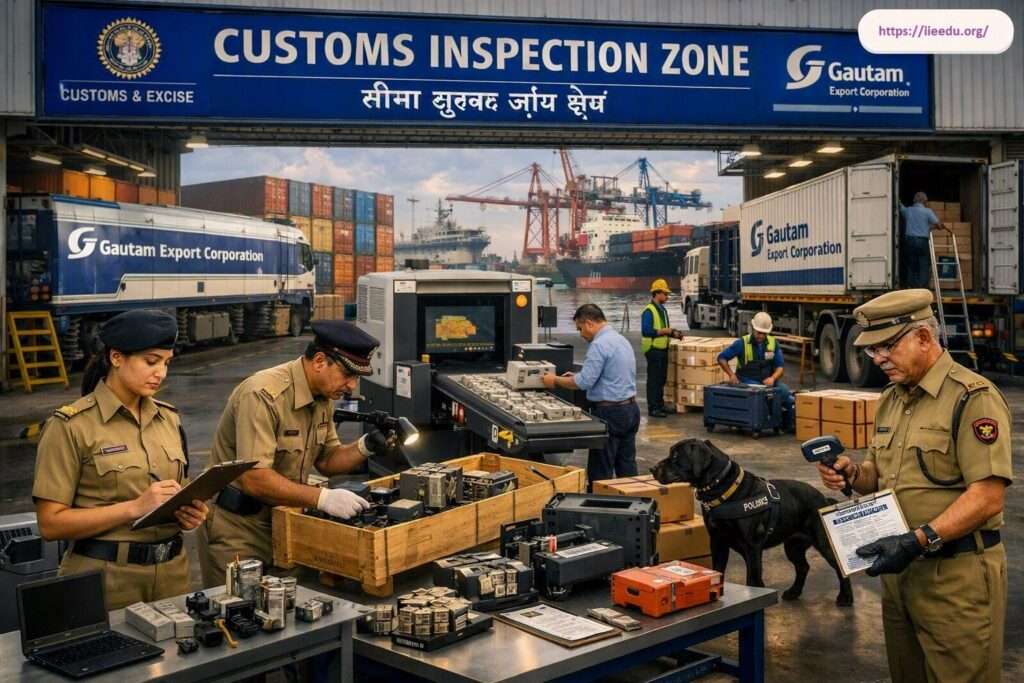
The business of spices, seeds and herbs is one of the most distinctive segments of the food industry. It connects agriculture with processing, manufacturing, packaging, distribution and international trade. Unlike many industrial products that are manufactured from standardized materials, spices and herbs originate from agricultural crops and naturally contain variations. This makes knowledge, process control and quality management particularly important.
For Gautam Export Corporation, understanding the nature of the spice and herb business was fundamental to its development. The company’s stated scope includes the processing and packing of whole and ground spices, seeds and herbs in HDPE, paper and jute bags, laminated pouches and tins. This scope reflects a business that operates across several stages of the food-ingredient value chain rather than functioning only as a traditional commodity trader.
The journey of a spice begins long before it reaches the processing facility.
It starts with cultivation.
Farmers grow crops under different climatic and geographical conditions. The resulting agricultural produce may vary according to soil, rainfall, temperature, harvesting practices and the timing of harvest. Once harvested, the commodity passes through several stages of handling before reaching a processor.
This natural variation creates one of the industry’s greatest challenges: consistency.
A customer purchasing a spice expects the product to meet agreed requirements regardless of natural differences between agricultural lots. The processor therefore has to establish controls that help transform variable raw material into a product that is sufficiently consistent for its intended application.
This is where experience becomes valuable.
An experienced spice organization understands that quality cannot be judged by a single characteristic. Appearance may provide useful information, but it is only one part of the assessment. Aroma, colour, physical condition, cleanliness, moisture, foreign matter and other characteristics may all influence suitability.
Different products also require different approaches.
Whole spices retain their original physical form. Customers may expect particular size, appearance, cleanliness or other characteristics.
Ground spices are different because the raw material has undergone a physical transformation. Grinding introduces additional considerations such as particle size and process consistency. The cleanliness and condition of processing equipment also become important.
Seeds may require careful sorting and cleaning before packing.
Herbs may require special handling to preserve their characteristic qualities.
The company must therefore understand not only the commodity but also the requirements of the final customer.
This customer-focused approach is an important characteristic of a modern food business.
A supplier cannot simply say, “This is the product we have.”
Instead, the supplier must understand:
“What does the customer require?”
“What specification has been agreed?”
“What packaging format is appropriate?”
“What quantity is required?”
“What documentation is necessary?”
“What market will the product enter?”
These questions become increasingly important when products are supplied to international customers.
International trade adds another layer of complexity because the buyer and supplier are separated by distance. A customer may not be able to inspect every production batch personally. Confidence must therefore be created through specifications, documentation, communication, certifications and consistent delivery.
Gautam Export Corporation’s product and packaging scope demonstrates the importance of flexibility.
HDPE bags may be appropriate for particular bulk applications.
Paper bags can serve another requirement.
Jute bags may be selected where the customer or product application calls for that type of packaging.
Laminated pouches can provide a different combination of protection, presentation and handling.
Tins can offer another packaging solution.
Each format requires proper control.
Packaging is not merely an external covering. It becomes part of the product-delivery system.
The correct product must enter the correct package.
The package must contain the required quantity.
The package must be appropriately sealed or secured.
The identification must correspond to the product.
The finished package must be suitable for storage and transportation.
These requirements illustrate why a quality-management system becomes important in a spice-processing organization.
Without defined procedures, different employees may perform the same activity differently. Over time, such variation can create inconsistency.
With a structured system, important processes can be documented and communicated.
The objective is not to eliminate human judgment. Rather, it is to make important decisions more consistent.
For example, employees involved in receiving raw material can work according to established requirements. Production employees can follow defined processing instructions. Packing personnel can perform specified verification steps. Supervisors can monitor operations. Management can review records and investigate deviations.
This creates a connected system.
Procurement affects production.
Production affects packing.
Packing affects dispatch.
Dispatch affects customer satisfaction.
Customer feedback then returns to management and becomes an input for improvement.
The entire chain is interconnected.
This is particularly important in the spice business because the final customer often judges the company on the finished product, not on individual stages of production. The customer does not see how carefully the raw material was selected or how much attention employees paid during processing. The customer simply receives the shipment and evaluates whether it meets expectations.
Therefore, the organization must control the invisible processes behind the visible product.
This understanding was important in Gautam Export Corporation’s journey toward ISO 9001 certification. The quality-management framework provided a structured way to look at the company as a series of interconnected processes.
The approach encouraged the organization to consider inputs, activities, outputs and controls.
Raw material became an input.
Processing became a controlled activity.
Finished spices, seeds and herbs became outputs.
Inspection and verification became controls.
Customer feedback became an input for improvement.
This process-based approach helped create a stronger foundation for organizational growth.
The spice industry also demands flexibility. Markets change, customers introduce new specifications, packaging requirements evolve and product preferences shift. A company that can adapt while maintaining quality has an important advantage.
For Gautam Export Corporation, experience in spices, seeds and herbs provided the commercial foundation. Processing and packaging capabilities provided opportunities to add value. Quality management provided a framework for controlling the operation.
The company’s development can therefore be understood as the gradual integration of three essential strengths:
Product knowledge.
Operational capability.
Quality discipline.
Product knowledge enables the company to understand what it is selling.
Operational capability enables the company to process and pack it.
Quality discipline enables the company to deliver it consistently.
Together, these strengths create customer confidence.
Ultimately, the spice and herb business is not simply about moving agricultural commodities from one location to another. It is about creating a reliable food product from a naturally variable raw material and delivering that product according to customer expectations.
For Gautam Export Corporation, this understanding formed an important part of its organizational identity.
The journey toward ISO 9001 certification was therefore not a sudden change in direction. It was the formal development of principles that were already essential to the business: careful handling, consistent processing, appropriate packaging, customer focus and continuous attention to quality.
As the company moved forward, these principles would become increasingly organized into a formal quality-management system, preparing Gautam Export Corporation for the important certification milestone that followed.
#SpiceProcessing
Chapter 4 The Need for a Quality Management System

As a company grows, the methods that worked when the organization was small may no longer be sufficient for managing a larger and more demanding operation. This is particularly true in the food-processing and export industry, where quality depends on a chain of activities rather than on one final inspection. For Gautam Export Corporation, the development of a formal quality-management system represented an important step toward creating consistency, accountability and customer confidence.
The company’s activities involve the processing and packing of whole and ground spices, seeds and herbs. These products originate from agricultural sources and therefore naturally contain variations. The organization must control those variations as effectively as possible while ensuring that finished products meet customer requirements.
A quality-management system provides a structured method for achieving this objective.
Before a formal system is established, many business processes may depend heavily on individual experience. Experienced employees know what to look for when receiving raw materials. Production personnel understand how products should be processed. Packing employees know how finished products should be prepared. Supervisors understand which issues require attention.
Such experience is extremely valuable.
However, it also creates a risk.
If knowledge exists only in people’s minds, it may be difficult to maintain the same level of performance when employees change, business volumes increase or new products are introduced. A growing organization therefore needs to convert individual knowledge into organizational knowledge.
This is one of the central purposes of a quality-management system.
A formal system establishes responsibilities, procedures, records, controls and methods of review. It creates a common way of working and gives management greater visibility into the organization’s performance.
For Gautam Export Corporation, the need for such a system can be understood through the journey of a typical product.
The process begins with customer requirements.
A customer may specify a particular spice, seed or herb, along with requirements relating to quality, quantity, packaging and delivery. These requirements must be understood before the order enters production.
The next stage involves procurement.
The organization must obtain suitable raw materials from reliable sources. If the incoming material does not meet expectations, difficulties may appear later during processing.
The material then enters the facility.
At this stage, identification, inspection and appropriate handling become important. The organization must know what has arrived, where it is located and whether it is suitable for use.
Processing follows.
Whole spices, seeds and herbs may undergo cleaning, sorting or other preparation activities. Ground products require additional processing. Each stage must be performed under controlled conditions.
Packing comes next.
The finished product must be placed in the correct packaging format, such as an HDPE bag, paper or jute bag, laminated pouch or tin, according to the applicable requirement.
Finally, the product is inspected, documented and dispatched.
At every stage, an error can affect the final customer.
A wrong raw material can create a processing problem.
A processing error can affect product quality.
A packing error can result in the wrong quantity or wrong identification.
A documentation error can delay a shipment.
A communication failure can result in the wrong specification being used.
The quality-management system connects these activities.
Instead of viewing them as separate departments, the organization can view them as interconnected processes.
This process-based approach is one of the most important concepts associated with ISO 9001.
The question changes from:
“Who is responsible for quality?”
to:
“How does every process contribute to quality?”
The answer involves everyone.
Purchasing influences quality by selecting appropriate suppliers.
Warehouse employees influence quality through proper storage and handling.
Production employees influence quality by following defined processing requirements.
Packing employees influence quality by ensuring correct packaging and identification.
Supervisors influence quality through monitoring and verification.
Management influences quality by providing resources, training and direction.
Sales and customer-service personnel influence quality by accurately communicating customer requirements.
Quality therefore becomes a shared organizational responsibility.
Another important reason for developing a quality-management system is customer confidence.
In international business, customers may be located far away from the manufacturing facility. They cannot personally monitor every operation. They therefore rely on evidence that the supplier has appropriate controls.
Documentation becomes important in this environment.
A specification provides a clear understanding of requirements.
A purchase record provides information about incoming material.
An inspection record provides evidence of verification.
A production record provides information about processing.
A packing record supports finished-product control.
A dispatch record connects the shipment with the customer.
A complaint record allows the organization to learn from problems.
These records create an information trail.
They also create corporate memory.
Employees may change, but documented processes and records help preserve organizational knowledge.
The quality-management system also provides a framework for corrective action.
No business can expect to operate without mistakes.
The important issue is how the organization responds when something goes wrong.
A weak system may focus only on correcting the immediate problem.
A stronger system asks why the problem occurred.
For example, if an incorrect label is discovered, management should not simply replace the label. It should examine why the wrong label was available or selected, whether the identification process was clear, whether employees were trained and whether an additional verification step is necessary.
This approach addresses the cause rather than only the symptom.
The result is a learning organization.
Every deviation becomes an opportunity to improve the process.
This is particularly valuable in the food industry because quality failures can affect customer confidence and commercial relationships.
The need for a quality-management system therefore goes beyond certification.
Certification is a formal recognition.
The management system is the real operational tool.
For Gautam Export Corporation, the development of such a system provided an opportunity to bring together traditional business experience and modern management practices.
The company already had knowledge of spices, seeds, herbs, customers and suppliers. The quality system could organize that knowledge into defined processes.
The objective was not to make the organization unnecessarily bureaucratic.
The objective was to make important activities reliable.
Reliable procurement.
Reliable processing.
Reliable packing.
Reliable documentation.
Reliable customer service.
Reliable improvement.
This reliability is what ultimately creates trust.
A customer who receives a consistent shipment begins to trust the supplier.
A supplier who receives clear requirements can plan effectively.
An employee who understands his responsibility can perform more confidently.
Management that receives accurate information can make better decisions.
Thus, quality management creates value throughout the organization.
The decision to move toward ISO 9001 certification was therefore an important stage in Gautam Export Corporation’s evolution. It represented recognition that continued growth required more than product knowledge and commercial relationships.
The company needed systems.
It needed discipline.
It needed documentation.
It needed measurable controls.
And above all, it needed a culture in which quality was understood as everyone’s responsibility.
This foundation would prepare the organization for the next major stage of its journey: the development and implementation of a structured ISO 9001 quality-management system and the certification milestone achieved in 2017.
#FoodIngredients
Chapter 5 The Road to ISO 9001 Certification
Courtesy: Taxlegit
The decision to pursue ISO 9001 certification represented an important stage in the evolution of Gautam Export Corporation. For an established organization operating in the processing and packing of spices, seeds and herbs, certification was not simply an administrative exercise. It represented an opportunity to organize existing experience into a structured quality-management system and to demonstrate a formal commitment to consistency, customer satisfaction and continual improvement.
According to the certification information provided for this corporate history, Gautam Export Corporation received its ISO 9001 certification in 2017, with the certification stated as valid through 2020. The stated scope covered the processing and packing of whole and ground spices, seeds and herbs in HDPE, paper and jute bags, laminated pouches and tins. This scope was significant because it covered the organization’s core operational activities and the various forms in which its products were supplied to customers.
The road to certification began with a fundamental question: how could the organization ensure that its processes consistently produced the results expected by customers?
The answer required looking at the company as a complete system.
Procurement could no longer be viewed as an isolated purchasing function. The quality of raw material entering the facility directly influenced the quality of the finished product. Supplier selection, incoming material evaluation and appropriate storage therefore became important parts of the quality chain.
Processing had to be considered in the same way. Different spices, seeds and herbs have different characteristics. Whole products and ground products may require different handling and processing considerations. Employees therefore needed clear responsibilities and appropriate procedures.
Packaging also became part of the quality system. Whether a product was packed in an HDPE bag, paper bag, jute bag, laminated pouch or tin, the organization had to ensure that the correct product reached the correct packaging in the correct quantity and with appropriate identification.
The certification journey encouraged the company to document these activities.
Documentation is sometimes misunderstood as paperwork created only for auditors. In a well-managed quality system, however, documentation serves a much more practical purpose. It provides a common reference for employees and creates evidence that important processes have been performed.
A documented procedure can help a new employee understand how an activity should be carried out.
A specification can help the production team understand customer requirements.
An inspection record can show whether incoming or finished material was checked.
A corrective-action record can demonstrate how a problem was addressed.
A training record can demonstrate that employees received appropriate instruction.
Together, these documents create a structured organizational memory.
The implementation of ISO 9001 also required responsibilities to become clearer.
Quality could not remain the responsibility of one person or one department.
Purchasing personnel influenced quality through supplier selection.
Warehouse personnel influenced quality through storage and handling.
Production personnel influenced quality through processing.
Packing personnel influenced quality through final presentation and identification.
Supervisors influenced quality through monitoring.
Management influenced quality through leadership, resources and review.
This shared responsibility was one of the most important cultural changes associated with the certification journey.
Employees needed to understand that following a procedure was not merely about satisfying an auditor. It was about protecting the product and the customer.
For example, proper identification of raw material helps prevent confusion between products or lots. Proper identification of finished products supports accurate dispatch. Proper packaging verification helps prevent customer complaints. Proper documentation allows the organization to investigate an issue if one occurs later.
In this way, quality management connects everyday activities with customer satisfaction.
Another important part of the certification journey was the development of internal review.
A management system must be checked to determine whether it is functioning as intended. Internal audits and process reviews can identify gaps, inconsistencies or opportunities for improvement.
The objective of an audit should not be to find someone to blame.
Its purpose is to determine whether the system is working.
If a procedure is not being followed, management can ask why.
Perhaps employees were not adequately trained.
Perhaps the procedure was unclear.
Perhaps the available equipment was insufficient.
Perhaps the process had changed but the documentation had not been updated.
By asking these questions, the organization can improve the system rather than simply correcting an individual mistake.
This approach also supports a culture of preventive thinking.
When a potential problem is identified before it reaches the customer, the organization has an opportunity to prevent unnecessary waste, complaints and loss of confidence.
Customer feedback becomes another source of information.
A complaint is not merely a negative event. It can reveal something about the system.
If a customer reports a packaging problem, the company can investigate the packing process.
If a customer reports variation in a product, the organization can examine raw material, processing and inspection controls.
If a shipment is delayed, management can examine planning and communication.
Each issue becomes a learning opportunity.
This is how certification can contribute to organizational maturity.
The road to ISO 9001 certification also required commitment from leadership. A quality-management system cannot succeed if management treats it as a temporary project.
Employees take their direction from leadership.
If management demonstrates that quality matters, employees are more likely to take quality responsibilities seriously.
If management treats records as unnecessary, employees will do the same.
If management responds constructively to problems, employees are more likely to report them.
Leadership therefore determines whether certification becomes a living management system or simply a certificate on the wall.
For Gautam Export Corporation, the certification milestone in 2017 represented the formal recognition of a structured approach to quality. It also marked the beginning of a new level of accountability.
The organization could now use the management system to monitor its activities, evaluate performance and identify areas for improvement.
Most importantly, certification created a framework for connecting traditional business experience with modern management practices.
The company did not have to abandon the knowledge accumulated through years in the spice trade.
Instead, that knowledge could be strengthened through procedures, records, training and systematic review.
The journey to ISO 9001 certification was therefore a journey from informal confidence to documented confidence.
It transformed the question from:
“Do we know how to produce a good product?”
to:
“Can we demonstrate that our processes consistently support the production of a good product?”
That difference was central to the company’s development.
Certification was not the end of the journey. It was a milestone that established a stronger foundation for future growth.
For Gautam Export Corporation, the year 2017 therefore represented more than a date on a certificate. It represented a commitment to a structured quality culture—one in which customer requirements, process control, documentation, employee responsibility and continual improvement became interconnected elements of the company’s continuing growth story.
#ISO9001
Chapter 6 The 2017 Certification Milestone

The year 2017 represents an important milestone in the development story of Gautam Export Corporation. According to the certification details provided for this corporate history, the company received ISO 9001 certification in 2017, with the stated validity extending through 2020. The certification covered the processing and packing of whole and ground spices, seeds and herbs in HDPE, paper and jute bags, laminated pouches and tins.
For an established food-processing and export organization, such a certification represents more than the achievement of a formal document. It signifies the adoption of a structured approach to quality management and creates a framework through which an organization can organize its processes, responsibilities and customer commitments.
The importance of the 2017 milestone becomes clearer when viewed against the nature of Gautam Export Corporation’s business.
The company operates in a sector where quality begins with agricultural raw materials and continues through multiple stages before the finished product reaches the customer. Spices, seeds and herbs can vary naturally according to origin, season, harvesting conditions, storage and handling. The organization therefore needs effective controls to ensure that the finished product remains consistent with customer expectations.
ISO 9001 provided a structured framework for managing these activities.
The certification period created an opportunity to formalize the connection between different functions of the business. Procurement, receiving, storage, processing, grinding where applicable, packing, inspection, documentation and dispatch could be treated as connected processes rather than isolated activities.
This process-based approach was particularly valuable for a company handling several product categories.
A whole spice may require one type of processing.
A seed may require another type of cleaning or preparation.
A ground spice introduces additional considerations associated with grinding and consistency.
Herbs may require appropriate handling to preserve their desired characteristics.
The packaging requirement can also vary depending on the customer and product.
By defining responsibilities and processes, the organization could create greater consistency across these different activities.
One of the important effects of certification was the increased emphasis on documented processes.
Documentation gives an organization a common language.
Employees can understand what is expected.
Supervisors can verify whether activities are being performed correctly.
Management can review records.
If a problem occurs, the organization can investigate what happened.
This becomes particularly important as an organization grows.
In a small operation, a promoter may personally know how almost every process is performed. In a larger organization, that is no longer practical. Responsibilities must be distributed among employees, and the company needs systems capable of maintaining standards even when the promoter is not directly supervising every activity.
The 2017 certification therefore represented a movement toward institutional quality.
Quality became less dependent on individual memory and more dependent on organizational systems.
This did not reduce the importance of experienced employees. Instead, it allowed their knowledge to be incorporated into formal procedures and training.
The certification also reinforced the importance of customer requirements.
A customer purchasing food ingredients may have specific expectations regarding product type, grade, quantity, packaging and documentation. These requirements must be understood before processing begins.
The quality-management approach encouraged the organization to consider customer requirements as inputs to its processes.
This principle is simple but commercially important.
If the company understands the requirement correctly at the beginning, it has a better opportunity to deliver the correct product at the end.
Errors that begin with misunderstanding can become expensive later.
A wrong specification may lead to incorrect processing.
Incorrect processing may result in rework.
Rework may create delays.
Delays can affect customer relationships.
A quality-management system therefore seeks to prevent problems rather than simply discover them after production.
Another important aspect of the 2017 milestone was the strengthening of accountability.
Employees needed to understand their roles.
A person receiving raw material had a responsibility.
A person managing storage had a responsibility.
A production operator had a responsibility.
A packing employee had a responsibility.
A supervisor had a responsibility.
Management had a responsibility.
Quality became a chain in which every link mattered.
If one link failed, the final product could be affected.
This understanding helped create a culture in which quality was considered everyone’s responsibility.
The certification also created greater emphasis on corrective action.
Problems are inevitable in complex operations, but repeating the same problem is avoidable.
If a customer complaint occurred, the organization could investigate its cause.
If an internal deviation was identified, the organization could determine what happened.
If an audit identified a weakness, corrective action could be introduced.
The purpose was not merely to correct the immediate issue.
The objective was to prevent recurrence.
This approach transformed problems into sources of organizational learning.
The 2017 milestone also strengthened the company’s ability to communicate its commitment to quality to customers and business partners.
In international food markets, customers often evaluate suppliers not only on price and product availability but also on the supplier’s ability to demonstrate controlled processes.
Certification provides an external reference point for such evaluation.
It does not guarantee that every shipment will be perfect, nor does it replace day-to-day quality control. However, it demonstrates that the organization has adopted a recognized framework for managing quality.
For Gautam Export Corporation, this was especially relevant because the company operated with an export-oriented product portfolio and served a market in which customer confidence was essential.
The certification period through 2020 can therefore be understood as a significant phase of organizational maturity.
It provided the company with an opportunity to monitor processes, review performance and develop a stronger culture of continual improvement.
Importantly, the value of the certification was not limited to the certificate’s validity period.
The systems, habits and organizational knowledge developed during the certification journey could continue to influence the company beyond the stated validity date.
A certificate has a beginning and an end date.
A quality culture can continue.
The 2017 milestone therefore deserves to be viewed as a turning point rather than simply a compliance event.
It represented a transition from quality being primarily a matter of experience and inspection toward quality being supported by a structured management system.
For Gautam Export Corporation, this transition strengthened the foundation upon which future growth could be built.
The company’s long association with spices, seeds and herbs provided the product knowledge.
Its promoter and employees provided the experience.
Its customers provided the market direction.
And ISO 9001 provided a formal framework for bringing these elements together.
The significance of 2017 was therefore not only that Gautam Export Corporation obtained certification.
The deeper significance was that the organization demonstrated its willingness to formalize its commitment to quality, improve its processes and build greater confidence among the customers it served.
That commitment would become an important part of the company’s continuing journey toward stronger operations, customer satisfaction and sustainable growth.
#QualityManagement
Chapter 7 Procurement – Where Quality Begins
In the food-processing industry, quality begins long before a product enters a production machine. It begins with the selection and purchase of raw materials. For a company such as Gautam Export Corporation, whose business involves processing and packing whole and ground spices, seeds and herbs, procurement is therefore one of the most important links in the quality chain.
The quality of the finished product can never be completely separated from the quality of the raw material used to produce it.
A processing facility may have capable employees, appropriate equipment and well-defined procedures, but if unsuitable raw material enters the system, achieving the desired finished-product quality becomes more difficult. This principle made procurement an important part of the company’s quality-management approach following its movement toward ISO 9001 certification.
Spices, seeds and herbs are agricultural commodities. Their characteristics can vary according to geographical origin, climate, agricultural practices, harvesting conditions, storage and transportation. Two lots of the same commodity may not be identical. The role of the processor is therefore to establish appropriate controls for selecting and evaluating incoming material.
For Gautam Export Corporation, procurement was not simply a matter of finding a product at the lowest possible price. A professional procurement process had to balance several factors.
Quality.
Reliability.
Availability.
Price.
Customer requirements.
Delivery schedules.
Supplier performance.
These factors are interconnected.
A supplier offering a low price may not necessarily provide consistent quality. A supplier offering excellent quality may not always have sufficient availability. A reliable supplier may become strategically important when customer orders require dependable delivery.
Procurement therefore becomes a management decision rather than a simple purchasing transaction.
One of the important developments associated with a structured quality-management system is the formal evaluation of suppliers.
A company needs to know which suppliers consistently provide acceptable material and which suppliers require greater monitoring. Supplier performance can be assessed through factors such as product conformity, delivery reliability, responsiveness and consistency.
The purpose of supplier evaluation is not necessarily to eliminate suppliers.
Its greater purpose is to understand supply-chain performance.
A reliable supplier can become a long-term partner.
A supplier whose performance is inconsistent can be given clearer expectations and monitored more closely.
If problems continue, management can reconsider the relationship.
This approach helps create a more stable procurement system.
The process begins with customer requirements.
Suppose a customer requires a particular spice with defined characteristics. The purchasing team must understand what is required before selecting the raw material.
The requirement may relate to the type of product, grade, quantity, packaging or other specifications.
Once the requirement is understood, procurement can identify appropriate sources.
This creates a direct connection between customer expectations and supplier selection.
The process continues when the raw material reaches the facility.
Receiving is a critical control point.
The organization needs to identify what has arrived and determine whether the material is acceptable for use. Proper identification helps prevent confusion between different commodities or lots.
Inspection and verification can provide information about the condition of incoming material.
If material is not acceptable, the organization must have a defined method for dealing with it.
It may be rejected.
It may be placed on hold pending further evaluation.
Or it may be accepted subject to appropriate conditions.
The important point is that the decision should be controlled rather than accidental.
This is where documentation becomes valuable.
A record of incoming material provides evidence about what was received and when. It can also help management investigate problems later.
For example, if a customer reports an issue with a particular finished product, the organization may need to understand where the raw material originated. Traceable records can help connect the finished product with the relevant incoming material.
Traceability therefore supports both quality management and customer confidence.
Storage is the next important stage.
Even good raw material can be affected by poor handling.
Spices, seeds and herbs need appropriate storage practices to protect them from deterioration, contamination, damage and unnecessary exposure to adverse conditions.
Warehouse organization is therefore part of procurement quality.
Material should be appropriately identified.
Different lots should be distinguishable.
Movement should be controlled.
Employees should know which material is approved for production and which material is awaiting inspection or decision.
These controls reduce the risk of accidental use of unsuitable material.
The procurement function also has an important financial dimension.
Raw materials represent a significant business cost. Poor purchasing decisions can create waste.
If material is purchased in excessive quantities, inventory may increase unnecessarily.
If insufficient quantities are purchased, production may be interrupted.
If inconsistent material is purchased, additional processing or rejection may result.
Effective procurement therefore supports both quality and productivity.
The ISO 9001 approach helped reinforce the idea that purchasing should be treated as a controlled process.
The objective was not to make procurement complicated.
The objective was to make it reliable.
The company needed to establish clear expectations for suppliers and maintain appropriate records.
Over time, this could lead to stronger supplier relationships.
A supplier that understands the company’s requirements can prepare material more effectively.
The company can communicate specifications clearly.
Problems can be discussed based on evidence.
Performance can be reviewed over time.
This creates a professional supply relationship rather than a series of isolated purchases.
Procurement also supports the company’s ability to meet customer deadlines.
Export customers often work according to production schedules of their own. A delay in raw-material availability can affect processing and ultimately shipment schedules.
Reliable procurement therefore contributes to delivery reliability.
This demonstrates how the quality system connects departments.
Customer service communicates requirements.
Purchasing sources material.
Warehouse personnel receive and store it.
Production processes it.
Packing prepares it.
Dispatch sends it to the customer.
Each stage depends upon the previous one.
The quality of procurement therefore influences the entire organization.
For Gautam Export Corporation, strengthening procurement controls was an important part of developing a mature quality-management culture.
The company could use its accumulated experience in spices and seeds while applying a more systematic approach to supplier management, incoming inspection, identification and storage.
This combination of experience and system was valuable.
Experience helped employees understand the products.
The quality system helped ensure that important activities were performed consistently.
Ultimately, procurement became more than a purchasing function.
It became the first major quality gate.
Before a spice could be cleaned, processed, ground or packed, it first had to enter the organization as an appropriate raw material.
This understanding created a simple but powerful principle for the company:
Quality cannot be added successfully at the end of production if it was ignored at the beginning.
By strengthening procurement, Gautam Export Corporation strengthened the foundation of its entire processing operation.
The raw material was the starting point.
The quality system provided the controls.
The employees provided the expertise.
And the customer remained the ultimate measure of whether the complete process had succeeded.
#GroundSpices
Chapter 8 Storage and Handling
Courtesy: ISO
Once raw materials have been purchased and received, the next important stage in the quality journey is storage and handling. For Gautam Export Corporation, which deals with spices, seeds and herbs, proper storage is particularly important because these products are agricultural commodities whose condition can be influenced by their surrounding environment.
A good-quality raw material can lose its value if it is not handled correctly.
This simple principle makes warehousing an important part of the quality-management system.
The work of procurement does not end when a shipment arrives at the facility. Receiving the material is only the beginning. The organization must identify it, inspect it where required, store it appropriately and ensure that it remains suitable for processing.
For a business operating from an industrial facility such as Gautam Export Corporation’s premises at D-81, TTC Industrial Area, Turbhe MIDC, Navi Mumbai, warehouse organization can become an important contributor to operational efficiency.
The first requirement is identification.
When raw materials arrive, employees need to know what the material is, where it came from, when it was received and what status it has within the organization. Identification reduces the possibility of confusion between different products, suppliers or lots.
This becomes especially important when a company handles multiple commodities.
A facility processing spices and seeds may have several different raw materials present at the same time. Cumin, coriander, pepper, fennel, herbs and other commodities may be received in different quantities and from different sources. Without appropriate identification, there is a greater possibility of material being mixed up or used incorrectly.
A structured quality system therefore encourages clear identification and status control.
Raw materials may need to be distinguished as approved, awaiting inspection, under evaluation or rejected. The important principle is that employees should be able to determine the status of material before it enters production.
This is not merely a documentation requirement.
It is a practical safeguard.
The next consideration is storage conditions.
Spices, seeds and herbs need to be protected from conditions that could adversely affect their quality. Proper housekeeping, cleanliness and organized storage can help reduce risks associated with contamination, damage or deterioration.
The warehouse should therefore be treated as part of the production system rather than simply as a place where bags are kept.
Employees working in storage have a direct influence on the quality of the finished product.
Their responsibilities may include receiving materials carefully, maintaining identification, following appropriate storage practices, keeping areas organized and ensuring that material is moved correctly.
Handling is also important.
Large bags and containers may need to be moved multiple times during their journey through the facility. Rough handling can damage packaging, create losses or expose material to unwanted conditions.
Careful movement protects both the product and the company’s investment.
Inventory control also becomes important as business volumes increase.
The organization needs to know what material is available and where it is located.
Accurate inventory information supports production planning.
If production requires a particular spice, the team should be able to identify whether suitable material is available.
If a customer order requires a particular lot or specification, the organization should be able to locate the appropriate material.
This contributes to efficiency.
Without proper inventory control, employees may spend unnecessary time searching for material, production may be delayed or unsuitable material may be selected.
Quality management therefore has a direct relationship with productivity.
One important benefit of good storage control is traceability.
Traceability means being able to connect a product with relevant information about its movement through the process.
For example, a finished shipment may be associated with a particular production lot. That production lot may be connected with specific raw materials. Those raw materials may be linked to particular suppliers and receiving records.
This chain creates visibility.
If a customer later asks a question about a shipment, the organization has a better opportunity to investigate.
Traceability is particularly important in food-related businesses because customer confidence depends upon the organization’s ability to understand what happened to a product during its journey.
The quality-management approach also encourages the organization to consider the movement of material through the warehouse.
Material should not remain in storage unnecessarily.
At the same time, it should not be moved without proper control.
The organization therefore needs a logical flow.
Receiving.
Inspection.
Identification.
Storage.
Release for production.
Processing.
Finished-product storage.
Dispatch.
A clear flow reduces confusion and can also improve productivity.
Warehouse organization can additionally support workplace safety.
Employees must be able to move through the facility without unnecessary obstruction. Materials should be arranged in a manner that allows safe handling and access.
Good housekeeping contributes to both quality and safety.
The principle is straightforward:
A clean and organized workplace is easier to control.
The introduction of a formal quality-management system helped reinforce these practices by giving employees defined responsibilities.
Rather than relying solely on individual habits, the organization could establish procedures for receiving, identifying, storing and issuing material.
This created greater consistency.
It also made training easier.
A new employee could be introduced to a defined system rather than being expected to learn everything informally.
This is particularly valuable as a company grows.
When an organization is small, a few experienced employees may know exactly where everything is located and how material should be handled. As the business expands, more people become involved.
Systems must therefore grow with the organization.
Storage also has an important connection with customer satisfaction.
The customer does not see the warehouse.
The customer sees the final product.
But the condition of that final product may be influenced by everything that happened while the material was stored.
A well-controlled warehouse therefore contributes indirectly to the customer’s experience.
For Gautam Export Corporation, this principle formed an important part of the broader quality philosophy established around the ISO 9001 certification period.
Quality was not restricted to processing or final inspection.
It began with purchasing and continued through receiving, storage, handling, production and packing.
Every stage mattered.
Every employee had a role.
Every movement of material could influence the final result.
This way of thinking represented a major step toward organizational maturity.
The company could no longer view quality as something checked only after production.
Instead, quality had to be protected throughout the entire process.
Storage and handling therefore became important links in the company’s quality chain.
The raw material arrived with potential.
Proper storage preserved that potential.
Careful handling protected it.
Controlled release sent it into production at the appropriate stage.
Processing then transformed it into a finished product.
Through this sequence, Gautam Export Corporation could build a more reliable and disciplined operating environment.
Ultimately, the warehouse was more than a storage area.
It was a quality-control point.
It was an inventory-management centre.
It was a traceability link.
It was a workplace.
And it was an important part of the company’s promise to its customers.
By treating storage and handling as integral components of quality management, Gautam Export Corporation strengthened the foundation upon which its processing, packing and export activities depended.
#SupplyChainManagement
Chapter 9 Processing Whole Spices, Seeds and Herbs
Processing is the stage where carefully selected agricultural raw materials begin their transformation into finished food ingredients. For Gautam Export Corporation, processing whole and ground spices, seeds and herbs represents one of the central activities of the organization. It is also a stage where product knowledge, employee skill, equipment, cleanliness, process discipline and quality management come together.
The quality of a finished spice product is influenced by everything that happens before and during processing. Procurement determines the quality of the incoming material. Storage protects that material. Processing transforms it. Packing protects the finished product. The relationship between these stages is essential.
For this reason, the processing department cannot operate independently from the rest of the quality system.
The first principle of controlled processing is understanding the product.
Whole spices, seeds and herbs have different characteristics. Their physical appearance, size, texture, aroma and other properties may vary. A processing method that is appropriate for one commodity may not be suitable for another.
Employees therefore need product knowledge as well as process knowledge.
A well-established organization develops this knowledge over time. Experienced employees learn how materials behave during cleaning, sorting, handling and processing. The challenge for management is to ensure that this experience is not lost when the organization grows.
A quality-management system helps convert experience into repeatable processes.
Processing can involve activities such as cleaning, sorting, grading, preparation and other appropriate operations before the product is packed. The exact sequence depends upon the product and customer requirement.
The objective is to remove undesirable material, prepare the commodity appropriately and achieve the characteristics expected by the customer.
Cleaning is an important example.
Agricultural commodities may contain unwanted material acquired during harvesting, transportation or storage. Processing therefore needs appropriate controls to separate acceptable material from unwanted material.
Sorting and grading can further improve consistency by separating material according to relevant characteristics.
The process must be carried out carefully because excessive handling can also create losses or damage.
This is why process control is important.
The organization needs to understand what each processing stage is intended to achieve and how employees should perform it.
For whole spices and seeds, maintaining the desired physical characteristics may be particularly important. Customers may have expectations concerning appearance, size, cleanliness or other specifications.
Ground spices present an additional challenge.
Grinding changes the physical form of the product and introduces greater dependence on process conditions. Consistency of grinding becomes important because customers may require a particular texture or particle-size profile.
Grinding also makes equipment cleanliness especially important.
If equipment is not properly controlled between products, there may be a risk of unintended carryover or product mix-up. A structured system therefore requires attention to cleaning, identification and process sequencing.
The importance of equipment management extends beyond grinding.
Machines must be maintained in suitable working condition.
If equipment is poorly maintained, processing efficiency may decline and product consistency can be affected.
Preventive maintenance can therefore support both productivity and quality.
The quality-management system provides a framework for identifying such requirements and assigning responsibility.
Employees must know who is responsible for equipment checks.
They must know what to do if equipment does not function correctly.
They must know how to report a problem.
They must understand when production should stop rather than continue under unsuitable conditions.
These responsibilities contribute to a culture of prevention.
Another important element is process identification.
A production lot should be identifiable throughout processing. This helps maintain traceability and makes it easier to investigate any issue later.
For example, if a customer raises a question about a particular shipment, the company may need to identify which production lot was involved, what material was used and when the product was processed.
Without records, such investigation can be difficult.
With appropriate records, the organization has a stronger basis for understanding what happened.
Documentation therefore becomes a practical tool for production management.
A processing record can show what product was handled, when it was processed and by whom. Such records can support planning, traceability and quality review.
They can also help management identify recurring issues.
Suppose the same type of processing deviation appears several times.
The organization can review the records and determine whether the problem is related to equipment, raw material, employee training or process instructions.
This creates a feedback loop.
Process → Record → Review → Improvement
That cycle is central to quality management.
Employee training is another important part of processing.
An operator may understand how to operate a machine but still need to understand why specific process controls are required.
Training should therefore address both practical operation and quality awareness.
Employees should understand the effect their work can have on the finished product.
If a cleaning step is incomplete, unwanted material may remain.
If a grinding process is inconsistent, the finished product may not meet customer expectations.
If equipment is not cleaned appropriately, product integrity may be affected.
If identification is incorrect, the wrong product may reach packing.
Every action matters.
This is why quality is often described as a chain.
The finished product is only as strong as the processes that created it.
For Gautam Export Corporation, the stated scope of processing and packing whole and ground spices, seeds and herbs required the organization to manage this chain carefully.
The quality-management approach encouraged employees to think about processing as a controlled activity rather than simply a production task.
The purpose of production was not merely to process material quickly.
It was to process it correctly.
Productivity remained important, but productivity without quality could create waste.
A batch that must be reprocessed consumes additional time and resources.
A batch that fails to meet customer requirements can create even greater consequences.
Therefore, the most effective production system is one that combines efficiency with consistency.
The 2017 ISO 9001 certification milestone provided a framework for strengthening this approach.
Defined procedures helped establish expectations.
Training helped employees understand their responsibilities.
Records provided evidence.
Internal reviews helped identify weaknesses.
Corrective actions helped address recurring problems.
Management review provided an opportunity to evaluate overall performance.
Through these mechanisms, processing could become increasingly systematic.
This was particularly valuable as Gautam Export Corporation served customers with different product requirements and packaging needs.
The company needed flexibility without losing control.
A strong process system allowed employees to adapt to different products while maintaining fundamental quality principles.
The deeper significance of processing therefore lies in transformation.
Raw agricultural material enters the organization.
Through controlled operations, it becomes a food ingredient ready for the customer.
That transformation requires knowledge, care and discipline.
For Gautam Export Corporation, processing was not simply a production function. It was an important expression of the company’s quality philosophy.
Every batch represented the organization’s reputation.
Every production decision could influence customer satisfaction.
Every employee involved in processing contributed to the final result.
The objective was therefore clear: protect the integrity of the raw material, apply appropriate processing controls and deliver a finished product that meets the intended requirements.
By integrating processing into the wider ISO 9001 quality-management framework, Gautam Export Corporation strengthened its ability to turn agricultural commodities into consistent, customer-focused food products.
This was another important step in the company’s continuing journey from experience-based operations toward a mature, system-supported organization.
#CustomerTrust
Chapter 10 Grinding, Product Consistency and Process Control
Gautam Export Corporation, the processing of whole spices, seeds and herbs formed an important part of its business, but the production of ground spices introduced another level of responsibility. Grinding transforms the physical character of a product and therefore requires careful process control, equipment management, identification and consistency.
The difference between a whole spice and a ground spice may appear simple to the customer, but from an operational perspective the transformation involves several important considerations. Once a spice is ground, its appearance, texture, handling characteristics and other properties change. The customer expects the finished material to conform to the agreed requirements every time.
This made grinding an important area within the company’s quality-management approach following its ISO 9001 certification.
The first requirement was to understand the customer’s expectations.
A customer purchasing ground spice may have a particular requirement regarding the product, quantity, packaging and other characteristics. These requirements need to be clearly communicated to the processing team before production begins.
A mistake at this stage can affect the entire batch.
If the wrong material is selected, processing cannot correct the problem.
If the wrong specification is used, the finished product may not satisfy the customer.
If the wrong packaging requirement is communicated, even a correctly processed product may be dispatched incorrectly.
Therefore, process control begins with accurate information.
Controlled Production
Once the production requirement is established, the appropriate raw material must be identified and released for processing. This creates an important connection between warehouse management and production.
Employees need to know which material is approved.
They need to know which lot is being processed.
They need to understand the relevant production instructions.
They also need to ensure that product identification remains clear throughout the operation.
This is particularly important when several products are processed in the same facility.
Clear identification reduces the risk of product mix-ups.
Grinding equipment is another important part of the process. Machinery must be maintained and operated appropriately. A well-maintained machine can support consistent production, while equipment problems can lead to delays, inefficiency or variation.
For this reason, maintenance becomes part of quality management.
Equipment should not simply be repaired after it fails. A more systematic approach considers preventive maintenance and routine checks so that potential problems can be identified before they become major disruptions.
This philosophy reflects an important principle of ISO 9001: prevention is generally more effective than repeated correction.
If a machine repeatedly causes problems, management should investigate the reason.
Is maintenance inadequate?
Is the equipment being operated correctly?
Does the employee require additional training?
Is the machine suitable for the product?
Has the process changed?
These questions encourage the organization to look beyond the immediate symptom.
Consistency as a Business Requirement
For a spice processor, consistency has commercial value.
A customer who purchases a product from Gautam Export Corporation expects the next shipment to be comparable with the previous one, subject to the agreed specification.
Consistency builds confidence.
Confidence encourages repeat business.
Repeat business contributes to growth.
Growth provides opportunities for further investment.
Thus, process consistency is not merely a technical objective. It is part of the company’s commercial strategy.
The organization therefore needs to establish controls that help maintain uniformity.
Employees must understand the importance of following defined processing instructions rather than relying entirely on personal judgment. Experienced operators remain valuable, but their experience becomes more powerful when supported by documented procedures.
A documented process can help ensure that different employees approach the same operation in a consistent manner.
It also makes training easier.
A new employee can learn from an established method rather than depending entirely upon informal instruction.
Preventing Product Mix-Ups
Another significant consideration in grinding operations is product identification.
When multiple spices and herbs are processed in a facility, the organization must take appropriate measures to prevent unintended product mix-ups.
Identification of raw materials and work-in-process material becomes important.
Cleaning and appropriate preparation of equipment also become important.
Packing materials must be clearly associated with the correct product.
Production records must connect the finished material with the relevant process.
These controls help protect product integrity.
They also strengthen traceability.
If a customer later raises a question about a particular shipment, the organization can use its records to investigate the product’s history.
This ability to investigate is one of the practical benefits of a structured quality-management system.
Records and Traceability
Records provide information that may otherwise disappear once production is completed.
A production record can identify the product processed, relevant lot information, quantities and other necessary details.
Packing records can connect the processed material to the finished packages.
Dispatch records can connect those packages to the customer.
Together, these records create a chain of information.
This chain becomes particularly valuable when the organization needs to investigate a complaint or identify the scope of a potential problem.
Instead of asking, “What happened?” without evidence, management can examine records and determine what happened at each stage.
This creates a more objective approach to problem solving.
Employee Responsibility
No quality system can function effectively without competent employees.
Operators are often the people closest to the actual process. They see equipment behaviour, material characteristics and production conditions directly.
Their observations can therefore provide valuable information to management.
Employees should feel responsible not only for completing production but also for identifying unusual conditions.
If something does not appear correct, it should be reported.
If equipment behaves differently, it should be investigated.
If material identification is unclear, production should not proceed blindly.
If a process deviation occurs, it should be documented and addressed.
Such behaviour reflects a mature quality culture.
Continual Improvement
ISO 9001 certification also encouraged the company to view production as an area for continual improvement.
Improvement does not necessarily mean replacing every machine or dramatically changing the process.
Sometimes improvement can be simple.
A clearer production instruction.
A better identification system.
More effective employee training.
Improved housekeeping.
Better maintenance planning.
More accurate records.
Faster communication between departments.
Each improvement can contribute to overall performance.
For Gautam Export Corporation, these small improvements could accumulate over time and strengthen the organization as a whole.
The company’s journey after certification therefore involved more than maintaining existing procedures. It involved learning from experience and using that knowledge to improve future performance.
From Grinding to Customer Satisfaction
The final purpose of grinding is not the operation itself.
The purpose is to create a product that satisfies the customer’s requirement.
This distinction is important.
A production department may measure success through output.
A quality department may measure conformity.
Management may consider cost and productivity.
The customer ultimately considers whether the product meets expectations.
A successful system must therefore balance all three dimensions.
Quality.
Productivity.
Customer satisfaction.
For Gautam Export Corporation, the ISO 9001 framework provided a structure for bringing these objectives together.
The company’s experience in spices, seeds and herbs remained essential. Its employees remained central to operations. Its equipment provided production capability. Its management system provided coordination and control.
The result was a more disciplined approach to grinding and product consistency.
The certification milestone of 2017 thus represented an important stage in the company’s transformation. It encouraged the organization to treat each production activity as part of a larger quality chain.
From raw material selection to grinding.
From grinding to packing.
From packing to dispatch.
From dispatch to customer feedback.
And from customer feedback back to improvement.
This continuous cycle helped Gautam Export Corporation strengthen the reliability of its operations and build a stronger foundation for sustainable growth.
#ContinualImprovement
#SpiceIndustry #HerbProcessing #SpiceManufacturing #FoodExportBusiness #NaviMumbaiIndustry
Take the Next Step Today
Don’t wait to enhance your business’s quality and efficiency. Partner with International Institute Of Entrepreneurship (IIE) and experience the transformation that comes with expert consultancy and training. Contact us today to learn more about how we can help you achieve your business goals. Reach out via phone at +91-9322728183, visit our website at www.iieedu.org, or email us at info@iieedu.org Let us be your guide on the journey to excellence and innovation.