
Karnal Railway Station
- Karnal Railway Station
- Chapter 1 – The Station at the Heart of Karnal
- Chapter 2 – When Quality Became a System
- Chapter 3 – The Green Transformation
- Chapter 4 – The People Behind the Transformation
- Chapter 5 – Passenger Experience Becomes the Measure
- Chapter 6 – From Certification to Continual Improvement
- Chapter 7 – Karnal and the Wider Railway Ecosystem
- Chapter 8 – The Economic Meaning of Green Growth
- Chapter 9 – The Legacy of 2021–2024
- Chapter 10 – The Journey Ahead: Karnal as a Model of Responsible Railway Growth
- Take the Next Step Today

Chapter 1 – The Station at the Heart of Karnal
Every railway station has a story. Some stories are built around architecture, some around famous trains, and some around the millions of passengers who have crossed their platforms over the years. The story of Karnal Railway Station is a story of connectivity, public service, changing expectations, environmental responsibility and the continuous pursuit of better infrastructure.
Located at Railway Road (Liberty Road), Chaman Garden, Karnal, Haryana – 132001, Karnal Railway Station occupies an important place in the city’s transportation landscape. Karnal is connected to the wider Northern Railway network, and Indian Railways’ own passenger information system lists Karnal among its important railway stations.
For the people of Karnal, a railway station is much more than a platform where a train arrives.
It is a gateway.
It is where students begin journeys toward education and employment. It is where families arrive to meet relatives. It is where business travellers enter the city. It is where workers begin their daily movement between towns and cities. It is where visitors form their first impression of Karnal.
Every day, therefore, the station becomes a meeting point for thousands of individual journeys.
Behind every arriving train is a complex network of activities. Railway personnel coordinate operations. Maintenance teams keep infrastructure functional. Housekeeping staff work to maintain cleanliness. Electrical and technical personnel look after essential services. Vendors serve passengers. Security and operational teams maintain order and safety.
To a passenger, all these activities may appear invisible.
Yet they determine the quality of the journey.
A passenger may never see a maintenance register, an inspection report or a management procedure. But the passenger experiences their results.
A clean platform is the result of a process.
A functioning facility is the result of maintenance.
Clear information is the result of communication systems.
Reliable infrastructure is the result of planning.
And an environmentally responsible station is the result of hundreds of decisions made every day.
This understanding became increasingly important as the concept of green railway stations developed in India.
The Global Green Building Council, with support from the Environment Directorate of Indian Railways, developed the GGBC Green Railway Stations Rating System as a voluntary, consensus-based programme. The system takes a holistic approach to environmental sustainability at railway stations, with objectives that include reducing adverse environmental impacts from station operation and maintenance while enhancing the commuter experience.
The information provided for this project identifies Karnal Railway Station under the GGBC Green Railway Station Rating System, with an issue date of 2021 and validity through 2024. The supplied project details describe the product as Northern Railway.
This certification and rating journey represented an important change in perspective.
Traditionally, railway infrastructure was primarily viewed through the lenses of transportation, safety, capacity and operational efficiency. The green-station approach added another important question:
How can a railway station serve people effectively while using natural resources more responsibly?
That question opened the door to a broader transformation.
Energy became an important consideration.
Water became an important consideration.
Waste became an important consideration.
Passenger comfort became an important consideration.
The management of station facilities became an important consideration.
Environmental awareness became an important consideration.
According to GGBC, the Green Railway Stations framework considers areas such as energy and water efficiency, renewable energy opportunities, waste management, passenger amenities and facility management. It also identifies potential benefits such as reduced electricity and water consumption, improved waste management and greater environmental awareness among railway staff.
For Karnal, the importance of this approach went beyond environmental terminology.
It encouraged a way of thinking.
Instead of asking only whether a facility existed, management could ask whether it was being operated efficiently.
Instead of asking only whether a problem had been repaired, the question could become whether the problem could be prevented from recurring.
Instead of looking at cleanliness as an isolated housekeeping activity, it could be understood as part of passenger satisfaction and public health.
Instead of seeing waste as something to be removed, it could be viewed as a resource-management issue.
This was the beginning of a more integrated vision.
The station was becoming a living system.
Water entered the station and was consumed.
Electricity powered essential services.
Passengers generated waste.
Maintenance activities consumed materials.
Employees interacted with infrastructure.
Trains connected the station with the wider railway network.
Every activity had an environmental and operational consequence.
The challenge was to manage these activities systematically.
This is where the philosophy of quality certification became significant.
The idea behind a quality-oriented management approach is not simply to inspect a finished result. It is to create processes capable of producing consistent results.
For a railway station, this means planning activities, assigning responsibilities, monitoring performance, identifying problems, taking corrective action and continually improving.
The certificate itself is only a formal recognition of a defined achievement.
The greater value lies in the discipline developed around it.
A station that adopts such thinking can gradually move from reactive management to preventive management.
A leaking water line can be identified before substantial wastage occurs.
A maintenance issue can be recorded and tracked.
A cleanliness problem can be investigated instead of repeatedly corrected.
A passenger complaint can become data for improvement rather than merely a grievance.
An environmental objective can become measurable rather than remaining a slogan.
This was the significance of the 2021–2024 period in the story of Karnal Railway Station.
It represented a period in which environmental performance and systematic management could be brought together.
The station did not need to abandon its traditional role.
Instead, it could strengthen that role.
It could continue connecting people while becoming more conscious of resources.
It could continue supporting the city while improving the passenger environment.
It could continue functioning as a railway facility while developing a stronger culture of continual improvement.
The true meaning of growth, therefore, was not simply constructing something new.
Growth meant becoming more efficient.
Growth meant becoming more organised.
Growth meant becoming more responsive.
Growth meant reducing avoidable environmental impacts.
Growth meant improving the experience of the people who depended upon the station.
And above all, growth meant creating systems capable of improvement long after a certificate had been issued.
Karnal Railway Station had always been a place of movement.
With the green-rating and quality journey, it also became a place of transformation.
The trains would continue to arrive and depart.
Passengers would continue to begin and end their journeys.
#KarnalRailwayStation
Chapter 2 – When Quality Became a System
The transformation of Karnal Railway Station did not begin with a single visible change. It began with a change in thinking.
A railway station is often judged by what passengers can see: clean platforms, functioning lights, comfortable waiting areas, clear information, accessible facilities and orderly surroundings. But behind every visible service is a network of processes, people and decisions. When those processes work together consistently, passengers experience reliability. When they fail, even a small weakness can become a major inconvenience.
This is where the philosophy of ISO 9001-based quality management becomes important.
Quality is not simply about checking whether something is good after it has been completed. It is about creating a system capable of producing consistent results. Planning, responsibility, monitoring, documentation, corrective action and continual improvement become interconnected parts of daily management.
For Karnal Railway Station, the certification journey and the GGBC Green Railway Station Rating System created an opportunity to look at station operations from this broader perspective. The supplied project information records the green railway station rating for the period 2021 to 2024, under the product category of Northern Railway.
The station’s transformation could therefore be understood as a movement from isolated activities toward an integrated management system.
Consider cleanliness.
A passenger sees a clean platform and may think only of the person who swept it. But quality management asks deeper questions.
Was there a defined cleaning schedule?
Were responsibilities clearly assigned?
Were cleaning activities monitored?
Were cleaning materials available?
Was the condition of the area inspected?
What happened if the expected standard was not achieved?
Was the problem corrected?
Could the same problem be prevented in the future?
These questions transform a simple activity into a controlled process.
The same principle applies to maintenance.
A broken facility should certainly be repaired. But an effective management system asks why the failure occurred. Was preventive maintenance performed? Was the equipment inspected regularly? Was the previous problem recorded? Was the replacement material appropriate? Did the corrective action actually solve the root cause?
The purpose is not to blame an individual.
The purpose is to improve the process.
This approach is particularly valuable in railway infrastructure because station operations are continuous. There is little opportunity to stop everything and start again. Trains continue to arrive. Passengers continue to enter. Employees continue to work. Facilities must continue functioning.
Therefore, quality has to be built into everyday operations.
The green-rating approach strengthened this philosophy by bringing environmental performance into the same conversation.
The Global Green Building Council describes its Green Railway Stations rating system as a holistic framework intended to improve environmental performance while enhancing commuter experience. Its focus includes areas such as energy efficiency, water efficiency, waste management, renewable energy opportunities and facility management.
This meant that quality could no longer be understood only as operational reliability.
It also included responsible resource use.
Electricity became part of quality.
Water became part of quality.
Waste management became part of quality.
Environmental awareness became part of quality.
Passenger comfort became part of quality.
The connection was logical.
If electrical systems are maintained properly, unnecessary energy losses can be reduced.
If plumbing systems are inspected regularly, water wastage can be prevented.
If waste is properly managed, station surroundings can remain cleaner.
If employees are trained, procedures can be followed more consistently.
If passenger feedback is monitored, service weaknesses can be identified.
One improvement can therefore create several benefits at the same time.
This is the strength of a systems approach.
A railway station is not a collection of unrelated departments. It is an interconnected environment.
Housekeeping affects passenger satisfaction.
Maintenance affects safety and reliability.
Electrical management affects energy consumption.
Water management affects both sustainability and facility performance.
Waste management affects cleanliness and environmental impact.
Communication affects passenger confidence.
Employee training affects the effectiveness of all these activities.
The station’s quality journey therefore required coordination.
People needed to understand their responsibilities.
Procedures needed to be communicated.
Records needed to provide evidence.
Inspections needed to identify gaps.
Management needed to review performance.
Corrective actions needed to be followed through.
Most importantly, employees needed to understand why these processes mattered.
A quality system becomes powerful only when it moves beyond paperwork.
A document cannot clean a platform.
A procedure cannot repair a broken tap.
A certificate cannot conserve electricity.
People make these improvements possible.
The role of management is to create the conditions in which people can perform their responsibilities effectively.
This includes providing resources, defining expectations, encouraging communication and supporting continual improvement.
The result is a culture in which employees begin to think differently.
Instead of saying, “This is how we have always done it,” they begin asking, “Can we do it better?”
Instead of waiting for complaints, they look for potential problems.
Instead of correcting the same issue repeatedly, they search for its cause.
Instead of treating environmental practices as an additional responsibility, they incorporate them into normal work.
This cultural change is one of the most important outcomes of quality certification.
Certification provides a framework.
People give the framework life.
For Karnal Railway Station, this was particularly meaningful because the station serves a wide range of passengers. Commuters, students, families, senior citizens, business travellers and visitors all experience the station differently. A reliable management system helps ensure that essential standards are maintained despite changing passenger volumes and operational pressures.
Passenger feedback can become an important source of information.
A complaint about cleanliness can indicate a housekeeping gap.
A complaint about water availability can reveal a maintenance issue.
A complaint about information can identify a communication problem.
Repeated complaints can reveal a systemic weakness.
When such information is analysed rather than ignored, it becomes an opportunity for improvement.
This creates a continuous cycle:
Plan → Implement → Monitor → Correct → Improve.
The cycle never truly ends.
That is why certification should not be viewed as a final destination.
The certificate may have a defined validity period, but the culture of quality should continue.
The 2021–2024 period can therefore be seen as an important chapter in Karnal Railway Station’s development. It represented an opportunity to strengthen processes, connect environmental responsibility with operational performance and place continual improvement at the centre of management thinking.
The most important achievement was not simply receiving recognition.
It was developing the capability to ask better questions.
How can resources be used more efficiently?
How can passenger experience be improved?
How can maintenance become more preventive?
How can waste be reduced?
How can employees become more aware?
How can recurring problems be eliminated?
How can today’s performance become tomorrow’s baseline?
These questions created the foundation for sustainable growth.
Karnal Railway Station was no longer being viewed simply as a place where trains stopped.
It was becoming a managed system—one in which people, processes, infrastructure, quality and environmental responsibility worked together toward a common objective: providing a better railway experience today while building a stronger and more sustainable station for tomorrow.
#Karnal
Chapter 3 – The Green Transformation
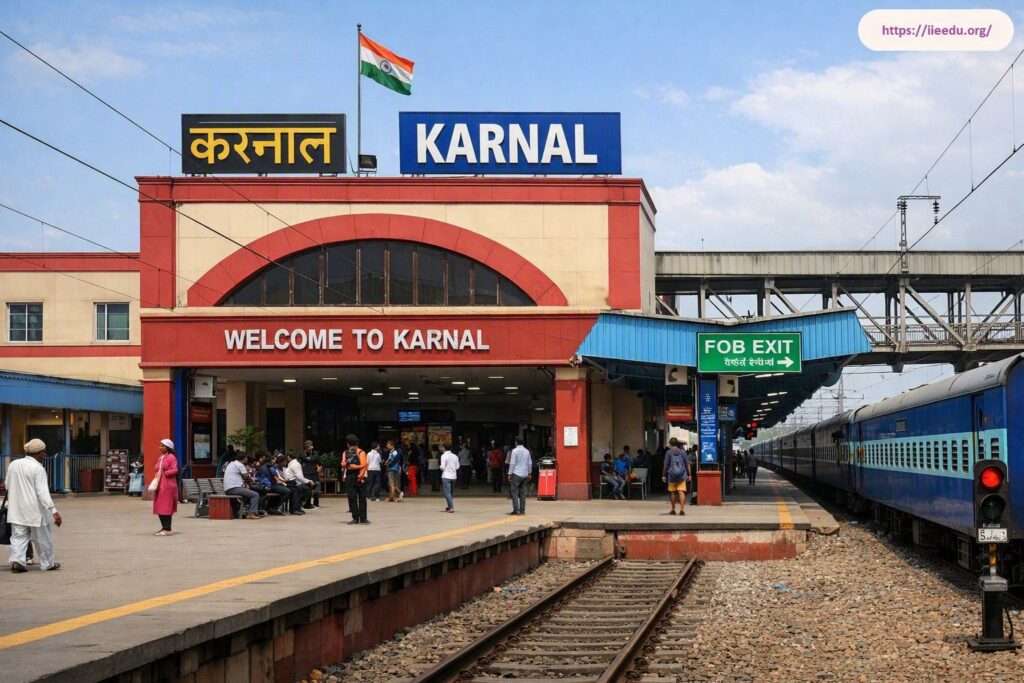
The journey of Karnal Railway Station toward greater quality and environmental responsibility was not about making one dramatic change. It was about understanding how hundreds of ordinary activities could be improved when viewed through the lens of sustainability.
A railway station is a demanding environment. It operates continuously, serves a large and changing population of passengers, requires multiple utilities and generates different types of waste. Every day brings new operational challenges. Because of this, environmental management cannot remain a separate activity performed occasionally. It has to become part of everyday station management.
The GGBC Green Railway Station Rating System, as identified in the project information for Karnal Railway Station, provided an important framework for this transformation. The supplied certification details record an issue date of 2021 and validity through 2024, with Northern Railway identified as the product. The broader Global Green Building Council Green Railway Stations programme focuses on environmental sustainability in railway stations and seeks to reduce environmental impacts while improving the commuter experience.
This approach changed the way ordinary station activities could be viewed.
Take energy consumption.
A railway station requires lighting and electrical services throughout its operational areas. From platforms and passenger spaces to offices and other facilities, electricity is essential for functioning. But the question of sustainability is not whether electricity should be used. It is whether it can be used intelligently.
Efficient lighting, appropriate controls, preventive maintenance and awareness among employees can all contribute to responsible energy management.
A light that is needed should provide adequate illumination.
A light that is not required should not consume energy unnecessarily.
An electrical system that is regularly maintained is more likely to perform efficiently than one that is neglected until failure.
These may appear to be small considerations, but repeated across a busy public facility, small efficiencies can have significant cumulative value.
Water represents another important part of the green transformation.
Railway stations require water for drinking facilities, cleaning, washrooms and other activities. Because water is an essential but finite resource, responsible water management becomes an important part of sustainable infrastructure.
The green approach encourages attention to consumption, leakage prevention, efficient fixtures and maintenance.
A dripping tap may appear insignificant to someone walking through the station.
But continuous leakage represents continuous resource loss.
A damaged pipeline can waste even more.
A poorly maintained water fixture can increase consumption over time.
Therefore, routine inspection becomes more than a maintenance activity—it becomes an environmental responsibility.
This is where the principles of quality management and green management come together.
Quality systems encourage preventive action.
Green management encourages resource conservation.
Together, they create a powerful reason to identify problems before they become larger.
Waste management creates another important challenge.
Thousands of passengers may use a railway station over the course of a day. Food packaging, paper, plastic and other materials can quickly accumulate. Without an organised system, waste can become mixed together, making recovery and responsible disposal more difficult.
A green station therefore needs more than waste bins.
It needs a waste-management process.
Waste should be handled systematically.
Collection should be organised.
Segregation should be encouraged wherever facilities permit.
Recyclable materials should be directed toward appropriate recovery channels.
Organic and other waste streams should be handled appropriately.
Most importantly, passengers and employees should understand their role.
This is where awareness becomes critical.
A waste bin is only effective if people use it correctly.
A water-saving message is useful when people understand why conservation matters.
A cleanliness campaign becomes stronger when employees and passengers participate.
Environmental sustainability is therefore partly technical and partly behavioural.
The station surroundings also contribute to the overall passenger experience.
Railway stations contain large areas of hard infrastructure—platforms, buildings, pathways and circulation areas. Green spaces and appropriate landscaping can improve visual appeal and create a more welcoming environment.
However, sustainable landscaping must also consider maintenance and water requirements.
The goal is not simply to add plants.
The goal is to create an environment that can be maintained responsibly.
This demonstrates a larger principle of green infrastructure:
Sustainability must work in real life.
A solution that looks impressive but requires excessive resources to maintain may not provide the intended long-term benefit.
The green transformation therefore required practical thinking.
What can be maintained?
What can be measured?
What can be improved?
What can employees realistically implement?
What can passengers understand?
What can become part of normal operations?
These questions helped connect environmental objectives with practical station management.
The transformation also created an opportunity to rethink the meaning of cleanliness.
Traditionally, cleanliness may be seen as the responsibility of housekeeping staff.
But in a green railway station, cleanliness is part of a larger resource-management system.
The less waste generated unnecessarily, the easier the waste-management process becomes.
The better waste is segregated, the more useful materials can potentially be recovered.
The better passengers understand responsible behaviour, the less pressure is placed on housekeeping teams.
Therefore, cleanliness becomes a shared responsibility.
Employees contribute.
Vendors contribute.
Passengers contribute.
Management contributes by creating the system.
This shared responsibility can produce a positive cycle.
Better systems encourage better behaviour.
Better behaviour reduces waste.
Reduced waste makes cleaning more effective.
Cleaner surroundings improve passenger satisfaction.
Improved passenger experience strengthens public confidence.
The same principle applies to energy and water.
Good maintenance supports efficiency.
Efficiency reduces unnecessary consumption.
Reduced consumption supports environmental goals.
Environmental improvements can contribute to better operational management.
Thus, the green transformation was not a separate project placed beside railway operations.
It became part of railway operations themselves.
This was perhaps the most important change in thinking.
A railway station can be both functional and environmentally responsible.
It can serve passengers efficiently while using resources thoughtfully.
It can maintain traditional railway values while adopting modern sustainability principles.
It can improve without losing its identity.
For Karnal Railway Station, the 2021–2024 green-rating period can therefore be understood as a significant stage in this continuing journey.
The objective was not perfection.
The objective was progress.
Every conserved unit of water represented progress.
Every avoided waste stream represented progress.
Every energy-efficiency improvement represented progress.
Every trained employee represented progress.
Every passenger who became more environmentally aware represented progress.
And every improvement that became part of routine management strengthened the station’s future.
The transformation of Karnal Railway Station was therefore not simply about becoming “green” in appearance.
It was about becoming greener in thinking, planning, operating and improving.
The station’s platforms continued to welcome trains.
Passengers continued their journeys.
But behind the familiar movement of railway life, a new philosophy was taking shape—one where quality protected performance, sustainability protected resources, and continual improvement connected both to the future.
#IndianRailways
Chapter 4 – The People Behind the Transformation
Courtesy: Starx World
A railway station may be built with concrete, steel, electrical systems, tracks, platforms and buildings, but its real strength comes from people.
Every successful station depends upon employees who perform their responsibilities with discipline, awareness and commitment. The transformation of Karnal Railway Station after its quality and green-rating journey was therefore not simply a story of infrastructure. It was a story of people learning to see their daily work from a wider perspective.
The certification journey associated with quality management and the GGBC Green Railway Station Rating System created a framework. But a framework can only succeed when people understand it and apply it.
At Karnal Railway Station, every working day begins with a sequence of activities that passengers may barely notice. Cleaning personnel prepare public areas. Maintenance teams inspect facilities. Electrical staff ensure essential systems remain functional. Railway personnel coordinate station operations. Supervisors monitor activities and respond to emerging requirements.
Each role may appear independent.
In reality, they are connected.
If a maintenance issue is not reported, it can affect passengers.
If a cleaning schedule is not followed, the station environment can deteriorate.
If an electrical problem is ignored, a larger failure may eventually occur.
If a passenger complaint is not recorded, the underlying problem may continue.
Quality management brings these activities together by creating defined responsibilities and processes.
Instead of depending entirely on individual memory or personal initiative, an organisation can establish procedures that explain what needs to be done, who should do it, how it should be monitored and what should happen when the expected result is not achieved.
This creates consistency.
Consistency is particularly important in a railway station because passenger demand does not remain constant.
One day may be relatively quiet.
Another may bring significantly greater passenger movement.
Peak travel periods can create additional pressure on facilities.
Weather conditions can influence cleanliness and maintenance.
Unexpected operational situations can require rapid response.
A mature management system helps employees deal with these changing circumstances without losing sight of basic standards.
The most important change, however, is cultural.
Employees begin to understand that quality is not merely something checked by an auditor.
It is part of their daily responsibility.
A cleaner contributes to quality.
A technician contributes to quality.
A supervisor contributes to quality.
A station employee interacting with passengers contributes to quality.
A contractor or service provider can also influence quality.
This understanding creates ownership.
When employees feel responsible for outcomes rather than merely completing assigned tasks, improvement becomes more natural.
Imagine a worker noticing a leaking tap.
A task-oriented approach might be to ignore it because plumbing is someone else’s responsibility.
A quality-oriented approach encourages the person to report the problem.
A stronger system ensures that the report reaches the responsible person.
A preventive approach ensures that the repair is tracked and verified.
An environmental approach recognises that fixing the leak also prevents unnecessary water loss.
One small observation can therefore activate the entire management system.
The same applies to waste.
An employee who notices that waste is being mixed can report the problem.
Management can examine why segregation is not working.
Perhaps the bins are poorly labelled.
Perhaps their locations are inconvenient.
Perhaps passengers are unaware of the system.
Perhaps collection procedures need improvement.
Instead of blaming the public or the housekeeping team, the organisation can examine the process.
This is the essence of continual improvement.
It asks not only “Who made the mistake?” but also “Why did the system allow the mistake to happen, and how can recurrence be prevented?”
Training becomes essential to this philosophy.
Employees need to understand the purpose behind procedures.
A person who understands why energy conservation matters is more likely to switch off unnecessary equipment.
A person who understands water conservation is more likely to report leakage.
A person who understands waste management is more likely to follow segregation requirements.
A person who understands passenger service is more likely to respond helpfully to questions.
Knowledge creates better decisions.
Training also creates confidence.
When employees understand their responsibilities, they are better prepared to respond to unusual situations.
They can identify problems earlier.
They can communicate more effectively.
They can cooperate across functions.
This improves the overall resilience of the station.
The green-rating philosophy reinforces this human dimension. The Green Railway Stations programme includes environmental awareness as an important aspect of sustainable station development.
Environmental awareness cannot be created only through signs and posters.
It must exist among the people responsible for station operations.
The employees become the first line of environmental protection.
They see leaking fixtures.
They see overflowing bins.
They see unnecessary energy use.
They see damaged facilities.
They see passenger behaviour.
Their observations provide valuable information.
This creates another important concept: employee participation in improvement.
Employees working closest to a process often understand its practical challenges better than anyone else.
A manager may design a procedure.
An employee performing the procedure every day can identify where it is difficult to implement.
Listening to these employees creates better systems.
A housekeeping worker may know which areas become dirty most quickly.
A maintenance worker may know which equipment requires frequent attention.
A passenger-service employee may know which questions passengers ask repeatedly.
These observations can help management improve processes.
Therefore, quality management is not simply top-down.
It should also move upward from the workplace.
Ideas can come from anywhere.
A small suggestion can sometimes produce a major improvement.
The people of Karnal Railway Station thus became an important part of the station’s growth story.
The certification framework provided direction.
The green-rating principles provided environmental purpose.
But employees transformed those ideas into daily action.
Their work may not always be visible.
A passenger may never know who repaired a facility, cleaned a waiting area, checked equipment or reported a problem.
Yet those actions shape the passenger experience.
This is the quiet side of railway excellence.
It happens before the passenger notices.
It happens when nobody is applauding.
It happens through routine work performed correctly, consistently and responsibly.
The greatest lesson from Karnal’s transformation is therefore simple:
A quality system can provide the framework, but people create the culture.
When employees understand that every action contributes to safety, service quality, environmental performance and passenger satisfaction, ordinary work acquires a larger purpose.
The railway station becomes more than infrastructure.
It becomes a community of people working toward a common standard.
And that human commitment forms one of the strongest foundations for Karnal Railway Station’s continuing journey toward quality, sustainability and responsible growth.
#NorthernRailway
Chapter 5 – Passenger Experience Becomes the Measure
A railway station can have procedures, certificates, maintenance schedules and environmental programmes, but there is one final question that brings all these efforts together:
What does the passenger experience?
For Karnal Railway Station, this question became increasingly important as quality management and the GGBC Green Railway Station Rating System encouraged a broader understanding of station performance. The purpose of improvement was never limited to achieving recognition. The deeper purpose was to create a station that worked better for the people who used it every day.
A passenger does not normally think in terms of clauses, procedures or management systems.
A passenger thinks in practical terms.
Is the station clean?
Can I find my platform?
Is the information easy to understand?
Are basic facilities available?
Are the washrooms maintained?
Is drinking water available?
Are the surroundings comfortable?
Can I get assistance when I need it?
Does the station feel organised?
These simple questions define service quality from the passenger’s point of view.
The Green Railway Stations programme itself connects environmental sustainability with commuter experience, recognising that a greener station should also provide a better environment for people using the facility.
This connection is important because environmental improvements are not separate from passenger service.
Consider cleanliness.
A well-managed waste system contributes directly to a cleaner station. If waste is collected efficiently and handled appropriately, platforms and passenger areas can remain more pleasant.
Consider water.
Efficient water management is environmentally responsible, but it also supports the availability and reliability of facilities used by passengers.
Consider energy.
Efficient lighting reduces unnecessary consumption while still supporting safe movement and clear visibility.
Consider landscaping.
Well-maintained green areas can improve the visual character of a public facility and create a more welcoming atmosphere.
In this way, sustainability and passenger experience reinforce one another.
Karnal Railway Station serves people with very different needs.
A daily commuter may know the station extremely well and want quick, predictable service.
A student travelling for an examination may be anxious and need clear information.
A family travelling with children may value cleanliness, seating and easy movement.
An elderly passenger may require accessible facilities and assistance.
A first-time visitor may need guidance.
A business traveller may place a high value on punctual information and efficient movement.
A quality-oriented station therefore needs to think beyond the average passenger.
It must recognise diversity.
This is where feedback becomes important.
Passengers are constantly providing information, whether through formal complaints, suggestions, interactions with employees or simple patterns of behaviour.
A complaint should not automatically be considered a negative event.
It can be a source of knowledge.
If passengers repeatedly complain about the same facility, management has received evidence that something requires attention.
If a particular area becomes congested, there may be an opportunity to improve movement or communication.
If passengers repeatedly ask the same question, information may need to be displayed more clearly.
If a facility frequently requires repair, preventive maintenance may need to be reviewed.
In each case, the passenger becomes part of the improvement process.
This creates a valuable cycle:
Passenger experience → feedback → analysis → corrective action → verification → improvement.
The cycle can continue indefinitely.
That is one of the defining characteristics of a mature quality culture.
Instead of treating every complaint as an isolated event, management can look for patterns.
Suppose one passenger reports a problem.
That is an incident.
Suppose fifty passengers report the same problem.
That is evidence of a systemic issue.
The quality approach encourages organisations to identify the difference.
This mindset can also improve employee behaviour.
When employees understand that passenger feedback is valuable information, they become more attentive.
They begin noticing recurring concerns.
They may identify problems before complaints increase.
They can explain procedures more effectively.
They can guide passengers more confidently.
The passenger therefore becomes more than a recipient of services.
The passenger becomes an important source of information for improving those services.
There is another dimension to passenger experience: trust.
A passenger wants confidence that the station is being managed responsibly.
Clean surroundings communicate care.
Well-maintained facilities communicate reliability.
Clear information communicates organisation.
Visible environmental initiatives communicate responsibility.
Consistent service communicates professionalism.
Over time, these experiences create institutional trust.
The importance of trust becomes even greater in public infrastructure.
People may not have the choice to use another railway station for every journey. They depend on the facility provided to them.
Therefore, quality is also a matter of public responsibility.
The station’s environmental journey added another important element to this relationship.
A railway station is a highly visible public space.
Every day, passengers observe how waste is handled, how clean the surroundings are and how responsibly resources appear to be managed.
This creates an opportunity for public awareness.
A clearly marked waste bin can teach responsible disposal.
A water-conservation message can encourage careful use.
A cleanliness campaign can influence behaviour.
A green area can demonstrate the value of maintaining public spaces.
The station can therefore educate without becoming a classroom.
Its environment itself becomes the message.
This is particularly powerful for children and young passengers.
A child who sees people using waste bins correctly may learn a habit.
A student who sees environmental messages may become more conscious of resource conservation.
A family may discuss cleanliness after observing good station practices.
Small public examples can influence larger social behaviour.
This is one of the broader benefits of green railway infrastructure.
Its influence can extend beyond the railway boundary.
The passenger experience also provides a measure of whether quality improvements are working.
Management may believe that a new process has solved a problem.
But the passenger experience provides the real test.
Has the problem actually disappeared?
Has the facility become easier to use?
Has cleanliness improved?
Has confusion decreased?
Has satisfaction increased?
These questions encourage evidence-based improvement.
A successful quality system does not assume success.
It verifies success.
This philosophy transforms the station from a static facility into a learning environment.
Every day brings new passengers.
Every day creates new observations.
Every day offers opportunities to improve.
The 2021–2024 green-rating period therefore represents more than an environmental milestone for Karnal Railway Station. It represents a period in which environmental responsibility, quality management and passenger experience could be considered together.
The station’s growth was not simply about becoming greener.
It was about becoming more responsive.
Not simply cleaner.
But better managed.
Not simply more efficient.
But more passenger-focused.
Not simply certified.
But capable of continual improvement.
Ultimately, the success of Karnal Railway Station can be seen in the ordinary moments that passengers experience every day: arriving without unnecessary confusion, moving through a clean environment, accessing facilities, receiving information and continuing their journey with confidence.
These moments may seem small.
But together, they define the reputation of a railway station.
And behind every positive passenger experience lies an invisible chain of people, processes and decisions.
That chain is quality.
That chain is sustainability.
And that chain is the foundation upon which Karnal Railway Station can continue to grow.
#GreenRailwayStation
Chapter 6 – From Certification to Continual Improvement
Receiving a certification or green rating can be an important milestone for any organisation. But the true value of certification begins after the recognition has been achieved. A certificate can confirm that defined requirements were addressed at a particular point in time; continual improvement determines whether the organisation continues to create value afterward.
For Karnal Railway Station, the certification and green-rating journey represented an opportunity to develop a stronger culture of systematic improvement. The project information supplied for this story records the GGBC Green Railway Station Rating System, with an issue date of 2021 and validity through 2024, under Northern Railway. The broader Green Railway Stations framework is intended to encourage sustainable station operation and maintenance while improving the commuter experience.
The most important lesson was simple:
Certification should be treated as a milestone, not a destination.
A railway station is never completely finished.
Passenger expectations change.
Technology changes.
Infrastructure ages.
Environmental priorities evolve.
Maintenance requirements increase.
New operational challenges appear.
Because of this, yesterday’s good performance must become today’s starting point rather than tomorrow’s final objective.
This is where the principle of continual improvement becomes powerful.
A quality-oriented organisation does not simply ask whether a requirement has been met. It asks whether the process can become more reliable, efficient and effective.
For Karnal Railway Station, this thinking could be applied across everyday operations.
Housekeeping could be reviewed regularly.
Maintenance activities could be planned rather than relying only on breakdown repairs.
Water consumption could be monitored.
Energy use could be examined.
Waste-management practices could be evaluated.
Passenger feedback could be analysed.
Employee training needs could be identified.
The objective would not be to create unnecessary paperwork. The objective would be to create useful information that supports better decisions.
One of the most recognised approaches to continual improvement is the Plan–Do–Check–Act cycle.
First comes Plan.
The station identifies an objective or problem.
For example, if a particular facility requires frequent repair, management can establish an improvement objective. Responsibilities can be assigned, resources can be considered and a method of monitoring can be established.
Next comes Do.
The planned improvement is implemented.
Employees are informed.
Maintenance activities are performed.
New practices are introduced.
The process begins operating under the improved method.
Then comes Check.
Performance is reviewed.
Did the problem decrease?
Was the new procedure followed?
Did passengers experience an improvement?
Were resources used more efficiently?
Was the corrective action effective?
Finally comes Act.
If the improvement worked, it can become part of normal practice.
If it did not work, the process can be revised.
The cycle then begins again.
This approach creates a culture where problems become opportunities for learning.
Imagine a recurring water leak at the station.
A reactive system waits for someone to complain.
A maintenance worker repairs the leak.
The issue disappears temporarily.
Later, the same problem returns.
A continual-improvement system asks a different question:
Why does this keep happening?
Perhaps the fixture is repeatedly damaged.
Perhaps the underlying pipeline requires attention.
Perhaps inspection frequency is insufficient.
Perhaps an unsuitable replacement component was installed.
Once the root cause is understood, a more permanent solution can be developed.
This is the difference between correction and corrective action.
Correction fixes the immediate problem.
Corrective action addresses the reason behind the problem.
This philosophy can be applied to many station activities.
Waste-management problems can be analysed rather than repeatedly cleaned up.
Recurring electrical faults can be investigated rather than simply repaired.
Passenger complaints can be examined for patterns.
Maintenance delays can be studied to identify process bottlenecks.
The result is a station that learns from its own experience.
Another important element is measurement.
Without measurement, improvement can become subjective.
Management may feel that performance has improved, but evidence provides greater confidence.
Energy consumption can be compared over time.
Water use can be monitored.
Complaint patterns can be reviewed.
Maintenance records can be examined.
Inspection findings can be tracked.
Training completion can be recorded.
Waste-management performance can be evaluated.
The purpose of measurement is not to create pressure for employees.
It is to understand reality.
Data can reveal things that assumptions cannot.
Perhaps a problem occurs only during particular periods.
Perhaps one facility generates disproportionately high maintenance requirements.
Perhaps a specific type of complaint appears repeatedly.
Perhaps an improvement produces a greater benefit than expected.
Once such patterns are visible, management can make better decisions.
This becomes particularly valuable for environmental management.
The Green Railway Stations approach recognises areas including energy, water, waste management and facility management as important elements of sustainable railway-station development.
Each of these areas can become part of a continual-improvement programme.
Energy efficiency can be reviewed.
Water-saving opportunities can be identified.
Waste segregation can be strengthened.
Maintenance can protect the efficiency of equipment.
Environmental awareness can be increased among employees and passengers.
The station can therefore move from one-time improvement projects toward an ongoing sustainability programme.
Documentation also plays an important role.
When an improvement is recorded, future employees can understand what was done and why.
When inspections are documented, management can identify patterns.
When corrective actions are tracked, unresolved issues are less likely to disappear from attention.
When training records are maintained, competency requirements become easier to manage.
Documentation therefore becomes organisational memory.
This is especially important in a large institution.
People change roles.
New employees join.
Contractors change.
Responsibilities are transferred.
Without documentation, valuable knowledge can disappear.
With a functioning management system, knowledge can remain within the organisation.
The 2021–2024 certification period can therefore be viewed as a learning period.
The important question is not simply what happened during those years.
The more important question is what lessons can continue beyond them.
Which practices proved effective?
Which processes require further strengthening?
Which environmental initiatives should be expanded?
Which passenger concerns require additional attention?
What new technology could improve performance?
These questions keep the system alive.
Continual improvement also creates resilience.
A resilient station is not one where problems never occur.
It is one that can respond to problems quickly, learn from them and become stronger afterward.
That is a much more realistic definition of excellence.
Karnal Railway Station’s journey therefore demonstrates that quality certification and green rating should not be viewed as isolated achievements.
They can become foundations for long-term organisational learning.
The certificate marks a point in time.
The improvement culture continues through time.
Every inspection can reveal an opportunity.
Every complaint can provide information.
Every employee can suggest an improvement.
Every passenger can provide feedback.
Every environmental initiative can create a new benchmark.
And every successful improvement can become the foundation for the next one.
This is how a railway station grows—not merely by becoming larger, but by becoming more capable, more efficient, more responsible and more responsive.
For Karnal Railway Station, the real achievement of certification was therefore not the moment of recognition.
It was the creation of a mindset:
Do better today than yesterday, and use today’s learning to build a better tomorrow.
That mindset is what turns certification into sustainable institutional growth.
#SustainableInfrastructure
Chapter 7 – Karnal and the Wider Railway Ecosystem
Karnal Railway Station has an identity of its own, but it does not operate alone. It is one part of a much larger railway network connecting communities, cities, businesses, institutions and families across the region and the country. Its development therefore has significance beyond its platforms and buildings.
The supplied project information identifies Karnal Railway Station as a client under the Northern Railway product, with the GGBC Green Railway Station Rating System as the scope of work and a certification period beginning in 2021 and remaining valid through 2024. Within this context, the station’s quality and environmental journey can be understood as part of a larger movement toward better-managed and more sustainable railway infrastructure.
Indian Railways is one of the world’s largest railway systems, and individual stations form the points through which passengers experience that enormous network. A passenger may think about the railway as one system, but their experience is created locally—one station, one platform, one interaction at a time.
For someone arriving in Karnal, the station represents Northern Railway.
For someone leaving the city, it may be their final impression of Karnal.
For a visitor arriving for the first time, it may be the beginning of their relationship with the city.
This gives the station an important role in the local economy and community.
Karnal is a significant urban centre in Haryana with strong connections to agriculture, education, commerce and regional business activity. Railway connectivity helps people move between Karnal and other centres, supporting employment, education, trade and personal mobility.
A student may use the railway to reach an educational institution.
A professional may travel for employment or business.
A family may travel to visit relatives.
A trader may depend on reliable connectivity.
A visitor may use the railway as their first route into the city.
Every journey contributes, in its own way, to economic and social activity.
This is why railway infrastructure should not be considered merely transportation infrastructure.
It is also development infrastructure.
When a railway station becomes cleaner, better organised and more efficient, the benefits can extend beyond the immediate passenger experience.
A well-maintained station creates confidence.
An organised environment creates a positive impression.
Reliable facilities support mobility.
Environmental practices demonstrate institutional responsibility.
Quality management strengthens consistency.
Together, these characteristics contribute to the wider reputation of the railway system.
The green-station concept adds another important dimension.
The Global Green Building Council’s Green Railway Stations rating system was developed to encourage environmental sustainability in railway stations and to reduce adverse environmental impacts associated with station operation and maintenance while improving the commuter experience.
This means that sustainability at one railway station can contribute to a much larger environmental objective.
Consider waste.
If passengers and station personnel adopt responsible waste practices, the station becomes cleaner. If similar practices are adopted across many stations, the cumulative effect becomes much greater.
Consider water.
Every station that reduces unnecessary water loss contributes to resource conservation.
Consider energy.
Every improvement in energy efficiency can reduce unnecessary consumption.
Consider environmental awareness.
Every passenger who learns responsible habits at a railway station can potentially carry those habits into their home, school, workplace or community.
This is the multiplier effect of public infrastructure.
A railway station reaches people at a scale that many organisations cannot.
Thousands of passengers may pass through its spaces.
The station therefore becomes an opportunity to communicate environmental values through everyday experience.
A clearly marked waste bin teaches without requiring a classroom.
A clean public space demonstrates the value of cleanliness.
Environmental messages create awareness.
Efficient facilities demonstrate responsible resource use.
Green areas create a visible connection with environmental responsibility.
The station becomes a practical example.
This is particularly valuable for younger generations.
Children travelling with their families observe what happens around them.
Students see public infrastructure in operation.
Young commuters develop expectations about what a modern railway station should look like.
If sustainability becomes a normal part of the railway environment, it becomes easier for society to accept sustainability as a normal part of everyday life.
The economic role of the station is equally important.
Businesses depend upon connectivity.
Employees depend upon transportation.
Educational institutions depend upon access.
Tourism depends upon mobility.
Families depend upon affordable transportation.
A railway station connects all these interests.
When station management improves, the reliability of this connection can also improve.
Quality management contributes by introducing discipline into processes.
Defined responsibilities reduce ambiguity.
Inspections identify problems.
Maintenance systems protect infrastructure.
Corrective actions address weaknesses.
Employee training improves capability.
Passenger feedback creates a mechanism for learning.
Environmental management complements these processes by encouraging responsible use of resources.
Together, quality and sustainability create a stronger foundation for long-term infrastructure management.
This integrated approach also creates a relationship between local and national development.
Karnal may be a city with its own identity, but its railway station is part of a national network.
The standards expected at one station can influence expectations at another.
An improvement introduced at one location can become an example elsewhere.
Lessons learned at Karnal can therefore have relevance beyond Karnal.
This is one of the most important reasons why certification and structured rating systems matter.
They create common frameworks.
A common framework makes it easier to identify performance areas.
It provides a language for improvement.
It helps organisations compare objectives against defined criteria.
It encourages documentation and monitoring.
Most importantly, it encourages a culture in which improvement can be repeated.
The station’s green-rating journey can therefore be viewed as one part of a much larger transformation in the way railway infrastructure is managed.
The traditional railway station was primarily understood as a transportation facility.
The modern railway station increasingly needs to be understood as a service environment, public space, environmental asset and community gateway.
Karnal Railway Station sits at the intersection of all these roles.
Its platforms connect people.
Its facilities serve passengers.
Its employees operate the system.
Its infrastructure consumes resources.
Its surroundings influence public perception.
Its environmental practices create awareness.
Its quality systems support consistency.
All these elements form one ecosystem.
The success of that ecosystem depends upon coordination.
A clean platform cannot compensate for poor information.
Good information cannot compensate for unreliable facilities.
Efficient facilities cannot compensate for poor passenger service.
Environmental initiatives cannot succeed without employee participation.
Quality procedures cannot succeed without management commitment.
Everything is connected.
This understanding leads to a broader definition of growth.
Growth is not simply an increase in passenger numbers or infrastructure.
It is an improvement in the ability of the station to serve its community responsibly.
It means becoming more reliable without becoming wasteful.
It means becoming more efficient without compromising passenger needs.
It means adopting modern practices while respecting operational realities.
It means protecting resources while supporting economic activity.
It means creating infrastructure that remains useful for future generations.
Karnal Railway Station’s story is therefore connected to the larger story of Northern Railway and Indian Railways.
Every train arriving at Karnal carries people from another part of the network.
Every departing train carries people toward another destination.
The station is a link in a continuous chain.
The quality of that link matters.
Its environmental responsibility matters.
Its passenger experience matters.
Its management maturity matters.
And its ability to improve matters.
The 2021–2024 green-rating journey provided one important chapter in this continuing evolution.
The larger lesson is that a railway station can be locally rooted while contributing to national goals of quality, connectivity, sustainability and responsible development.
Karnal’s railway story is therefore not confined to Railway Road.
It travels outward with every passenger.
It connects with every city reached by train.
It contributes to every business journey, educational journey and family journey that begins or ends there.
And through its commitment to quality and environmental responsibility, it has the opportunity to demonstrate that the future of railway infrastructure is not simply about moving people faster.
It is about moving people better, more responsibly and more sustainably.
#RailwayModernization
Chapter 8 – The Economic Meaning of Green Growth
Courtesy: Railway Reels
For many years, environmental responsibility was sometimes viewed as an additional cost for organisations. The traditional question was often simple: How much will it cost to become greener?
Modern quality and sustainability thinking asks a different question:
What does it cost if we continue wasting resources, ignoring inefficiencies and delaying preventive action?
For Karnal Railway Station, this shift in thinking was an important part of understanding green growth. The GGBC Green Railway Station Rating System project, with the supplied certification period of 2021–2024, was not simply about environmental recognition. It represented an opportunity to connect sustainability with operational efficiency, asset management, passenger experience and long-term institutional value.
The Green Railway Stations framework developed by the Global Green Building Council with support from the Environment Directorate of Indian Railways is designed to encourage environmental sustainability in railway stations, including areas such as energy, water, waste management and facility management.
Each of these areas has an economic dimension.
Take energy.
Electricity is essential for railway-station operations. Lighting and other electrical services support passenger movement, information, security and general station functioning. But unnecessary consumption represents avoidable expenditure.
If energy efficiency improves, two things can happen simultaneously.
The environmental burden can decrease.
Operational efficiency can increase.
This is the essence of green growth.
The objective is not simply to consume less.
It is to obtain the required service with fewer unnecessary resources.
The same principle applies to water.
Water is required for station facilities, cleaning, washrooms, drinking-water services and other activities. A poorly maintained water system can result in avoidable losses.
A leaking fixture may seem like a minor problem.
But if it continues for days, weeks or months, the cumulative loss becomes significant.
Preventive maintenance therefore becomes an economic activity as well as an environmental activity.
A small repair today may prevent a larger expense tomorrow.
This principle applies throughout the station.
A damaged facility that is repaired promptly can prevent further deterioration.
Equipment that is inspected regularly can have a better chance of remaining functional.
Recurring failures can be investigated and their causes addressed.
Maintenance records can help identify equipment requiring greater attention.
This is why quality management and green management complement each other so effectively.
Quality management encourages organisations to control processes and prevent recurring problems.
Environmental management encourages organisations to use resources responsibly.
The combination creates a culture of efficient operation.
Efficiency, however, is not limited to money.
Time is also a resource.
Employee time is valuable.
Passenger time is valuable.
Maintenance time is valuable.
If a process is unnecessarily complicated, employees may spend more time completing it.
If information is unclear, passengers may spend more time searching for assistance.
If a facility repeatedly fails, maintenance teams may spend time fixing the same problem again and again.
Process improvement can therefore create economic value by reducing wasted effort.
This is one reason documentation and process control matter.
Suppose a recurring maintenance issue is recorded properly.
Over time, the records reveal a pattern.
Management can identify the underlying problem.
A permanent corrective action can then be considered.
The result is not merely one fewer complaint.
It can mean fewer maintenance interventions, lower resource consumption and more productive use of employee time.
This is the economic power of information.
Data allows management to move from assumptions to decisions.
Energy records can reveal consumption trends.
Water records can identify unusual usage.
Complaint records can reveal recurring passenger concerns.
Inspection reports can identify areas requiring greater attention.
Maintenance histories can reveal unreliable equipment.
When these sources are reviewed together, management gains a clearer picture of station performance.
The station can then establish priorities.
Not every problem requires the same level of investment.
Some improvements may be inexpensive and immediate.
Others may require planning and capital expenditure.
A structured system helps management distinguish between them.
This creates another important benefit: better allocation of resources.
Green growth does not mean spending money indiscriminately on environmental projects.
It means investing intelligently.
An improvement should ideally provide practical value.
It may reduce resource consumption.
It may improve passenger comfort.
It may reduce maintenance requirements.
It may improve safety.
It may increase operational reliability.
Or it may provide several benefits simultaneously.
The best improvements often do exactly that.
For example, a well-maintained facility can be more reliable, more attractive to passengers and more resource-efficient at the same time.
Similarly, better waste management can improve cleanliness while supporting responsible material recovery.
Environmental responsibility can therefore become part of good asset management.
This is especially important for railway infrastructure because stations are long-life assets.
A railway station is expected to serve people for many years.
The decisions made today can influence maintenance requirements and operating costs far into the future.
Therefore, lifecycle thinking becomes important.
A short-term decision may appear inexpensive but create recurring costs.
A slightly better long-term solution may require more planning initially but reduce future maintenance.
Quality and sustainability encourage decision-makers to consider this broader picture.
The economic benefits also extend to reputation.
Passengers notice the condition of public infrastructure.
A clean and well-maintained station creates confidence.
An organised station creates a positive impression.
Visible environmental responsibility can strengthen public perception.
This reputation matters because railway stations are highly visible public assets.
They are often among the first places people see when entering a city.
For Karnal, this has particular significance.
The station is not merely a transportation point.
It is part of the city’s public image.
A passenger arriving from another city may form an impression of Karnal based partly on their experience at the station.
A well-managed station communicates that the city values public infrastructure.
A green station communicates that environmental responsibility is taken seriously.
A clean station communicates civic discipline.
Reliable facilities communicate organisational capability.
Thus, green growth can create intangible economic value through reputation and confidence.
There is also a broader regional benefit.
Reliable railway infrastructure supports economic mobility.
Businesses depend upon connectivity.
Workers depend upon transportation.
Students depend upon access to educational opportunities.
Families depend upon affordable travel.
Visitors depend upon reliable connections.
Every improvement that makes railway infrastructure more efficient can contribute indirectly to these activities.
The railway station therefore supports economic growth not by producing goods itself but by enabling movement.
This is the deeper meaning of infrastructure.
Infrastructure creates the conditions in which economic activity can occur.
The green transformation adds another requirement:
Economic activity should be supported responsibly.
Growth should not automatically mean greater waste.
Improvement should not automatically mean greater resource consumption.
Modernisation should consider long-term environmental consequences.
The challenge is to find ways in which service quality, operational efficiency and environmental responsibility reinforce one another.
Karnal Railway Station’s quality and green-rating journey provides a useful example of this principle.
The certification period from 2021 to 2024 can be understood as a stage in building awareness around these connections.
The most important lesson is that sustainability does not necessarily stand against efficiency.
In many situations, sustainability is efficiency.
Saving water is efficiency.
Reducing unnecessary energy use is efficiency.
Preventing waste is efficiency.
Preventive maintenance is efficiency.
Reducing repeated errors is efficiency.
Improving processes is efficiency.
Using employee time wisely is efficiency.
Listening to passengers is efficiency because it helps identify where resources should be directed.
This creates a new definition of green growth.
Green growth is not simply about planting trees or installing environmental equipment.
It is about creating a system in which resources are respected and performance is continuously improved.
For Karnal Railway Station, this philosophy can support long-term institutional strength.
A station that manages its resources carefully is better prepared for future challenges.
A station that maintains its assets proactively is more resilient.
A station that understands passenger needs is more responsive.
A station that trains its people is more capable.
A station that monitors performance is better positioned to make decisions.
And a station that combines all these elements becomes more sustainable.
The economic meaning of the green transformation is therefore ultimately about value.
Value for passengers.
Value for employees.
Value for the railway system.
Value for the local community.
Value through resource conservation.
Value through better maintenance.
Value through stronger public confidence.
And value for future generations.
The journey of Karnal Railway Station demonstrates that green growth does not have to mean choosing between the environment and development.
The more powerful vision is to create development that respects the environment while improving efficiency.
That is where quality meets sustainability.
And that is where certification becomes more than recognition—it becomes a foundation for responsible, efficient and lasting growth.
#EcoFriendlyRailways
Chapter 9 – The Legacy of 2021–2024
Every certification has a date. Every rating has a period. But the real value of a certification is determined by what remains after the formal period has ended.
For Karnal Railway Station, the supplied project details identify the GGBC Green Railway Station Rating System with an Issue Date of 2021 and Valid Date of 2024, under Northern Railway. Those dates represent more than administrative information. They mark an important period in the station’s continuing journey toward environmental responsibility, systematic management and better passenger service.
A certificate is a milestone.
A culture of improvement is a legacy.
That distinction is important.
When an organisation receives recognition, there is a natural temptation to consider the achievement complete. But railway stations cannot stop improving. They are living environments that face changing passenger expectations, changing technologies, ageing infrastructure and evolving environmental challenges.
The end of a certification period should therefore create reflection rather than closure.
What was learned?
Which practices were successful?
Where were weaknesses identified?
What should continue?
What needs to change?
What new opportunities have emerged?
These questions transform certification from a historical event into an ongoing management resource.
The Green Railway Stations programme itself is based on the idea of encouraging environmental sustainability in station operation and maintenance while improving the commuter experience.
This makes the legacy of a green-rating programme particularly important.
Environmental responsibility should not disappear when the rating period ends.
If employees have developed stronger awareness of energy conservation, that awareness should remain.
If water-management practices have improved, they should continue.
If waste-management procedures have become more organised, they should become part of routine operations.
If passengers have become more aware of responsible behaviour, the station can continue encouraging that behaviour.
In other words, the certificate may have an end date.
The values behind it should not.
The same principle applies to quality management.
A quality system is valuable because it creates organisational discipline.
Procedures establish consistency.
Inspections identify gaps.
Records preserve information.
Corrective actions address problems.
Management reviews provide direction.
Training builds competence.
Continual improvement connects all these activities.
Once these practices become part of an organisation’s culture, they can continue to provide value even when the original certification cycle changes.
For Karnal Railway Station, this creates an important question about institutional memory.
Railway operations involve many people.
Employees may transfer.
Responsibilities may change.
New personnel may join.
Contractors and service providers may change.
Technology may be replaced.
Without documented knowledge, important lessons can disappear.
A mature management system helps preserve that knowledge.
If a recurring problem was identified, the organisation can record how it was addressed.
If a particular maintenance approach worked well, it can be documented.
If passenger feedback revealed a weakness, that information can be retained.
If an environmental initiative produced useful results, the experience can guide future decisions.
Documentation therefore becomes a bridge between the past and the future.
The 2021–2024 period can be seen as such a bridge.
It provided an opportunity to establish practices that could support future development.
One of the most important lessons is that environmental performance should be treated as an operational responsibility.
It should not belong only to a specialised environmental team.
Energy conservation involves employees who operate equipment.
Water conservation involves maintenance personnel.
Waste management involves housekeeping staff, contractors, vendors and passengers.
Clean surroundings involve everyone who uses the station.
This shared responsibility creates stronger sustainability.
Another important lesson concerns measurement.
An organisation cannot improve effectively if it does not know where it stands.
Energy use can be monitored.
Water consumption can be reviewed.
Maintenance activities can be tracked.
Complaints can be analysed.
Inspection findings can be compared.
Training can be evaluated.
Measurements create visibility.
Visibility creates understanding.
Understanding creates better decisions.
Better decisions create improvement.
This is the cycle that turns sustainability into management.
Technology provides another opportunity for the future.
The railway station of tomorrow may increasingly depend upon digital systems.
Digital inspection records can make monitoring more efficient.
Automated alerts can help identify maintenance requirements.
Data dashboards can help managers understand resource consumption.
Digital passenger-feedback systems can provide faster information.
Smart controls can improve energy management.
Technology does not replace people.
Instead, it gives people better information with which to make decisions.
The legacy of the green-rating journey can therefore provide a foundation for digital transformation.
The principles remain the same:
Monitor.
Analyse.
Act.
Verify.
Improve.
Only the tools become more sophisticated.
Another important part of the legacy is public awareness.
Railway stations are among the most visible public facilities in a city.
A green station can influence behaviour simply by demonstrating responsible practices.
Passengers see waste bins.
They observe cleanliness.
They encounter environmental messages.
They experience the consequences of efficient or inefficient facility management.
This makes the railway station an informal environmental educator.
The effect can extend beyond the station.
A passenger who develops better waste-disposal habits at a railway station may apply them at home.
A child who sees environmental responsibility treated seriously may carry the lesson into school.
A commuter who experiences efficient public infrastructure may develop greater expectations for sustainability elsewhere.
Thus, the legacy can become social as well as operational.
Karnal itself is also part of this story.
The station serves a city that continues to evolve.
As Karnal develops, passenger expectations will naturally change.
People will increasingly expect clean, accessible, efficient and environmentally responsible public infrastructure.
The railway station must therefore evolve alongside the city.
The legacy of 2021–2024 provides a foundation for that evolution.
It demonstrates that environmental responsibility can be incorporated into station management.
It demonstrates that quality and sustainability can work together.
It demonstrates that public infrastructure can be managed through measurable objectives and continual improvement.
Most importantly, it demonstrates that improvement is a journey.
The next generation of railway management can build upon these lessons.
The objective should be to make each certification cycle stronger than the previous one.
New targets can be established.
New technologies can be evaluated.
Passenger feedback can guide priorities.
Employees can suggest improvements.
Environmental performance can be measured more accurately.
Maintenance can become increasingly preventive.
The station can become more resilient.
This is what makes a certification legacy meaningful.
It does not preserve the past exactly as it was.
Instead, it provides a foundation from which the future can grow.
The story of Karnal Railway Station between 2021 and 2024 should therefore not be remembered simply as a period during which a green rating was held.
It should be remembered as a period of learning.
A period of awareness.
A period of process improvement.
A period of environmental responsibility.
A period in which the station had an opportunity to strengthen its connection between infrastructure, people and sustainability.
The greatest achievement would be if these lessons continued beyond 2024.
Because the true measure of certification is not how long the certificate remains on display.
It is how long the culture created by the certification continues to influence decisions.
A certificate can hang on a wall.
A culture lives in people’s actions.
And every time an employee prevents waste, every time a maintenance issue is identified early, every time a passenger is served better, and every time resources are used responsibly, the legacy continues.
That is the real legacy of Karnal Railway Station’s 2021–2024 journey.
The certificate had a validity period. The commitment to improvement does not.
#PassengerExperience
Chapter 10 – The Journey Ahead: Karnal as a Model of Responsible Railway Growth
The story of Karnal Railway Station does not end with the conclusion of its 2021–2024 green-rating period. In many ways, that period represents only one chapter in a much longer journey.
A railway station is a living public asset. Trains continue to arrive and depart. Passengers continue to travel. Employees continue to maintain facilities. The city continues to develop. Technology continues to change. Environmental expectations continue to rise.
For this reason, the real question after certification is not, “What was achieved?”
It is:
“What can be achieved next?”
The supplied project details identify Karnal Railway Station, Railway Road (Liberty Road), Chaman Garden, Karnal, Haryana – 132001, under Northern Railway, with the GGBC Green Railway Station Rating System as the scope of work and an issue date of 2021, valid through 2024.
This milestone provides a foundation for the next stage of responsible railway development.
The future of Karnal Railway Station can be built around one central principle:
Continuous improvement with environmental responsibility.
The first priority should be maintaining a strong quality culture.
Certification should never be treated as a one-time achievement. The systems developed during the certification period should continue to evolve. Procedures should be reviewed, responsibilities should remain clear, inspections should continue and corrective actions should be followed through.
A mature quality culture asks questions continuously.
What is working?
What is not working?
Where are passengers facing difficulties?
Which facilities require greater attention?
Which processes can be simplified?
Where can resources be conserved?
How can employees be supported?
These questions keep improvement alive.
The second priority is resource efficiency.
Energy and water are essential to station operations, but they must also be managed responsibly. Efficient equipment, appropriate operating practices, preventive maintenance and monitoring can help reduce unnecessary consumption.
The goal should not simply be to use less.
The goal should be to use resources intelligently.
If a service requires energy, that energy should be used efficiently.
If water is required, unnecessary loss should be prevented.
If materials are purchased, durability and lifecycle value should be considered wherever practical.
This approach turns environmental responsibility into a permanent part of station management.
The third priority is waste management.
A busy railway station inevitably generates waste. The challenge is to manage that waste responsibly.
Segregation should be encouraged.
Collection should be organised.
Recyclable materials should be directed toward appropriate recovery channels where systems permit.
Employees and passengers should remain aware of their responsibilities.
The station can continue using visible communication to encourage responsible waste behaviour.
A green station is not created only through infrastructure.
It is created through habits.
The fourth priority is passenger experience.
The ultimate purpose of railway infrastructure is to serve people.
Passengers should remain at the centre of improvement.
Their feedback can reveal problems that routine inspections may not detect.
A passenger may notice confusing information.
Another may identify a facility that requires attention.
Someone else may suggest a practical improvement.
These observations should be treated as valuable information.
The relationship between passengers and station management can therefore become a continuous feedback loop.
Listen → Understand → Improve → Verify.
When passengers see that their concerns are taken seriously, confidence increases.
The fifth priority is employee development.
Technology and infrastructure cannot deliver sustainable performance without capable people.
Employees should continue receiving appropriate training and awareness regarding quality, environmental management, safety, customer service, emergency response and efficient resource use.
Training should not be considered an occasional activity.
It should evolve with changing requirements.
New employees need orientation.
Existing employees need refresher learning.
Supervisors need management skills.
Technical personnel need updated knowledge.
Employees should also be encouraged to contribute ideas.
The people closest to daily operations often see opportunities for improvement before anyone else.
An employee may notice an inefficient process.
A maintenance worker may identify a recurring fault.
A housekeeping employee may understand why a particular area repeatedly becomes difficult to maintain.
Listening to such observations can improve the system.
The sixth priority is digital transformation.
The future railway station will increasingly depend upon information.
Digital inspection systems can improve monitoring.
Electronic records can make information easier to access.
Data dashboards can help management understand performance.
Automated alerts can support preventive maintenance.
Digital passenger-feedback systems can help identify concerns faster.
Technology can also support environmental monitoring.
Energy and water consumption can be tracked.
Trends can be analysed.
Abnormal usage can be investigated.
This creates a more intelligent approach to infrastructure management.
However, technology should remain a tool rather than becoming the objective itself.
The purpose of digital transformation is to improve people, processes and performance.
The seventh priority is resilience.
Future railway infrastructure must be capable of responding to changing conditions.
Weather conditions can create new challenges.
Passenger volumes can fluctuate.
Infrastructure can age.
Technology can fail.
Operational disruptions can occur.
A resilient station is one that can respond, recover and learn.
Quality management supports resilience by encouraging risk identification, preparedness, monitoring and corrective action.
Environmental management supports resilience by encouraging efficient resource use and responsible infrastructure planning.
Together, they create a stronger foundation for the future.
The eighth priority is environmental awareness.
Karnal Railway Station can continue functioning as a visible example of responsible public infrastructure.
The Global Green Building Council’s Green Railway Stations programme seeks to reduce environmental impacts associated with station operation and maintenance while improving the commuter experience.
This philosophy can continue beyond the formal rating period.
Passengers can be encouraged to conserve water.
Waste segregation can be promoted.
Cleanliness can be connected to public responsibility.
Energy conservation can be communicated.
Green spaces can be maintained thoughtfully.
The station can become a place where environmental responsibility is demonstrated rather than merely discussed.
The future of Karnal Railway Station therefore lies in integration.
Quality should work with sustainability.
Sustainability should work with passenger service.
Passenger service should work with employee development.
Employee development should work with technology.
Technology should support decision-making.
All these elements should work together.
This creates a broader model of responsible railway growth.
Responsible growth means improving infrastructure without ignoring environmental consequences.
It means increasing efficiency without reducing service quality.
It means modernising systems while keeping people at the centre.
It means protecting resources while supporting economic development.
It means maintaining assets so that they remain useful for future generations.
For Karnal, this vision has particular significance because the railway station is part of the city’s identity.
People arriving by train see it as an introduction to Karnal.
People leaving by train experience it as their final connection to the city.
Daily commuters depend upon it.
Families use it.
Students use it.
Workers use it.
Businesses benefit from its connectivity.
The station therefore contributes to the social and economic life of Karnal.
Its growth is consequently connected to the growth of the community around it.
The greatest lesson from the certification journey is that sustainable development is not achieved through one certificate, one inspection or one project.
It is achieved through thousands of decisions made correctly over time.
A maintenance worker identifying a problem early.
An employee saving unnecessary energy.
A passenger using a waste bin responsibly.
A supervisor reviewing performance.
A manager supporting employee training.
A team analysing feedback.
A process being improved.
Each action may appear small.
Together, they create institutional transformation.
The journey of Karnal Railway Station is therefore a story without a final page.
The 2021–2024 period represents an important milestone, but the future offers an even greater opportunity.
The station can continue to improve.
It can continue to learn.
It can continue to conserve resources.
It can continue to serve passengers.
It can continue to strengthen its quality culture.
It can continue adopting appropriate technology.
And it can continue demonstrating that environmental responsibility and operational excellence can exist together.
Ultimately, the success of Karnal Railway Station should not be measured only by the number of trains that arrive or depart.
It should also be measured by the quality of the experience provided to passengers, the efficiency with which resources are managed, the capability of its people, the reliability of its processes and the responsibility with which its future is planned.
The certificate may represent a moment.
The transformation represents a journey.
And the journey continues.
Karnal Railway Station stands not merely as a place where journeys begin and end, but as an example of how quality, sustainability, people and infrastructure can come together to create responsible growth.
Its greatest achievement will be the ability to carry the lessons of the past into the future—making every new day at the station cleaner, more efficient, more passenger-focused and more sustainable than the day before.
#SmartRailwayStation
#KarnalRailway #GreenInfrastructure #RailwaySustainability #EnvironmentalManagement #SustainableMobility
Take the Next Step Today
Don’t wait to enhance your business’s quality and efficiency. Partner with International Institute Of Entrepreneurship (IIE) and experience the transformation that comes with expert consultancy and training. Contact us today to learn more about how we can help you achieve your business goals. Reach out via phone at +91-9322728183, visit our website at www.iieedu.org, or email us at info@iieedu.org Let us be your guide on the journey to excellence and innovation.