S.I. Enterprise
- S.I. Enterprise
- Chapter 1 – The Beginning of a Dream
- Chapter 2 – Building Trust Through Quality
- Chapter 3 – Expanding Horizons Through Professionalism
- Chapter 4 – The Power of Digital Transformation
- Chapter 5 – Facing Challenges and Discovering New Strength
- Chapter 6 – From Training Institute to Entrepreneurial Platform
- Chapter 7 – Strengthening the Brand and Community
- Chapter 8 – The Journey Beyond Certification
- Chapter 9 – Measuring Success Through People and Progress
- Chapter 10 – A Future Built on Quality and Vision
- Take the Next Step Today

Chapter 1 – The Beginning of a Dream
In the heart of Guwahati, Assam, on the busy M.L. Baruah Road of Silpukhuri, stood a modest office that carried a powerful dream. The name on the small signboard was S.I. Enterprise. Located at 01, M.L. Baruah Road, Silpukhuri, Kamrup (Metropolitan), Assam – 781003, the enterprise was not born with great investment or luxury infrastructure. It was built with determination, courage, and the belief that quality education and professional training could transform lives.
The promoter of S.I. Enterprise came from a humble background. Growing up in Assam, he had witnessed how many talented young people struggled to find proper career guidance and professional opportunities. He noticed that the beauty and makeup industry was growing rapidly, while digital marketing was becoming essential for every business. Yet, structured training in these fields was limited for many aspiring students in the region.
With this vision, he established S.I. Enterprise with two core areas of work: Professional Makeup Training and Digital Marketing. The idea was simple but ambitious—to create a platform where students could gain practical skills, confidence, and a pathway to employment or entrepreneurship.
The early days were far from easy. The office was small, resources were limited, and attracting students was a constant challenge. Many people doubted whether a local training institute could compete with larger academies from metropolitan cities. Some believed that professional makeup was only a hobby, while others underestimated the importance of digital marketing.
Despite the skepticism, the promoter remained committed. He personally met students, parents, local business owners, and community members. He explained that makeup artistry was a professional career with opportunities in bridal services, fashion, photography, events, and the entertainment industry. He also demonstrated how digital marketing could help businesses grow through social media, online advertising, and content promotion.
In the beginning, only a handful of students enrolled. The first makeup training batch had fewer than ten participants. The digital marketing classes were conducted with basic computers and limited internet facilities. Often, the promoter himself taught multiple subjects, managed admissions, handled accounts, and even arranged classroom materials.
What kept the enterprise alive was the transformation seen in those early students. A young woman who lacked confidence became a skilled bridal makeup artist. A college student learned social media marketing and started helping local shops promote their products online. These small success stories became the foundation of S.I. Enterprise’s reputation.
The promoter believed that quality should never depend on the size of the organization. He introduced practical sessions, live demonstrations, student assignments, and regular feedback. Every student was treated with respect, and every training session was conducted with sincerity.
As the number of students slowly increased, so did the responsibilities. Managing records, attendance, course materials, student feedback, and service consistency became more complex. The promoter realized that if S.I. Enterprise wanted to grow beyond a small local institute, it needed a structured management system.
During this period, he began learning about international quality standards. He discovered ISO 9001:2015, a globally recognized standard for quality management systems. The more he studied it, the more he understood that ISO was not only for large factories or multinational companies. It was equally valuable for service organizations, educational institutes, and training providers.
The principles of ISO 9001:2015—customer focus, leadership, process approach, continuous improvement, and evidence-based decision making—matched the values he had already been trying to follow. He decided that S.I. Enterprise would pursue ISO certification not as a marketing gimmick, but as a commitment to professionalism and long-term growth.
The preparation process was challenging. Documentation had to be created, procedures had to be defined, responsibilities had to be clarified, and records had to be maintained properly. For a small enterprise, this required extra effort and discipline.
Many evenings were spent organizing files, designing standard operating procedures, preparing training records, and reviewing student feedback. The promoter involved his small team in the process and explained that quality was everyone’s responsibility.
Finally, in 2019, S.I. Enterprise achieved ISO 9001:2015 certification for its scope of work in Professional Makeup Training and Digital Marketing. The certificate was issued in 2019 and remained valid until 2022.
Holding the certificate in his hands was an emotional moment for the promoter. It was not merely a document; it was recognition that a small enterprise from Silpukhuri, Guwahati, had adopted internationally accepted quality practices.
The news spread among students, parents, and local businesses. Trust began to increase. People started seeing S.I. Enterprise not just as a local training center, but as a professionally managed organization committed to quality education and continuous improvement.
The journey had only begun. The small office on M.L. Baruah Road was preparing for a new chapter—one that would bring growth, challenges, recognition, and transformation far beyond what anyone had imagined in the early days of S.I. Enterprise.
#SIEnterprise
Chapter 2 – Building Trust Through Quality
The year 2019 became a turning point in the history of S.I. Enterprise. After receiving the ISO 9001:2015 certification, the atmosphere inside the institute changed noticeably. The certificate was framed and placed near the reception area, but its real value was not in the frame. Its real value was in the new mindset that began to shape every activity of the organization.
The promoter understood that certification was not the end of the journey; it was the beginning of a greater responsibility. Students and parents now expected higher standards, better organization, and consistent results. Instead of feeling pressure, he saw this as an opportunity to strengthen the foundation of the enterprise.
One of the first improvements was in student management. Earlier, many records were maintained manually and sometimes inconsistently. After implementing the quality management system, admissions, attendance, course progress, feedback, and certification records were maintained in a more systematic manner. This not only reduced confusion but also helped the institute track the development of each student.
The Professional Makeup Training department received special attention. The promoter observed that students learned better when theory and practical sessions were balanced properly. Detailed lesson plans were prepared for topics such as skin analysis, hygiene, bridal makeup, party makeup, contouring, eye makeup, product selection, and client consultation.
Hygiene became a major focus area. Brushes, tools, and makeup stations were cleaned regularly, and students were trained to follow professional sanitation practices. The promoter often reminded them that a successful makeup artist is not judged only by creativity, but also by professionalism and client safety.
At the same time, the Digital Marketing department was upgraded. The curriculum was revised to include social media marketing, Facebook and Instagram promotion, content creation, basic graphic design, search engine optimization, and online business communication. Students were encouraged to work on real projects instead of only reading notes.
The ISO system introduced the concept of continuous improvement. Every batch of students was asked to provide feedback about teaching methods, practical sessions, classroom facilities, and overall satisfaction. Initially, some students were hesitant to give honest opinions, but the promoter assured them that their feedback would be used for improvement, not criticism.
The results were surprising. Students suggested longer practical sessions, more live demonstrations, and additional support for career guidance. Instead of ignoring these suggestions, S.I. Enterprise acted on them. Extra practice hours were introduced, and guest sessions with experienced professionals were organized whenever possible.
Word of mouth began to work in favor of the institute. Former students started recommending S.I. Enterprise to their friends and relatives. Bridal clients who received services from trained students appreciated their professionalism. Local businesses that received digital marketing support noticed better online engagement.
The promoter also focused on building trust with parents. In many families, especially in smaller towns and traditional communities, career choices in makeup artistry were not always taken seriously. Parents worried about stability, safety, and future opportunities.
To address these concerns, S.I. Enterprise conducted counseling sessions where the promoter explained the growing demand for professional makeup artists and digital marketers. He shared examples of students who had started freelancing, joined salons, worked with photographers, or assisted local businesses with social media promotion.
One memorable incident involved a student named Riya. She came from a modest family and was initially very shy. During the first week of training, she barely spoke in class. However, with regular practice and encouragement, she gradually developed confidence. By the end of the course, she successfully completed a bridal makeup assignment and received appreciation from the client.
When Riya’s parents visited the institute to thank the team, the promoter felt deeply moved. He realized that S.I. Enterprise was not only teaching skills; it was changing lives and restoring confidence in young people.
Financially, the institute was still not a large organization. Expenses for training materials, equipment, infrastructure, and quality maintenance continued to rise. Yet, the promoter made a conscious decision not to compromise on standards. He believed that long-term reputation was more valuable than short-term profit.
The ISO certification also improved internal discipline. Staff meetings were held regularly, responsibilities were defined more clearly, and problems were discussed openly. Instead of blaming individuals, the team focused on improving processes.
As months passed, the institute began receiving inquiries from students outside Silpukhuri and nearby areas. Some traveled from different parts of Guwahati, while others came from neighboring districts of Assam. The name S.I. Enterprise was slowly gaining recognition as a quality-focused training institute.
The promoter often looked at the framed ISO certificate and remembered the difficult days when even a few admissions seemed uncertain. Now, the challenge was different—not survival, but sustainable growth.
Chapter 2 of S.I. Enterprise’s journey was therefore about trust. Trust built through quality, discipline, feedback, professionalism, and genuine care for students. The institute had taken its first confident step from being a small local training center toward becoming a respected and professionally managed organization in Assam’s growing skill development landscape.
#ISO9001
Chapter 3 – Expanding Horizons Through Professionalism
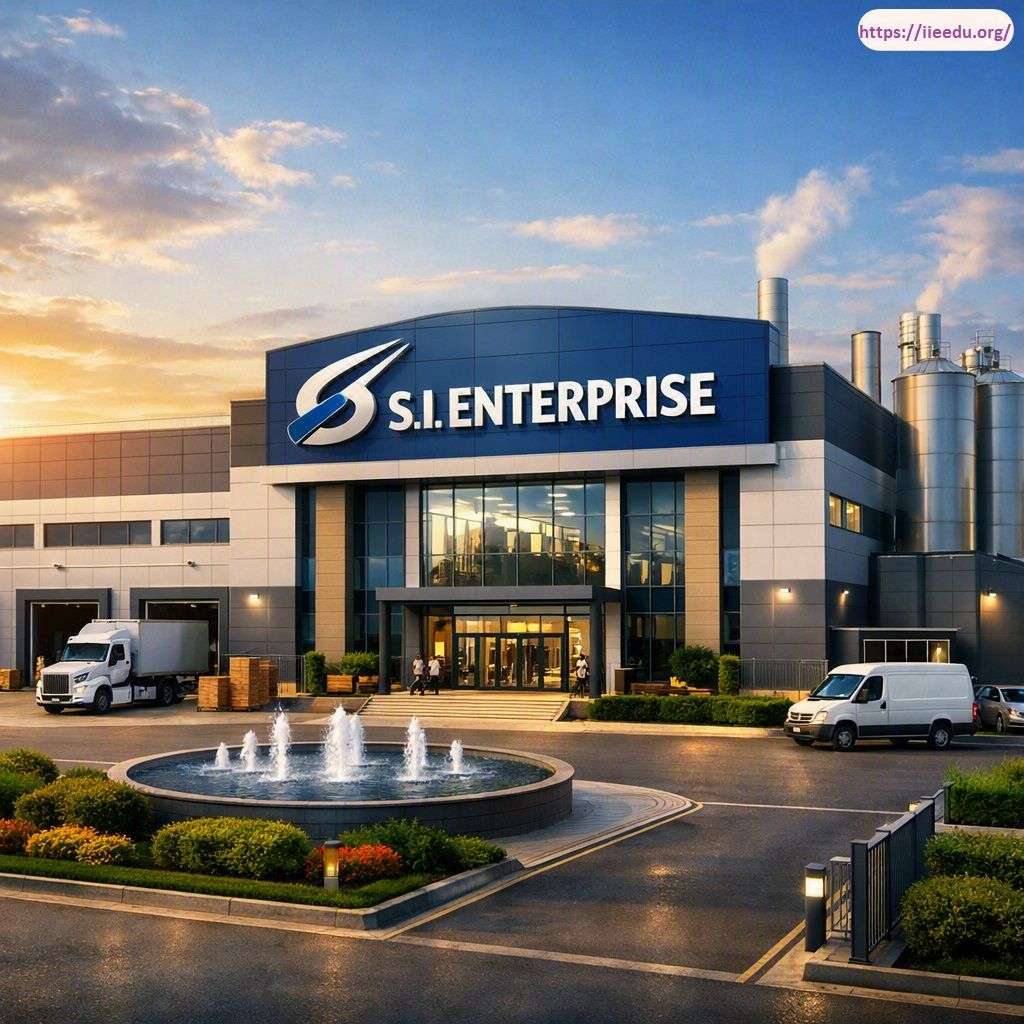
After the initial success of ISO 9001:2015 certification, S.I. Enterprise entered a new phase of development. The promoter understood that recognition alone could not guarantee growth. The organization had to demonstrate every day that its commitment to quality was genuine. The certificate displayed on the office wall became a constant reminder that every student, client, and business partner deserved professional service.
The year following certification brought new opportunities. More people began hearing about S.I. Enterprise through former students, local contacts, and digital platforms. The institute’s two major areas—Professional Makeup Training and Digital Marketing—started developing their own identities while remaining connected through a common quality management approach.
The promoter realized that the beauty industry was changing quickly. Makeup was no longer limited to traditional salon services. Bridal photography, fashion events, social media content, pre-wedding shoots, television, and personal branding were creating new opportunities for trained makeup professionals. Students wanted more than basic lessons; they wanted practical knowledge that could help them earn an income.
S.I. Enterprise therefore strengthened its practical training methodology. Students were encouraged to work on different face shapes, skin types, makeup styles, and client requirements. Instead of simply demonstrating a technique, trainers explained why a particular product, brush, or method was appropriate. Students practiced repeatedly until they developed confidence.
One of the most important changes was the introduction of a more professional attitude toward clients. Students were taught punctuality, communication, personal presentation, hygiene, consultation, and after-service interaction. The promoter believed that technical skill without professional behavior could limit a person’s career.
At the same time, digital marketing was becoming an increasingly important part of business development. Local entrepreneurs were opening online stores, salons were creating social media pages, and small businesses were realizing that customers were spending more time on the internet.
S.I. Enterprise responded by expanding its digital marketing training. Students learned how businesses could use social media to build awareness and communicate with customers. They practiced creating content calendars, writing promotional messages, preparing visual content, understanding audience behavior, and measuring online engagement.
The promoter encouraged students to think like entrepreneurs rather than merely employees. A makeup student could build a personal brand online. A digital marketing student could promote a local salon. A trained professional could combine both skills and create a successful beauty business.
This integrated approach became one of S.I. Enterprise’s strengths.
The promoter also began focusing more strongly on the organization’s own digital presence. He realized that if S.I. Enterprise was teaching digital marketing, it should demonstrate those principles through its own activities. Social media communication became more organized. Training photographs, student achievements, educational information, and success stories were shared with greater consistency.
This created a cycle of growth. Students saw the institute online, enrolled in courses, completed their training, shared their experiences, and in turn helped spread awareness about S.I. Enterprise.
However, growth brought new challenges. More students meant more administrative work. More training activities required better planning. The promoter could no longer personally supervise every small task.
This was the moment when leadership became especially important.
Responsibilities were gradually delegated to team members. Staff members were encouraged to take ownership of admissions, student records, training coordination, feedback collection, and communication. The promoter shifted from doing everything himself to building a team capable of maintaining standards.
The ISO framework helped during this transition because processes had already been documented. Team members could understand their responsibilities more clearly. When a problem occurred, the focus was placed on identifying its cause and preventing it from happening again.
One example involved scheduling. As the number of students increased, occasional confusion arose regarding practical sessions and classroom availability. Instead of simply correcting individual mistakes, the team reviewed the entire scheduling process. A clearer system was developed, responsibilities were assigned, and students were informed earlier.
Small improvements like this gradually made the organization more efficient.
The promoter also began measuring student satisfaction more seriously. Feedback was no longer considered a formality. It became a source of information about what students expected and where the institute could improve.
Some students requested more advanced makeup sessions. Others wanted greater exposure to real clients. Digital marketing students asked for more practical projects. These suggestions influenced future training programs.
The reputation of S.I. Enterprise continued to strengthen. Parents began to feel more comfortable sending their children for professional training. Students from different backgrounds found an environment where practical skills were valued.
For the promoter, the most satisfying moments were not necessarily financial achievements. They were the moments when former students returned and shared their progress.
Some had started freelancing. Others had joined salons or beauty businesses. Some were managing social media pages for local companies. A few had begun their own small ventures.
Every success story reinforced the promoter’s original belief: education becomes meaningful when it creates independence.
S.I. Enterprise was no longer simply trying to survive. It was building an identity based on quality, professional training, customer satisfaction, and continuous improvement.
The ISO 9001:2015 certification had opened the door, but it was the hard work of the promoter and his team that allowed the organization to move forward.
As the institute looked toward the future, one thing had become clear. Growth would not come from a certificate alone. It would come from people, processes, innovation, and the courage to improve continuously.
The journey of S.I. Enterprise was entering a more ambitious stage—one where a small organization from Silpukhuri could aspire to reach students and clients far beyond its immediate surroundings.
#QualityManagement
Chapter 4 – The Power of Digital Transformation

As S.I. Enterprise continued to grow, the promoter realized that the business environment around him was changing rapidly. Customers were becoming more dependent on digital platforms, students were searching for training institutes online, and small businesses were looking for affordable ways to reach larger audiences. For an organization whose scope included both Professional Makeup Training and Digital Marketing, this transformation presented a major opportunity.
The promoter decided that S.I. Enterprise should not simply teach digital marketing; it should use digital technology to strengthen its own business.
The first step was to improve the organization’s online identity. Information about courses, training activities, student achievements, and professional services was presented more systematically. Social media became an important communication channel. Instead of depending entirely on traditional word-of-mouth promotion, S.I. Enterprise could now reach people who had never previously heard of the organization.
This changed the relationship between the institute and prospective students.
A student living in another part of Guwahati could discover S.I. Enterprise through an online post. Someone interested in becoming a makeup artist could see examples of training activities and understand the opportunities available. A small business owner could learn about digital marketing services without having to visit the office first.
The promoter understood that digital visibility had to be supported by genuine quality. Advertising could attract attention, but only good service could create trust.
Therefore, the organization maintained a strong connection between its digital communication and its quality management practices. Course information was presented clearly. Student inquiries were handled more systematically. Feedback was monitored, and common questions were used to improve communication.
This approach produced encouraging results.
More inquiries began coming through digital channels. Some prospective students contacted the institute after seeing social media content. Others were referred by previous students. The promoter began noticing that the organization was reaching audiences beyond its immediate neighborhood.
The Digital Marketing training program also benefited from this experience. Students were given practical examples from the organization’s own digital activities. They could see how content, communication, audience engagement, and online reputation worked in a real business environment.
This practical approach made the classes more meaningful.
The promoter repeatedly told students that digital marketing was not simply about posting pictures or writing advertisements. It was about understanding customers, communicating value, building credibility, and creating long-term relationships.
The same philosophy was applied to S.I. Enterprise itself.
As online communication increased, the organization also learned to deal with criticism and negative feedback. Occasionally, someone might misunderstand a course detail or have an expectation that was different from the actual service. Instead of ignoring such situations, the team examined the concerns carefully.
The ISO 9001:2015 philosophy of customer focus encouraged the organization to treat complaints as opportunities for improvement.
A complaint about unclear course information could lead to better brochures. A question about training duration could result in clearer schedules. A suggestion about practical exposure could encourage the introduction of additional sessions.
Thus, even difficult situations became learning experiences.
The promoter also encouraged staff to develop their own digital skills. He believed that technology could not be delegated entirely to one person. Everyone involved with the organization needed to understand basic digital communication.
This created a more confident team.
Administrative staff became comfortable handling digital inquiries. Trainers learned how to communicate course activities online. Students were encouraged to document their work professionally. The entire organization gradually became more connected.
Another important development was the growing relationship between makeup training and digital branding.
The promoter noticed that a talented makeup artist could now build a career through social media without immediately opening a large salon. By displaying professional work, maintaining communication with clients, and developing a recognizable personal identity, a makeup artist could attract customers from a much wider area.
S.I. Enterprise began encouraging students to think about this possibility.
Students were taught that their professional journey did not end when they completed their training. Their portfolio, communication style, online presence, and reputation would influence future opportunities.
This was particularly valuable for students who wanted to become independent entrepreneurs.
A number of trainees began experimenting with small freelance projects. Some worked with local photographers. Others assisted bridal clients. A few started managing social media pages for small businesses. Their achievements became evidence that practical training could create real opportunities.
The promoter felt proud whenever a former student returned with a success story. Each story strengthened the organization’s reputation and inspired new students.
By this stage, S.I. Enterprise had begun to understand the true meaning of sustainable growth. It was not simply about increasing the number of students. Growth meant improving systems, strengthening people, embracing technology, and maintaining customer satisfaction.
The organization’s digital transformation also prepared it for unexpected challenges that would soon affect businesses everywhere.
The world was moving toward an increasingly digital economy, but no one could yet predict how dramatically circumstances would change.
S.I. Enterprise had built a stronger foundation through quality management, professional training, and digital communication. The promoter knew that the future would bring new challenges.
He also knew that the organization was better prepared to face them.
The small enterprise that had once struggled to attract its first students had now developed the confidence to compete in a changing market. Its journey was becoming a story not merely of certification, but of adaptation, learning, and continuous transformation.
#ProfessionalMakeupTraining
Chapter 5 – Facing Challenges and Discovering New Strength
Courtesy: Rudra Traders | Guwahati
Growth rarely comes without difficulties. As S.I. Enterprise became more established, the promoter discovered that every stage of development brought new responsibilities. The organization had gained recognition for Professional Makeup Training and Digital Marketing, but maintaining quality while expanding services required constant attention.
Then came one of the most difficult periods in the organization’s journey.
The business environment became uncertain, and traditional methods of training and customer interaction were suddenly disrupted. Students could not always attend physical classes as before. Clients became cautious about spending money. Businesses reduced their marketing budgets. Like many small organizations, S.I. Enterprise faced a serious question: how could it continue serving students and clients when normal operations were no longer possible?
The promoter remembered the principle that had guided the enterprise since its ISO 9001:2015 certification: continuous improvement.
Instead of waiting for conditions to return to normal, the team began looking for alternatives.
The first major change was the introduction and strengthening of digital communication for training. Where appropriate, lessons, discussions, assignments, and guidance were moved toward online platforms. Students were given additional learning materials so that their progress would not stop completely.
This was not an easy transition.
Professional makeup training is highly practical. Students normally need to observe techniques closely, practice with tools, and receive direct guidance from trainers. Moving some elements of learning into a digital environment required creativity.
Trainers began using demonstrations, recorded explanations, digital consultations, and structured assignments to support students. Whenever physical practical sessions were possible and appropriate, they were planned with greater attention to hygiene, safety, and organization.
The Digital Marketing program adapted more naturally because much of the subject itself was already based on online communication. Students were encouraged to explore real-world examples of how businesses were changing their marketing strategies during uncertain times.
The promoter also realized that digital marketing had become even more important for small businesses. Companies that had previously depended entirely on physical customers were suddenly looking for ways to communicate online.
S.I. Enterprise used this situation as an educational opportunity.
Students learned how local businesses could maintain relationships with customers through social media, online communication, digital content, and promotional campaigns. Instead of learning only from textbooks, they were encouraged to understand the changing needs of the market.
The difficult period also changed the promoter’s leadership style.
Earlier, he had been directly involved in almost every activity. Now he understood that a resilient organization needed a team capable of responding quickly. Staff members were encouraged to share ideas, identify problems, and suggest solutions.
Regular discussions became important.
If a student faced difficulty accessing online learning materials, the team looked for an alternative. If a client had concerns, those concerns were documented and addressed. If a particular teaching method was ineffective, it was revised.
The quality management system became particularly valuable during this period because it encouraged the organization to think in terms of processes rather than temporary fixes.
The promoter asked a simple question whenever a problem appeared: “How can we prevent this from happening again?”
That question encouraged long-term thinking.
Financial pressure remained a concern. Like many small enterprises, S.I. Enterprise had to manage expenses carefully. The promoter resisted the temptation to reduce quality simply to save money. He believed that cutting essential training resources could damage the organization’s reputation in the long run.
Instead, priorities were reviewed.
Resources were directed toward activities that created the greatest value for students and clients. Communication was improved. Unnecessary expenses were controlled. The team became more efficient.
The crisis also revealed the importance of adaptability.
Before this period, many students had imagined careers based primarily on physical workplaces. Now they began to understand that digital skills could provide additional opportunities. A makeup artist could promote services online. A small beauty business could attract customers through social media. A freelancer could communicate with clients remotely.
The boundaries between traditional and digital business were becoming less distinct.
For S.I. Enterprise, this created a new vision.
The promoter began thinking about how Professional Makeup Training and Digital Marketing could support each other more effectively. A student could learn makeup artistry and simultaneously learn how to promote a personal brand. Another student could specialize in digital marketing for beauty professionals. The two fields could create opportunities for collaboration and entrepreneurship.
This integrated approach became one of the organization’s most valuable lessons.
The challenging period also strengthened relationships with former students. Some alumni contacted the institute to share how they were managing their businesses or freelance work. Others asked for guidance about digital promotion.
The promoter realized that the relationship between an institute and its students should not end with a certificate. A strong educational organization should remain connected to its learners and encourage their continued development.
By the end of this difficult chapter, S.I. Enterprise had changed.
It was more digitally capable, more process-oriented, and more prepared for uncertainty. The promoter had learned that business growth was not a straight line. Sometimes progress meant surviving a difficult period, protecting quality, learning new methods, and emerging stronger.
The experience reinforced the importance of the ISO 9001:2015 principles that had guided the organization since 2019.
Customer focus, leadership, process management, risk awareness, and continuous improvement were no longer merely concepts written in documents. They had become part of the organization’s everyday thinking.
S.I. Enterprise had faced a major test and discovered an important truth: an organization’s strength is not measured only by how quickly it grows during good times, but by how intelligently it responds when circumstances become difficult.
The promoter looked toward the future with renewed confidence. The road ahead would still contain challenges, but S.I. Enterprise was no longer the same small enterprise that had once struggled to find its place.
#DigitalMarketing
Chapter 6 – From Training Institute to Entrepreneurial Platform

The difficult period had changed S.I. Enterprise in many ways. The organization had learned how to adapt to changing circumstances, use digital communication more effectively, and maintain its commitment to quality. But the promoter now wanted to achieve something more ambitious.
He did not want S.I. Enterprise to be known only as a place where people attended courses. He wanted it to become a platform where students could develop skills, confidence, professional networks, and the courage to create their own opportunities.
This vision gradually changed the way the organization approached training.
The promoter began asking a different question: “What happens to a student after completing the course?”
The answer could not simply be a certificate.
A certificate could demonstrate that a student had completed training, but real success required practical ability, confidence, communication skills, and an understanding of the market. Therefore, S.I. Enterprise began placing greater emphasis on employability and entrepreneurship.
In Professional Makeup Training, students were encouraged to think beyond classroom exercises. They were introduced to the realities of working with clients. They learned how to understand customer requirements, prepare professionally, manage appointments, maintain hygiene, calculate service costs, and communicate politely.
The promoter explained that becoming a successful makeup artist involved much more than applying makeup beautifully. A professional had to build trust.
A client might be preparing for a wedding, an important celebration, a photography session, or a professional event. Such occasions could be emotionally important. The makeup artist therefore needed patience, punctuality, listening skills, and attention to detail.
These lessons changed the way students approached their work.
The Digital Marketing program followed a similar philosophy. Students were encouraged to understand the needs of real businesses rather than simply memorize marketing concepts. They explored how businesses could identify audiences, develop content, communicate online, and evaluate results.
The promoter particularly encouraged students to work with small local businesses.
Assam has a large community of entrepreneurs operating salons, boutiques, restaurants, educational services, retail stores, home-based businesses, and professional services. Many of these businesses had good products but limited digital visibility.
This created an opportunity for S.I. Enterprise students.
A student could help a local business improve its social media presence while gaining practical experience. The business could receive affordable support, and the student could build a portfolio.
This mutually beneficial relationship became an important part of the organization’s growth philosophy.
The promoter also encouraged former students to remain connected with the institute. Alumni were invited to share their experiences with new learners. Some spoke about freelancing. Others described their first clients, business challenges, and mistakes.
These conversations were often more inspiring than formal lectures.
Students could see that successful professionals had also experienced uncertainty in the beginning. They learned that entrepreneurship was not about having everything perfect before starting. It was about taking calculated steps, learning from mistakes, and improving continuously.
S.I. Enterprise itself became an example of this philosophy.
The promoter openly discussed the early struggles of the organization. He explained how the enterprise had started with limited resources, how ISO 9001:2015 certification had introduced greater discipline, and how the organization had continued improving after certification.
The story gave students confidence.
If a small organization could grow through persistence and quality, individuals could also build careers from modest beginnings.
Another important development was the growing emphasis on personal branding.
The promoter recognized that digital platforms had changed the way professionals attracted customers. A makeup artist, trainer, consultant, or freelancer could now build a professional identity online.
Students were taught to present their work carefully, maintain appropriate communication, and create a consistent professional image.
This was especially useful for aspiring makeup artists.
A talented student could photograph completed work, create a portfolio, communicate with potential clients, and use digital marketing principles to promote services. The student was no longer dependent entirely on finding employment.
Entrepreneurship became a realistic option.
Of course, not every student immediately became a successful business owner. Some required more practice. Some changed careers. Others found employment in existing organizations. S.I. Enterprise accepted that success looked different for different people.
The promoter’s responsibility, in his view, was to provide a strong foundation.
Quality management continued to support this approach. Training processes were reviewed regularly. Student feedback was considered. Problems were documented and addressed. Improvements were introduced whenever possible.
The ISO certification had therefore influenced more than paperwork. It had helped create a culture where the organization regularly asked how it could serve students better.
As the enterprise became more mature, the promoter also became more conscious of sustainability. Rapid expansion without proper systems could create problems. He preferred controlled growth that protected quality.
New ideas were considered carefully. Before introducing a course or service, the team looked at student demand, available resources, trainer capability, and potential value.
This disciplined approach prevented the organization from expanding simply for the sake of expansion.
Meanwhile, the reputation of S.I. Enterprise continued to grow through the achievements of its students. Every successful freelancer, makeup artist, digital marketer, or small entrepreneur connected to the institute became part of its wider story.
The promoter began to see the organization as a network rather than just an office.
Students, trainers, clients, alumni, and local businesses were connected through a common objective: creating opportunities through professional skills.
This was a major transformation.
S.I. Enterprise had started with a simple dream of providing professional training. Over time, that dream had expanded into something larger—a belief that education should lead to confidence, independence, and meaningful economic opportunity.
The promoter knew there was still much to accomplish. Markets would change, technology would evolve, and competition would increase.
But the organization had developed something more valuable than rapid growth: a culture of learning.
And with that culture firmly established, S.I. Enterprise was ready to enter the next stage of its journey.
#SkillDevelopment
Chapter 7 – Strengthening the Brand and Community
As S.I. Enterprise moved forward, the promoter began to understand that sustainable growth depended not only on the quality of its training programs but also on the strength of its reputation. A business could have excellent services, but if people did not know about them or trust the organization, growth would remain limited.
The promoter therefore began focusing on building a stronger and more recognizable brand.
For S.I. Enterprise, branding was not simply about designing a logo or displaying an ISO certificate. It meant creating a consistent identity based on professionalism, quality, student development, and customer satisfaction.
Every interaction mattered.
When a prospective student called the office, the conversation needed to be polite and informative. When a student attended a training session, the classroom environment needed to feel professional. When a client requested digital marketing assistance, the team needed to understand the client’s expectations clearly.
The promoter believed that reputation was built through hundreds of small experiences.
This philosophy gradually influenced the entire team.
The organization began communicating its services more clearly. Professional Makeup Training was presented as a career-oriented skill rather than merely a beauty hobby. Digital Marketing was presented as a practical business skill with applications across many industries.
Student achievements were also highlighted.
When a student completed training successfully, the accomplishment became part of the organization’s story. With permission, photographs, testimonials, and professional work could be shared through appropriate communication channels.
These stories created a human connection between S.I. Enterprise and potential students.
A person considering enrollment could see someone with a background similar to their own learning a skill and moving toward a career. Parents could understand that professional training could lead to practical opportunities.
The promoter also wanted S.I. Enterprise to maintain a strong relationship with the local community.
Silpukhuri and the wider Guwahati area were filled with small entrepreneurs and aspiring professionals. Many were searching for ways to improve their businesses but had limited access to professional guidance.
The organization began seeing itself as part of this local entrepreneurial ecosystem.
Students could gain practical experience by working with local businesses. Local businesses could receive assistance with digital promotion. Beauty professionals could connect with makeup trainees. Freelancers could build professional relationships.
These connections created opportunities that went beyond the classroom.
The promoter frequently reminded students that networking was not about asking everyone for favors. It was about creating relationships based on mutual value and professionalism.
A student who helped a local business solve a digital marketing problem might later receive a recommendation from that business. A makeup artist who maintained good relationships with photographers might receive opportunities for future assignments.
Small professional relationships could eventually become major career opportunities.
The ISO 9001:2015 quality system continued to play a supporting role in this growth. As the organization became more visible, maintaining consistency became even more important.
The promoter did not want the institute to make promises it could not fulfill. Course information had to remain accurate. Students needed to understand what training involved. Services needed to be delivered according to agreed expectations.
Customer feedback was treated as valuable information.
When students expressed satisfaction, the team identified what was working well. When they raised concerns, the team looked for ways to improve.
The promoter often said that criticism, when handled properly, could be more useful than praise.
One important area of development was communication.
Earlier, many decisions had been handled informally. As the organization grew, communication needed to become more structured. Staff meetings were used to discuss upcoming training schedules, student requirements, marketing activities, and operational challenges.
This reduced confusion and improved teamwork.
The team also became more aware of the importance of documenting decisions. This helped create accountability and made it easier to review what had happened when a problem occurred.
The promoter himself was changing as a leader.
In the early years, he had been the person who personally handled almost everything. Now he was learning to trust his team. He understood that leadership was not about controlling every task; it was about creating a system in which people could perform their responsibilities confidently.
This shift allowed him to focus more on strategy.
He began thinking about future partnerships, new training opportunities, digital expansion, and long-term sustainability.
The organization’s reputation continued to grow gradually.
There was no single day when S.I. Enterprise suddenly became famous. Instead, recognition developed through repeated positive experiences. One student recommended another. One business referred another. One successful trainee shared a story that inspired another person.
This was the quiet power of community-based growth.
The promoter was particularly proud that S.I. Enterprise remained connected to its original purpose. The organization had not forgotten why it was established.
The objective was still to help people develop professional skills and create opportunities.
ISO certification had strengthened the organization’s structure, but the human element remained at the center of its work.
Every successful student represented more than a completed course. It represented a person who had gained knowledge and confidence.
Every satisfied client represented more than revenue. It represented trust.
Every staff member who took responsibility represented more than an employee. It represented the growing strength of the organization.
By this stage, S.I. Enterprise had become more than a small training center on M.L. Baruah Road. It had developed into a community of learners, professionals, entrepreneurs, and supporters.
The promoter knew that the next challenge would be to protect this reputation while continuing to grow.
Expansion could bring new markets, but it could also create new risks. Maintaining quality would therefore remain essential.
The lesson of the previous years was clear: growth should never be separated from responsibility.
S.I. Enterprise had built its reputation one student, one client, and one improvement at a time. The promoter now looked toward the future with the confidence that the organization’s strongest asset was not a building, a certificate, or a marketing campaign.
#Entrepreneurship
Chapter 8 – The Journey Beyond Certification
Courtesy: UpBrightSkills
As the years passed, the significance of the ISO 9001:2015 certification became clearer to the promoter of S.I. Enterprise. The certificate had been issued in 2019 and was valid until 2022, but its greatest contribution was not limited to those three years. The systems, habits, and principles introduced through the certification continued to influence the organization long after the certificate itself had become part of its history.
The promoter often reflected on the early days of the enterprise. At that time, quality had been based largely on personal supervision. He would check details himself, speak directly with students, and personally solve many operational problems. As the organization grew, this approach became impossible.
ISO certification had taught the organization an important lesson: quality must become a system.
Processes needed to be clear enough that the organization could continue functioning effectively even when one person was not personally supervising every activity.
This realization encouraged S.I. Enterprise to strengthen its internal systems further.
Training schedules became more organized. Student records were maintained carefully. Feedback was collected and reviewed. Responsibilities were assigned more clearly. The team began looking at recurring problems not as isolated incidents but as opportunities to improve the overall process.
This way of thinking created greater stability.
The promoter also recognized that certification could never substitute for actual performance. A certificate might create an initial impression of credibility, but students would ultimately judge the institute by their classroom experience, the quality of training, the professionalism of trainers, and the opportunities they received.
Therefore, S.I. Enterprise continued focusing on the learner.
Professional Makeup Training evolved with changing trends in the beauty industry. New products, techniques, styles, and customer expectations appeared regularly. The organization encouraged trainers and students to remain open to learning.
Students were taught that professional development does not end when a course is completed. A successful makeup artist must continue practicing, observing trends, understanding products, and improving technique.
The same principle applied to Digital Marketing.
The digital world changed constantly. Platforms introduced new features, audiences changed their behavior, and businesses experimented with different communication methods.
A digital marketer who stopped learning could quickly become outdated.
S.I. Enterprise therefore emphasized adaptability. Students were encouraged to remain curious and develop the habit of continuous learning.
This philosophy became one of the most important legacies of the ISO journey.
The promoter also began thinking about the organization’s long-term identity. What should S.I. Enterprise become in the future? Should it remain focused only on local students? Could it reach learners from other parts of Assam? Could digital tools allow it to serve a wider audience?
These questions led to new possibilities.
Online communication made geographical boundaries less restrictive. Students could learn about the organization from different districts. Professionals could communicate with trainers without always visiting the office. Digital marketing services could be discussed with clients beyond the immediate neighborhood.
The promoter began considering how traditional classroom training and digital learning could complement each other.
The goal was not to abandon physical training. Instead, the aim was to create a flexible model where students could receive theoretical information digitally while using practical sessions for hands-on development.
This approach could make learning more accessible while preserving the importance of practical experience.
The organization also became more conscious of its alumni.
Former students were no longer viewed simply as people who had completed their courses. They represented the extended S.I. Enterprise community.
Some alumni had developed careers in beauty services. Others were working in digital marketing or related fields. A few had started their own small ventures.
Their experiences provided valuable lessons for current students.
The promoter encouraged alumni to remain connected and share their knowledge whenever possible. In this way, the organization could create a cycle in which learners eventually became mentors for others.
This was a powerful idea.
A student who once entered the institute with uncertainty could eventually return as a confident professional and inspire someone else.
The promoter considered this one of the greatest indicators of organizational success.
Meanwhile, the external business environment continued to evolve. Competition increased, customer expectations became more sophisticated, and digital communication became more important.
S.I. Enterprise responded by maintaining the principles that had guided it from the beginning.
It avoided making unrealistic promises.
It listened to customers.
It reviewed its processes.
It encouraged staff development.
It treated feedback seriously.
It looked for ways to improve.
These principles were simple, but they created consistency.
By the time the 2019–2022 certification period approached its end, the promoter understood that the organization had changed significantly. The enterprise was more disciplined, more digitally aware, and more confident than it had been before certification.
The certificate had been important, but the transformation behind the certificate was even more important.
It had taught the organization to document, measure, review, improve, and take responsibility.
The promoter also realized that quality was not a destination. There could never be a moment when an organization could say, “We have achieved quality forever.”
Markets would change.
Students would change.
Technology would change.
Customer expectations would change.
Therefore, the organization would have to change as well.
This understanding prepared S.I. Enterprise for the next stage of its journey.
The promoter no longer measured growth only by revenue or the number of students enrolled. He began looking at broader indicators: student satisfaction, professional outcomes, repeat business, reputation, team capability, operational efficiency, and the ability to adapt.
In his mind, these were the true signs of sustainable growth.
Looking back, the ISO 9001:2015 certification had become a milestone that divided the history of S.I. Enterprise into two periods: before structured quality management and after it.
Before certification, the organization had ambition.
After certification, it had greater structure and discipline.
Before certification, the promoter had a vision.
After certification, he had a clearer system for turning that vision into action.
The journey beyond certification was therefore not about leaving ISO principles behind. It was about making those principles part of the organization’s culture.
The certificate had an issue date and a validity period.
But the lessons it created could continue for many years.
And for S.I. Enterprise, that was perhaps the greatest achievement of all.
#CustomerSatisfaction
Chapter 9 – Measuring Success Through People and Progress
As S.I. Enterprise entered a more mature stage of its journey, the promoter began to look at success from a broader perspective. In the early years, success had meant surviving, attracting students, paying expenses, and building a reputation. Later, it meant receiving ISO 9001:2015 certification and creating organized systems.
Now the definition of success had become much deeper.
For the promoter, true growth could be measured by the people whose lives had changed because of S.I. Enterprise.
Every year, new students arrived with different dreams. Some wanted to become professional makeup artists. Others wanted to learn digital marketing to improve their employment opportunities. Some were interested in starting their own businesses, while others simply wanted to develop a practical skill.
Each student had a different starting point.
Some arrived with confidence and experience. Others were nervous and unsure of themselves. The responsibility of the organization was to provide an environment where every learner could develop according to his or her potential.
The promoter increasingly understood that training was a human process.
A good classroom could teach techniques, but encouragement could build confidence. A practical assignment could develop ability, but constructive feedback could help a student understand weaknesses. A certificate could recognize completion, but real achievement came when the student could apply the knowledge independently.
This philosophy became central to S.I. Enterprise.
In Professional Makeup Training, students were encouraged to practice repeatedly. Trainers provided guidance and explained how small improvements could make a significant difference.
Students learned that professional makeup required patience. A technique that looked easy during a demonstration might require many attempts before it could be performed confidently.
Instead of being discouraged by mistakes, students were taught to learn from them.
The same principle was applied in Digital Marketing.
Students might create content that received little engagement or design a campaign that did not produce the expected response. Rather than treating failure as the end, trainers encouraged them to analyze what happened.
Was the audience correctly identified?
Was the communication clear?
Was the content appropriate?
Could the message be improved?
This approach developed analytical thinking.
The promoter saw these lessons as preparation for real business life. Entrepreneurship and employment both involved uncertainty. People needed the ability to evaluate problems and adapt.
The ISO 9001:2015 approach of continual improvement therefore became closely connected with student development.
The organization itself also continued measuring its performance.
Feedback from students was reviewed. Training activities were evaluated. Administrative processes were examined. Customer concerns were considered carefully.
When an issue was identified, the team tried to understand its root cause rather than simply correcting the immediate problem.
This created a culture of learning inside the organization.
The promoter also recognized the importance of employee development. Trainers and staff needed opportunities to improve their own skills. As technology changed, digital knowledge became increasingly important. As beauty trends evolved, makeup professionals needed to remain current.
An organization could not expect its students to keep learning if its own team stopped learning.
Therefore, professional development became an ongoing objective.
The organization also began paying greater attention to its network of former students. Alumni stories provided evidence of the practical value of training.
One former student might begin with a small freelance assignment and gradually build a regular client base. Another might join a beauty business and eventually become a senior professional. A Digital Marketing student might begin by helping a local shop and later work with multiple clients.
These journeys were not always fast or easy.
Some students faced financial difficulties. Others had family responsibilities. Some lost confidence after unsuccessful attempts.
But the promoter believed that progress should not be measured only by dramatic success stories.
Sometimes success was simply a student gaining enough confidence to attend an interview.
Sometimes it was someone earning their first independent income.
Sometimes it was a person discovering a skill that they had never known they possessed.
These small victories mattered.
The organization’s reputation grew through these individual achievements.
People began associating S.I. Enterprise with practical learning and professional development. The promoter was particularly pleased when parents expressed appreciation for the confidence their children had gained.
For him, such feedback was more meaningful than publicity.
At the same time, the enterprise became more conscious of its role in encouraging entrepreneurship among young people.
Assam has many talented individuals who may not have access to large amounts of capital. Skills can therefore provide an important starting point.
A professional makeup artist can begin with limited equipment and gradually build a client base. A digital marketer can start with a small project and expand through experience. A skilled individual can transform knowledge into a service.
S.I. Enterprise wanted students to understand this possibility without creating unrealistic expectations.
The promoter always emphasized that entrepreneurship required discipline, patience, customer service, financial management, and continuous learning.
Success rarely happened overnight.
The organization itself was proof.
S.I. Enterprise had grown gradually. There had been uncertain periods, operational challenges, changing market conditions, and difficult decisions. The promoter had learned that sustainable growth required patience.
The years after ISO certification had therefore created a more mature organization.
The enterprise was no longer measuring its future solely by how quickly it could expand. It was asking whether growth was healthy, whether quality was being maintained, whether students were satisfied, and whether the team could manage increasing responsibilities.
This approach protected the organization from uncontrolled expansion.
The promoter also remained committed to the principle that customer focus should guide decision-making. Whether the customer was a student, a parent, a local business, or a professional client, understanding expectations was essential.
Trust had become the organization’s most valuable asset.
Looking back at the journey from 2019 onward, the promoter could see how much had changed.
The ISO 9001:2015 certification had introduced a structured way of thinking.
Digital transformation had expanded communication.
Professional training had created new opportunities.
Student success had strengthened the organization’s reputation.
And continuous improvement had connected all these developments together.
The promoter understood that the next chapter would not be about celebrating what had already been achieved.
It would be about preparing for what came next.
S.I. Enterprise had built a foundation.
#ContinuousImprovement
Chapter 10 – A Future Built on Quality and Vision
The story of S.I. Enterprise was never simply the story of an ISO certificate. It was the story of a small enterprise that began with an idea, faced uncertainty, embraced quality, adapted to change, and gradually developed into a trusted platform for professional learning and business development.
Located at 01, M.L. Baruah Road, Silpukhuri, Kamrup (Metropolitan), Assam – 781003, S.I. Enterprise had started its journey with a focused vision: to provide opportunities through Professional Makeup Training and Digital Marketing.
The path was not always smooth.
There were times when student numbers were small, resources were limited, and the future appeared uncertain. The promoter had to manage many responsibilities and make difficult decisions. Yet, every challenge contributed to the organization’s development.
The turning point came in 2019 with the achievement of ISO 9001:2015 certification.
The certification gave S.I. Enterprise a structured quality framework. It encouraged the organization to focus on customer requirements, document important processes, monitor performance, collect feedback, and pursue continuous improvement.
The certificate was valid until 2022, but its influence extended beyond the validity period.
Its greatest contribution was cultural.
The promoter and his team learned that quality could not be treated as a temporary project. It had to become part of everyday work.
This lesson influenced everything from student admission and training to communication, feedback, documentation, and service delivery.
Over the years, S.I. Enterprise also embraced digital transformation. Digital Marketing was not only taught as a subject; it became an important part of the organization’s own development.
Online communication allowed the enterprise to reach more people. Students could discover training opportunities through digital platforms. Local businesses could understand the value of online promotion. Former students could remain connected with the institute.
Technology helped the organization expand its reach while maintaining its local identity.
Professional Makeup Training also developed into a career-oriented learning opportunity. Students were taught not only makeup techniques but also professionalism, hygiene, client communication, confidence, and personal branding.
This broader approach reflected the changing nature of the beauty industry.
A professional makeup artist could now combine technical skill with digital marketing knowledge and create an independent career. Social media could become a portfolio. Online communication could become a customer acquisition tool. Personal branding could help a talented professional reach clients beyond a small local area.
This combination of skills became one of the most important lessons of S.I. Enterprise’s journey.
The organization also discovered that its greatest achievements were connected to people.
Every student who gained confidence represented a success.
Every trainee who found employment represented progress.
Every person who started freelancing or building a small business represented the practical impact of education.
Every satisfied customer strengthened the reputation of the enterprise.
The promoter came to understand that sustainable business growth was ultimately human growth.
A business can expand its infrastructure, increase its marketing budget, and introduce new services. But without capable people and satisfied customers, such growth cannot remain strong.
For this reason, S.I. Enterprise continued to emphasize training quality and continuous improvement.
The team learned from feedback.
Students were encouraged to ask questions.
Problems were analyzed.
Processes were reviewed.
New ideas were considered.
This created a cycle of improvement that continued from one batch to the next.
The promoter also became increasingly aware that the future would bring new challenges.
Technology would continue changing. Digital platforms would evolve. Competition would increase. Customer expectations would become more demanding.
The answer was not to fear change.
The answer was to continue learning.
This became the central philosophy of the organization.
S.I. Enterprise did not need to know exactly what the future would look like. It needed to remain prepared to respond intelligently when the future arrived.
The promoter believed that the organization should continue strengthening its professional standards, improving training methods, developing digital capabilities, supporting entrepreneurship, and maintaining strong relationships with students and clients.
He also believed that growth should remain responsible.
Expansion should never compromise quality.
More students should not mean less attention.
More services should not mean weaker systems.
More visibility should not mean unrealistic promises.
Every stage of growth needed to be supported by proper planning.
This philosophy was one of the most important lessons learned from the ISO journey.
When the promoter looked back at the organization’s history, he could see a clear transformation.
In the beginning, there was only an idea.
Then came the first students.
Then came the development of training systems.
Then came ISO 9001:2015 certification in 2019.
After certification came greater discipline, stronger customer focus, digital transformation, adaptation to challenges, and a growing community of students and professionals.
Each stage built upon the previous one.
The certificate itself was therefore only one chapter in a much larger story.
The real achievement was the ability to convert the principles of quality management into everyday organizational behavior.
That achievement created confidence.
Today, the story of S.I. Enterprise can inspire other small organizations that may believe international quality standards are meant only for large companies.
The journey demonstrates that a smaller enterprise can also pursue professional systems, customer satisfaction, continuous improvement, and sustainable development.
The promoter’s journey also offers a message to aspiring entrepreneurs.
Start with what you have.
Focus on quality.
Listen to customers.
Learn continuously.
Do not fear change.
Build systems.
Develop people.
And never allow short-term difficulties to destroy a long-term vision.
The future of S.I. Enterprise remains a story waiting to be written. New students will enter its doors. New technologies will emerge. New opportunities will appear. New challenges will test its leadership.
But the foundation has already been created.
The organization has learned that certification can open a door, but commitment is what keeps the door open.
For S.I. Enterprise, the journey from its early beginnings to ISO 9001:2015 certification and beyond is ultimately a story of vision, quality, resilience, and people.
The small enterprise on M.L. Baruah Road began with a dream of creating opportunities.
Through perseverance and continuous improvement, that dream became a growing reality.
And the final lesson of the journey is simple:
Quality creates trust. Trust creates opportunity. Opportunity creates growth. And sustainable growth begins when an organization never stops learning.
#SustainableGrowth
#MakeupArtistTraining #BeautyIndustrySkills #DigitalEntrepreneurship #CareerOrientedTraining #GuwahatiSkillDevelopment
Take the Next Step Today
Don’t wait to enhance your business’s quality and efficiency. Partner with International Institute Of Entrepreneurship (IIE) and experience the transformation that comes with expert consultancy and training. Contact us today to learn more about how we can help you achieve your business goals. Reach out via phone at +91-9322728183, visit our website at www.iieedu.org, or email us at info@iieedu.org Let us be your guide on the journey to excellence and innovation.