
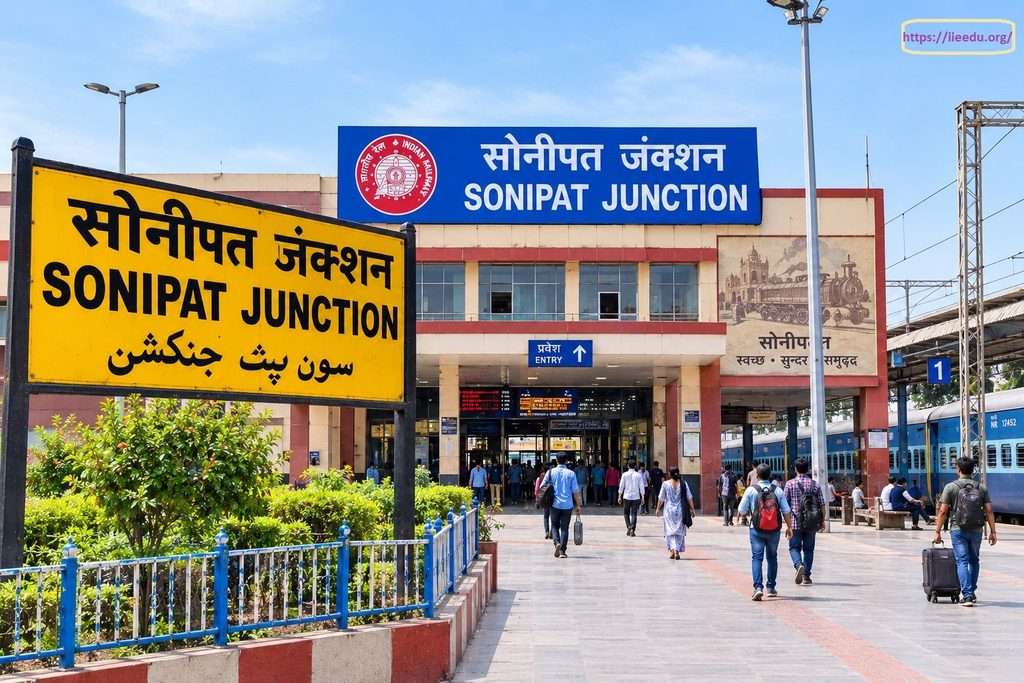
Sonipat Railway Station
- Sonipat Railway Station
- Chapter 1: The Beginning of a New Journey
- Chapter 2: Understanding the Value of Certification
- Chapter 3: Creating Awareness Among Stakeholders
- Chapter 4: Improving the Culture of Operations
- Chapter 5: The Human Side of Transformation
- Chapter 6: Building Public Confidence
- Chapter 7: From Certification to Continual Improvement
- Chapter 8: The Broader Impact on Growth
- Chapter 9: Lessons for the Future
- Chapter 10: A Vision for the Next Chapter
- Take the Next Step Today

Chapter 1: The Beginning of a New Journey
Sonipat Railway Station, located at Railway Road, Aggarsain Nagar, Indira Colony, Sonipat, Haryana – 131304, is an important railway facility serving the people of Sonipat and surrounding areas. As part of Northern Railway, the station plays a significant role in connecting passengers and communities with different parts of the region and the country. Every day, railway stations operate as dynamic public spaces where transportation, infrastructure, passenger services, maintenance, safety, cleanliness, and environmental responsibilities come together.
The journey toward becoming a more environmentally responsible railway station represents more than the introduction of a few green initiatives. It requires a change in the way an organization thinks about its infrastructure, resources, people, and long-term responsibilities. For Sonipat Railway Station, the year 2021 represented an important milestone in this journey, with certification under the GGBC Green Railway Station Rating System.
The certification provided a structured framework for considering sustainability within the railway station environment. Rather than viewing environmental responsibility as an independent activity, the rating approach encouraged attention toward multiple aspects of station operations. Energy conservation, water management, waste management, cleanliness, awareness, maintenance, resource utilization, and responsible operational practices could all be considered as interconnected elements of a greener railway environment.
The certification journey also highlighted an important principle: improvement begins with awareness. Before an organization can improve a process, it must understand the process and recognize the areas where improvement is possible. A railway station has numerous routine activities that may appear small individually but can have a considerable cumulative impact. Lighting, water consumption, cleaning activities, waste disposal, maintenance work, passenger behavior, and staff practices are all part of the station’s environmental footprint.
The implementation of a structured green rating system therefore created an opportunity to look at these routine activities from a new perspective.
For employees, the process encouraged greater awareness of their role in maintaining a responsible and sustainable workplace. Railway stations depend heavily on coordinated teamwork. Cleaning personnel, technical staff, administrative teams, station management, maintenance workers, security personnel, contractors, and other stakeholders all contribute to the functioning of the facility. Environmental performance cannot be achieved by one individual or department alone. It requires collective participation.
Passengers are equally important stakeholders. A railway station is a public facility, and its environmental performance is influenced by the behavior of thousands of people who use it. Responsible disposal of waste, avoiding unnecessary wastage of water, maintaining cleanliness, and respecting station facilities are examples of simple actions that can support sustainability.
The certification process therefore created an opportunity to connect operational responsibility with public awareness.
The GGBC Green Railway Station Rating System can be viewed as a framework that encourages railway facilities to consider environmental performance in a systematic manner. For Sonipat Railway Station, this provided a foundation for strengthening the culture of sustainability and responsible resource management.
The certification issued in 2021, with validity through 2024, represented an important recognition of the station’s green practices during that period. More importantly, it provided a reference point from which continual improvement could be encouraged.
Certification, however, should never be considered the final destination. A certificate provides recognition at a particular point in time, while sustainable performance requires continuous attention. Environmental practices need to be maintained, reviewed, and improved as technology, passenger expectations, operational requirements, and environmental challenges evolve.
This understanding was particularly important for a public infrastructure facility such as Sonipat Railway Station. The station’s responsibilities extend beyond transportation. It is also part of the local community and contributes to the public image of the railway system. A clean, organized, and environmentally conscious railway station can create a positive experience for passengers and demonstrate the importance of responsible infrastructure management.
The certification journey can therefore be understood as the beginning of a broader transformation. It encouraged the station to consider how everyday activities could contribute to larger sustainability objectives. Small improvements, when implemented consistently, can develop into organizational habits. When those habits are supported by awareness, monitoring, documentation, and management commitment, they can become part of the station’s operational culture.
Another important aspect of this journey was the connection between environmental responsibility and quality. Quality is not limited to the technical performance of a product or service. In a modern organization, quality also includes efficient processes, responsible resource utilization, stakeholder satisfaction, continual improvement, and long-term sustainability.
For a railway station, these principles are particularly relevant. Passengers expect reliable transportation, but they also value cleanliness, organized facilities, responsible operations, and a comfortable environment. Environmental initiatives can therefore complement service-quality objectives.
The Sonipat Railway Station certification journey consequently represents a meaningful chapter in the broader movement toward sustainable railway infrastructure. The year 2021 became a reference point for recognizing green practices and strengthening environmental awareness under the GGBC Green Railway Station Rating System.
As the journey continued toward 2024, the focus was not simply on possessing a certification. The larger objective was to encourage a culture in which sustainability could become part of everyday thinking.
The story of Sonipat Railway Station thus begins with a simple but powerful idea: a railway station can serve society while also taking greater responsibility for the environment in which it operates.
The certification became a milestone, but the real journey was the development of awareness, discipline, responsibility, and continual improvement. It opened the door to a future in which quality and sustainability could work together to create better railway infrastructure and a better experience for the communities that depend upon it.
#SonipatRailwayStation
Chapter 2: Understanding the Value of Certification
The certification journey of Sonipat Railway Station did not begin and end with the issuance of a certificate. The real significance of certification lies in the changes it encourages within an organization—the development of structured processes, greater awareness, improved discipline, and a stronger commitment to continual improvement.
For Sonipat Railway Station, the GGBC Green Railway Station Rating System certification issued in 2021 and valid through 2024 represented an important step toward recognizing and strengthening environmentally responsible practices. As a facility under Northern Railway, the station operates in an environment where passenger service, infrastructure management, maintenance, cleanliness, resource utilization, and operational efficiency must function together.
A green rating system provides an opportunity to look at these activities from a wider perspective.
Traditionally, railway station performance may be associated primarily with train operations, passenger movement, safety, and basic infrastructure. However, modern expectations are broader. Public infrastructure is increasingly expected to demonstrate responsible use of resources and greater awareness of environmental impacts. A railway station serves a large and diverse population, making sustainable practices particularly important.
Certification creates a formal point of reference for these expectations.
One of the most important values of certification is structured thinking. Without a systematic framework, environmental activities can sometimes remain dependent on individual initiatives. One person may be highly committed to cleanliness, another may focus on energy conservation, and another may pay attention to waste management. While these individual efforts are valuable, certification encourages the organization to bring different activities into a more coordinated system.
For Sonipat Railway Station, this approach could support a broader understanding of sustainability. Instead of treating cleanliness, water conservation, energy efficiency, waste management, and awareness as separate subjects, they can be viewed as connected components of overall station performance.
This integrated perspective is particularly useful in a railway environment because one activity can influence another. Efficient water use can support resource conservation. Better waste segregation can support cleaner premises. Greater passenger awareness can reduce littering. Improved maintenance can help preserve infrastructure and reduce unnecessary resource consumption.
Certification also provides an opportunity to strengthen employee awareness.
People are at the center of every management system. Even the most carefully designed procedures cannot deliver results unless the people responsible for implementation understand them. Employees who understand the purpose of environmental practices are more likely to recognize their importance in everyday operations.
The certification process can therefore encourage a shift from simply following instructions to understanding responsibility.
For example, switching off unnecessary electrical equipment is not merely an instruction. It can be understood as part of responsible energy management. Avoiding water wastage is not simply a housekeeping activity; it contributes to conservation of a valuable natural resource. Proper waste handling is not merely a cleanliness requirement; it contributes to a healthier and more sustainable public environment.
This change in understanding can gradually influence organizational culture.
Another important value of certification is stakeholder confidence. Railway stations interact with numerous stakeholders, including passengers, employees, contractors, suppliers, local communities, railway authorities, and other service providers. A recognized green rating demonstrates that environmental considerations have been incorporated into the station’s management approach.
For passengers, this can contribute to a perception of a cleaner, more responsible, and better-managed public facility. For employees, it can create a sense of participation in a larger organizational objective. For management, it can provide a framework for reviewing environmental practices and identifying opportunities for further development.
Certification can also contribute to the concept of continual improvement.
A certificate represents achievement at a particular point in time, but environmental performance cannot remain static. Conditions change. Passenger expectations evolve. Technologies become more efficient. New methods of waste management become available. Energy-saving opportunities develop. Consequently, organizations need to continue reviewing their practices.
The 2021–2024 certification period can therefore be seen as a phase during which Sonipat Railway Station had an opportunity to strengthen its green-management foundation. The objective was not simply to achieve recognition but to create habits and systems capable of supporting future improvements.
This principle is closely connected with quality management. Quality organizations do not depend only on final inspection. They focus on processes, prevention, measurement, awareness, and continual improvement. Environmental management follows a similar philosophy.
When environmental considerations become part of daily operations, sustainability moves from being a special project to becoming part of normal working culture.
The value of certification can also extend beyond the station itself. Railway stations are highly visible public spaces. Practices observed by passengers can influence public awareness. A passenger who sees responsible waste management, cleanliness, environmental messaging, and efficient use of facilities may become more conscious of similar practices in other public and private environments.
In this way, a green railway station can contribute to a wider culture of environmental responsibility.
For Sonipat, the certification journey also represented an opportunity to connect service quality with sustainability. Passenger satisfaction is influenced by many factors, including cleanliness, convenience, facility management, and the overall condition of the station environment. Sustainable practices can complement these objectives by encouraging responsible maintenance and resource use.
Ultimately, the value of the GGBC certification was much greater than the physical certificate itself. It represented recognition of a structured commitment toward greener railway operations and provided a platform for strengthening environmental awareness.
The certification period from 2021 to 2024 can therefore be viewed as an important chapter in Sonipat Railway Station’s development. It created a foundation for thinking differently about everyday operations and demonstrated that environmental responsibility can exist alongside operational efficiency and passenger service.
The true achievement of certification is not merely being certified. It is the ability to carry forward the principles behind certification—discipline, awareness, responsibility, measurement, stakeholder participation, and continual improvement.
For Sonipat Railway Station, this became an important foundation for the chapters that followed.
#GreenRailwayStation
Chapter 3: Creating Awareness Among Stakeholders
A railway station is not operated by one person, one department, or one group of employees. It is a living public environment where thousands of people interact with infrastructure, services, and one another every day. For this reason, the journey toward a greener railway station depends not only on systems and procedures but also on the awareness and participation of everyone connected with the station.
Following the GGBC Green Railway Station Rating System certification issued to Sonipat Railway Station in 2021, stakeholder awareness became an important part of the broader sustainability journey. The certification period, valid through 2024, provided an opportunity to strengthen the understanding that environmental responsibility is a shared activity.
Sonipat Railway Station, located in the heart of the city and serving passengers travelling through the Northern Railway network, has a diverse stakeholder community. Passengers arrive from different backgrounds and age groups. Railway employees work across different functions. Cleaning and maintenance teams support the physical condition of the station. Contractors and vendors conduct their activities within the station environment. Security personnel contribute to safe and orderly movement. Local residents and visitors also interact with the station.
Each of these groups has an influence on the station’s overall environment.
Employees as the Foundation
Employees are among the most important stakeholders in any certification journey. Policies and procedures become meaningful only when people understand and implement them consistently.
The green certification encouraged greater awareness about the relationship between daily activities and environmental responsibility. Employees could recognize that simple actions—such as preventing unnecessary wastage, maintaining cleanliness, using resources responsibly, and reporting problems—can collectively contribute to better station performance.
Awareness also helps employees understand that sustainability is not the responsibility of a single department. Housekeeping personnel may have a direct role in cleanliness and waste handling, while technical teams may influence energy and equipment efficiency. Administrative personnel may contribute through documentation and monitoring, and station management may coordinate activities across different functions.
When all these roles work together, sustainability becomes part of the overall operational culture.
Passengers as Partners
Passengers are at the center of railway services. A railway station may establish excellent systems, but maintaining a clean and responsible environment also depends on passenger participation.
For Sonipat Railway Station, awareness among passengers could encourage responsible behavior such as using designated waste-disposal facilities, avoiding littering, conserving water, and respecting station infrastructure.
Environmental messages displayed in public areas can play an important role in this process. A simple reminder can influence behavior, particularly when it is repeated consistently and supported by visible practices.
The relationship between the railway station and passengers is therefore not one-sided. The railway provides facilities and services, while passengers also have a responsibility to use those facilities responsibly.
This creates a partnership in which everyone contributes to maintaining a better public environment.
Vendors and Contractors
Another important stakeholder group consists of vendors, contractors, and service providers working within or around the railway station.
Their activities can have a direct impact on cleanliness, waste generation, resource consumption, and general station conditions. Awareness among these stakeholders can therefore support the station’s broader sustainability objectives.
Contractors and vendors who understand environmental expectations are better positioned to incorporate responsible practices into their daily activities. Clear communication of requirements can help ensure that sustainability considerations are not limited to railway employees but extend throughout the operational ecosystem.
This approach reflects a broader principle of quality management: an organization’s performance is influenced by the people and partners who contribute to its processes.
Building a Culture Rather Than Following Instructions
One of the biggest differences between basic compliance and an effective management culture is understanding.
If people follow environmental instructions only because they are required to do so, the results may disappear when supervision decreases. However, when people understand the reason behind those instructions, responsible behavior is more likely to become habitual.
The certification journey provided an opportunity to develop this deeper understanding.
For example, conserving water is not simply about reducing consumption. It is about recognizing water as a valuable resource. Maintaining clean surroundings is not simply about meeting an inspection requirement. It is about protecting public health, improving passenger experience, and creating a better environment. Proper waste disposal is not merely a housekeeping task. It is part of responsible public behavior.
This change in perspective can gradually create a stronger environmental culture.
Communication and Continuous Awareness
Awareness cannot be treated as a one-time activity. Railway stations experience continuous movement of people, and new employees, contractors, vendors, and passengers interact with the facility every day.
Therefore, communication must remain continuous.
Posters, notices, instructions, staff briefings, awareness programs, operational meetings, and routine communication can all contribute to keeping environmental responsibilities visible.
The objective is to make sustainability familiar.
When environmental messages become part of everyday station life, they are more likely to influence behavior. Repeated communication can reinforce the importance of cleanliness, resource conservation, responsible waste handling, and care for public infrastructure.
The Role of Leadership
Leadership is another critical factor in creating stakeholder awareness.
When management demonstrates commitment to environmental objectives, employees are more likely to recognize that sustainability is an organizational priority. Leaders can encourage participation by communicating expectations, recognizing good practices, addressing gaps, and promoting continual improvement.
Effective leadership also means creating an environment where employees can identify problems and suggest improvements.
A staff member who notices unnecessary water wastage, inefficient use of electricity, improper waste disposal, or a maintenance issue should feel encouraged to report it. Small observations can lead to practical improvements when the organizational culture supports participation.
A Shared Responsibility
The greatest lesson from the awareness journey is that a green railway station cannot be created by certification alone.
A certificate can provide recognition and a structured framework, but people create the actual results.
For Sonipat Railway Station, the GGBC certification provided an opportunity to strengthen this shared understanding. Employees, passengers, contractors, vendors, and other stakeholders could all become participants in the station’s sustainability journey.
The certification period from 2021 to 2024 therefore represented more than a formal recognition of green practices. It provided an opportunity to build awareness and encourage responsible behavior across the station community.
The journey demonstrated an important principle: when people understand their role in sustainability, individual actions can become collective progress.
Sonipat Railway Station’s green transformation can consequently be viewed as a people-centered journey. Every responsible action—whether performed by an employee, passenger, contractor, vendor, or visitor—adds another contribution to the larger objective.
The ultimate goal is not simply to create a certified railway station, but to create an environment in which sustainability becomes a shared habit, quality becomes a daily responsibility, and continual improvement becomes part of the station’s long-term culture.
#GGBCGreenRating
Chapter 4: Improving the Culture of Operations
Courtesy: Explore with DD
The journey of Sonipat Railway Station toward greater environmental responsibility did not depend only on obtaining certification. The more meaningful challenge was to bring the principles of the GGBC Green Railway Station Rating System into everyday operations. A certification can recognize achievement, but its long-term value comes from transforming requirements into consistent working practices.
For Sonipat Railway Station, the certification issued in 2021 and valid through 2024 provided an opportunity to strengthen an operational culture in which quality, cleanliness, resource responsibility, and environmental awareness could work together. As part of Northern Railway, the station functions in a demanding environment where passenger services and infrastructure activities must continue efficiently every day. Within such an environment, operational discipline becomes essential.
From Individual Activities to a System
One of the most important changes associated with a structured certification approach is the movement from isolated activities toward systematic management.
In any busy railway station, many activities happen simultaneously. Passenger movement, cleaning, maintenance, facility management, technical operations, waste handling, administrative work, security, and vendor activities all form part of the station’s daily functioning.
If each activity is managed independently, opportunities for improvement can easily be missed. A systematic approach encourages different activities to be viewed as interconnected parts of one operational system.
For example, cleanliness is connected with waste management. Waste management is connected with passenger awareness. Maintenance is connected with resource efficiency. Resource efficiency is connected with environmental performance. Passenger experience is influenced by all of these areas.
The green rating framework therefore encouraged a broader operational perspective.
Strengthening Daily Discipline
Operational culture is built through repetition.
A single cleaning activity may improve a particular area temporarily, but consistent cleanliness requires daily discipline. Similarly, a single effort to reduce energy consumption is useful, but long-term efficiency requires responsible practices to become routine.
The certification journey provided an opportunity to reinforce this principle.
Employees and supporting teams could increasingly view routine tasks through the lens of environmental responsibility. Turning off unnecessary equipment, avoiding wastage, maintaining facilities, handling waste appropriately, identifying maintenance issues, and keeping public areas orderly are examples of practices that can become part of normal working habits.
When such activities are repeated every day, they gradually become organizational culture.
Documentation and Monitoring
Another important characteristic of a mature operational system is documentation.
Documentation creates continuity. Railway stations involve multiple employees, shifts, teams, and responsibilities. Written procedures, records, checklists, inspection observations, maintenance information, and other forms of documentation can help ensure that important activities do not depend solely on individual memory.
Monitoring also makes improvement easier.
When an organization monitors a process, it becomes possible to identify trends, recognize recurring problems, and evaluate whether corrective actions are working. This is particularly important for environmental practices because resource use and waste generation can change according to operational conditions.
The certification framework encouraged a mindset in which activities could be observed, recorded, reviewed, and improved.
Connecting Quality and Environmental Responsibility
A significant feature of the journey was the connection between quality and sustainability.
Quality is often understood as providing a service that meets expectations. In a railway station, this includes reliable facilities, cleanliness, convenience, safety, and an organized environment.
Environmental responsibility strengthens this concept.
A station that uses resources responsibly, manages waste effectively, maintains infrastructure properly, and creates awareness among passengers is not only supporting environmental objectives but also contributing to a better public-service environment.
This means that green practices should not be seen as separate from operational quality. Instead, they can become part of a broader definition of quality.
Maintenance as a Preventive Approach
Maintenance is another area where operational culture plays a major role.
Reactive maintenance occurs when a problem has already become serious. Preventive thinking focuses on identifying potential problems earlier.
A structured approach to station management can encourage employees to observe facilities regularly and report issues before they become larger problems.
Preventive maintenance can support environmental performance as well. Equipment that is properly maintained can operate more effectively, while damaged infrastructure may lead to unnecessary consumption or wastage.
The lesson is simple: maintaining infrastructure is not merely a technical responsibility; it is also part of responsible resource management.
Encouraging Employee Participation
A strong operational culture gives employees an opportunity to contribute ideas.
Employees who work directly with equipment, facilities, passengers, cleaning activities, or maintenance tasks often observe practical problems that may not be visible at the management level. Creating channels for reporting issues and suggesting improvements can therefore strengthen the overall system.
The certification journey could encourage such participation by making environmental performance a shared organizational objective.
Instead of asking only, “Are we following the procedure?”, employees can begin asking, “Can this process be improved?”
That question represents a major step toward continual improvement.
The Importance of Continual Improvement
The green certification period from 2021 to 2024 should not be viewed as a fixed period with a beginning and an end. It can instead be viewed as one stage in a continuing improvement cycle.
Organizations evolve. Technologies change. Passenger expectations increase. Environmental challenges become more visible. New opportunities for resource conservation emerge.
Therefore, an effective operational culture must remain flexible.
The principles introduced or strengthened through certification can provide a foundation for future initiatives. New technologies can be evaluated, awareness programs can be improved, operational practices can be reviewed, and environmental objectives can be updated according to changing requirements.
Building a Responsible Station Culture
Ultimately, operational improvement is about people, processes, and consistency.
The GGBC Green Railway Station Rating System gave Sonipat Railway Station a framework for looking at environmental responsibility in a more structured manner. The certification recognized a particular stage of the station’s green journey, while the larger opportunity was to incorporate responsible practices into everyday operations.
The station’s experience demonstrates that transformation does not always occur through one dramatic change. It can happen through hundreds of small improvements repeated consistently.
A cleaner working area, responsible resource use, timely maintenance, better documentation, employee awareness, passenger cooperation, and regular monitoring may each appear modest individually. Together, however, they can contribute to a stronger operational culture.
For Sonipat Railway Station, the journey toward greener operations therefore became closely connected with the broader principles of quality management: plan, implement, monitor, correct, improve, and repeat.
The certification was an important milestone, but the real achievement lies in developing a culture capable of sustaining improvement beyond the certificate’s validity period.
As the station moved forward, the foundation created during the 2021–2024 certification period could support a continuing vision: an operational environment where quality and sustainability are not separate objectives, but two complementary parts of responsible railway service.
#NorthernRailway
Chapter 5: The Human Side of Transformation
Behind every successful certification, every improved process, and every well-maintained facility, there is one essential element—people. Systems provide direction, procedures provide structure, and standards provide requirements, but employees and stakeholders are the people who turn these principles into everyday action.
The journey of Sonipat Railway Station under the GGBC Green Railway Station Rating System, with certification issued in 2021 and valid through 2024, can therefore be understood not only as an environmental initiative but also as a people-centered transformation. The certification created an opportunity to strengthen awareness among employees and stakeholders and to encourage a culture in which environmental responsibility became connected with daily railway operations.
People Behind the Processes
A railway station is a highly active public environment. From the early morning arrival of passengers to the movement of trains throughout the day, numerous activities take place continuously. Station employees, maintenance teams, housekeeping personnel, technical staff, security personnel, administrative teams, contractors, vendors, and other supporting workers all contribute to keeping the station functional.
Each person has a different responsibility, but all of these responsibilities are connected to the overall performance of the station.
A green railway station cannot depend on the efforts of a single team. Cleanliness requires housekeeping and passenger cooperation. Resource conservation requires awareness among employees and users. Maintenance requires technical knowledge and timely action. Environmental performance requires management attention and participation across functions.
The certification journey helped highlight this interconnectedness.
Creating a Sense of Responsibility
One of the most valuable outcomes of a structured certification process is the development of responsibility.
When employees understand that their daily actions contribute to the station’s environmental performance, routine tasks begin to acquire greater meaning. A housekeeping employee is not simply cleaning a platform; they are helping maintain a healthier public environment. A maintenance employee is not simply repairing equipment; they are helping preserve infrastructure and avoid unnecessary resource wastage.
Similarly, an administrative employee who maintains records and documentation contributes to organizational discipline.
This broader understanding can create a sense of ownership.
Employees begin to recognize that environmental responsibility is not something imposed from outside. It is part of their own professional responsibility.
Awareness Through Everyday Activities
Transformation does not always require complicated training programs or major technological investments. Awareness can develop through everyday communication.
Staff meetings, workplace instructions, notices, demonstrations, briefings, checklists, and routine supervision can reinforce important environmental principles.
Simple messages can have significant value:
Use resources carefully.
Avoid unnecessary wastage.
Keep work areas clean.
Dispose of waste responsibly.
Report maintenance problems promptly.
Protect public infrastructure.
Encourage passengers to follow responsible practices.
When such messages become part of everyday working life, they gradually become familiar habits.
The purpose is not merely to make employees remember rules. It is to help them understand why those rules matter.
From Compliance to Commitment
There is an important difference between compliance and commitment.
Compliance means doing something because it is required. Commitment means doing it because the individual understands its importance.
A certification system can establish requirements, but long-term sustainability depends on commitment.
For Sonipat Railway Station, the green certification provided an opportunity to encourage this transition. Employees could increasingly view environmental practices as part of professional excellence rather than simply as certification requirements.
This distinction is important because supervision cannot be present everywhere at every moment. A committed employee will continue following responsible practices even when nobody is watching.
That is how organizational culture develops.
Teamwork Across Departments
The human side of transformation also involves teamwork.
Railway station operations are divided among different functions, but environmental challenges often cross departmental boundaries. A waste-management issue may involve housekeeping, station management, vendors, and passengers. A water-related problem may require cooperation between maintenance personnel and management. Energy conservation may involve technical staff as well as employees using facilities.
Effective communication between departments therefore becomes essential.
When departments work in isolation, problems may remain unresolved because everyone assumes that someone else is responsible. A shared environmental objective can help reduce this gap.
The idea becomes simple: the station belongs to everyone who works there and everyone who uses it.
Leadership and Motivation
Leadership plays an important role in maintaining employee motivation.
When management demonstrates visible commitment to environmental responsibility, employees are more likely to recognize that sustainability is a genuine organizational priority.
Leadership does not necessarily mean giving more instructions. It also means listening, recognizing good practices, encouraging suggestions, addressing problems, and creating an environment in which employees feel that their contributions matter.
Recognition can be particularly powerful.
When employees receive appreciation for maintaining cleanliness, identifying problems, improving processes, or encouraging responsible behavior, others may become motivated to participate as well.
This creates a positive cycle in which responsible behavior is noticed, appreciated, and repeated.
Passengers as Part of the Human Story
The human side of transformation extends beyond railway employees.
Passengers are central to the station environment. They use the facilities, generate waste, consume water, interact with public infrastructure, and experience the station’s services.
Their cooperation can significantly influence the station environment.
Awareness messages and responsible facility management can encourage passengers to participate in maintaining cleanliness and protecting public resources. When passengers understand that a clean and sustainable station depends partly on their own behavior, they become partners rather than passive users.
This creates a stronger relationship between service provider and service recipient.
Building Long-Term Culture
The ultimate objective of employee and stakeholder awareness is culture.
Culture is created when responsible behavior becomes normal.
A culture of sustainability means employees naturally think about resource conservation. A culture of quality means teams routinely look for ways to improve their work. A culture of responsibility means people report problems rather than ignoring them. A culture of cooperation means departments work together rather than focusing only on individual responsibilities.
These cultural changes may not always be immediately visible in numerical terms, but they can have significant long-term value.
For Sonipat Railway Station, the 2021–2024 certification period represented an opportunity to strengthen this foundation.
The Continuing Human Journey
Certification may have a defined validity period, but people remain the permanent foundation of improvement.
New employees join. Responsibilities change. Technologies develop. Passenger expectations evolve. Environmental challenges change over time.
Therefore, awareness must also continue.
The lessons of the certification journey can be carried forward through regular training, communication, teamwork, monitoring, and leadership involvement. Every new employee can become part of the culture, and every experienced employee can help pass that culture forward.
The story of Sonipat Railway Station is therefore not only a story of a green rating or a certification achievement. It is a story about people learning to see their everyday responsibilities from a broader perspective.
The most important transformation takes place when employees stop thinking of sustainability as an additional task and begin seeing it as part of doing their work well.
That is the human side of quality.
That is the human side of sustainability.
And ultimately, that is what gives a certification journey its lasting value.
#SustainableInfrastructure
Chapter 6: Building Public Confidence
A railway station is more than a transportation facility. It is a public-facing institution where infrastructure, services, employees, passengers, and the surrounding community meet every day. Because of this visibility, the condition and management of a railway station can strongly influence public perception. Clean surroundings, responsible resource management, organized facilities, and environmental awareness can contribute to a stronger sense of confidence among passengers and other stakeholders.
For Sonipat Railway Station, the GGBC Green Railway Station Rating System certification issued in 2021 and valid through 2024 represented an important milestone in its journey toward strengthening green and responsible operational practices. The significance of this achievement extended beyond the certification itself. It provided an opportunity to demonstrate that environmental responsibility and public service could develop together.
Certification as a Sign of Commitment
Certification provides an external form of recognition for practices that are evaluated against defined requirements. For a public facility, this recognition can communicate an important message: environmental performance is being considered as part of the organization’s broader responsibilities.
For Sonipat Railway Station, the GGBC green rating represented a commitment to environmentally responsible railway operations during the certification period.
A certificate displayed in a public or administrative setting can serve as a visible reminder of this commitment. However, the strongest form of communication comes from the actual practices that passengers experience.
When people see clean facilities, responsible waste handling, awareness messages, orderly operations, and well-maintained infrastructure, they begin to associate certification with practical action.
The Passenger Experience
Passenger experience is one of the most important elements of public confidence.
A passenger may not know the technical details of a rating system, but they can immediately observe the station environment. They notice cleanliness, facility conditions, signage, waste-disposal arrangements, maintenance, and the general organization of public spaces.
Environmental responsibility can therefore complement passenger service.
A cleaner environment can create a more welcoming atmosphere. Better resource management can support efficient facility operations. Awareness initiatives can encourage passengers to participate in maintaining public spaces.
The green certification journey provided an opportunity to consider these elements together rather than treating them as completely separate objectives.
Confidence Through Consistency
Public confidence is built gradually.
One successful day is not enough to establish a reputation. Passengers form impressions through repeated experiences.
If cleanliness is maintained consistently, people begin to expect it. If facilities are managed responsibly, passengers develop greater confidence in the organization. If environmental messages are supported by visible practices, they become more credible.
This makes consistency one of the most important elements of public trust.
The certification period from 2021 to 2024 provided a framework within which environmentally responsible practices could be maintained and strengthened. The long-term objective was not merely to achieve recognition once, but to encourage continued attention to environmental performance.
Employees as Ambassadors
Employees are among the strongest representatives of an organization’s values.
Passengers interact with railway employees in many different situations. The professionalism, awareness, and behavior of employees can influence public perception.
When employees understand the purpose of green practices, they can communicate those values through their own behavior.
For example, responsible use of facilities, proper disposal practices, attention to cleanliness, and willingness to guide passengers can demonstrate that sustainability is a shared responsibility.
An employee does not need to deliver a formal environmental lecture to influence public behavior. Everyday conduct can itself become an example.
Community Connection
Sonipat Railway Station is part of the wider Sonipat community. The station connects people not only to other destinations but also to the economic and social life of the region.
Environmental responsibility at a public facility can therefore have a wider community dimension.
When a railway station promotes cleanliness and responsible resource use, it contributes to public awareness beyond its physical boundaries. Passengers carry their experiences home, to workplaces, educational institutions, and other public places.
In this way, sustainability can become a social message.
A station that demonstrates responsible practices can encourage people to think about how similar principles can be applied in other areas of daily life.
Building Stakeholder Confidence
Public confidence also includes the confidence of other stakeholders.
Contractors, vendors, employees, authorities, and service providers all benefit from clear expectations and structured management practices.
A certification framework can help establish a common understanding of environmental responsibilities. When stakeholders know that environmental performance is being considered systematically, coordination can become easier.
This can support a more professional approach to station management.
Linking Reputation with Responsibility
Organizational reputation is often associated with visible achievements, but sustainable reputation is built through responsible behavior.
For Sonipat Railway Station, the green certification created an opportunity to strengthen its image as a facility giving importance to environmental considerations.
However, reputation should not be based solely on a certificate. The certificate is best understood as a symbol of a broader commitment.
The strongest reputation develops when recognition and actual performance support each other.
This is why continual improvement remains important.
Transparency and Accountability
Certification can also encourage greater accountability.
When an organization commits itself to defined environmental objectives, it becomes easier to review whether those objectives are being maintained.
Documentation, monitoring, inspections, awareness activities, and internal reviews can all support this process.
Accountability does not mean searching for mistakes. It means creating a system in which problems can be identified and addressed.
This approach can strengthen confidence because stakeholders know that performance is being considered systematically rather than left entirely to chance.
The Long-Term Value of Trust
Public confidence has a long-term value.
A railway station that is perceived as responsible, organized, and environmentally conscious can create a more positive relationship with the community it serves.
The GGBC certification during the 2021–2024 period provided Sonipat Railway Station with an opportunity to reinforce this relationship by emphasizing environmental responsibility alongside its core railway functions.
The certification journey also demonstrated that sustainability can be part of public service excellence.
A green railway station is not simply about environmental performance. It is about creating an environment in which passengers feel that public resources are being treated responsibly and that the facility is being managed with long-term thinking.
Looking Beyond the Certificate
The most important lesson from this chapter is that public confidence cannot be created through certification alone.
A certificate can open the door, but consistent performance keeps that door open.
For Sonipat Railway Station, the certification issued in 2021 and valid through 2024 represented an important milestone. Its deeper value lies in the awareness, practices, and organizational discipline that could continue beyond the formal validity period.
The station’s journey shows that when quality, sustainability, employee responsibility, and passenger awareness are brought together, certification can become more than recognition—it can become a foundation for stronger public confidence.
Ultimately, the relationship between a railway station and its passengers is built on experience. Every clean platform, every responsible practice, every maintained facility, and every informed employee contributes to that experience.
The long-term objective is therefore clear: to transform certification into confidence, confidence into trust, and trust into a lasting culture of responsible public service.
#SmartRailwayStation
Chapter 7: From Certification to Continual Improvement
The achievement of certification is often seen as the conclusion of a long process of preparation, assessment, documentation, implementation, and evaluation. However, for an organization committed to quality and sustainability, certification should never be considered the final destination. It is better understood as a milestone that creates a foundation for the next stage of development.
For Sonipat Railway Station, the GGBC Green Railway Station Rating System certification issued in 2021 and valid through 2024 represented such a milestone. The certification recognized a particular stage of the station’s environmental journey, while also creating an opportunity to develop a mindset of continual improvement.
The central question after certification is simple: What happens next?
The answer lies in maintaining good practices, identifying opportunities, learning from experience, and continuously improving processes.
Certification as a Starting Point
Before certification, organizations often focus heavily on meeting defined requirements. Teams review existing practices, identify gaps, organize documentation, strengthen processes, and prepare for assessment.
This process itself can create valuable organizational learning.
Once certification has been achieved, the challenge changes. The organization must prevent the system from becoming inactive. Practices need to continue even when there is no immediate assessment approaching.
For Sonipat Railway Station, the certification period from 2021 to 2024 provided an opportunity to establish this mindset.
The objective was not simply to achieve recognition in 2021, but to maintain awareness and responsible practices throughout the validity period.
The Philosophy of Continual Improvement
Continual improvement means making regular efforts to make processes more effective, efficient, responsible, and sustainable.
Improvement does not always require a major project.
Sometimes improvement may involve correcting a recurring problem, improving communication, reorganizing a work process, reducing unnecessary resource use, improving maintenance routines, or increasing awareness among employees and passengers.
The important factor is consistency.
Small improvements repeated over time can create significant organizational change.
For a railway station, this philosophy is particularly relevant because operations are continuous. Facilities experience regular use and wear. Passenger expectations change. Equipment requires maintenance. Waste patterns can vary. Environmental challenges can evolve.
A static management system may therefore become less effective over time.
Continual improvement keeps the system active.
Identifying Opportunities
One of the first steps in continual improvement is learning to identify opportunities.
Employees who work directly with station facilities are often in a strong position to recognize practical problems. They may notice repeated maintenance issues, unnecessary wastage, areas requiring better awareness, or processes that could be made more efficient.
Encouraging employees to communicate these observations can create a valuable improvement mechanism.
Management can then review the suggestions, assess their practicality, and implement suitable actions.
This creates a simple improvement cycle:
Observe → Identify → Analyze → Improve → Monitor → Learn.
Such a cycle can become part of everyday operational thinking.
Monitoring Performance
Improvement requires some form of monitoring.
Without observation or measurement, it can be difficult to determine whether a change has actually produced the desired result.
Monitoring can include routine inspections, maintenance reviews, environmental observations, staff feedback, passenger feedback, documentation checks, and other appropriate forms of assessment.
The purpose is not merely to collect information. The purpose is to use information for decision-making.
If a recurring issue is identified, management can investigate its cause rather than repeatedly addressing only the visible symptom.
This encourages a preventive approach.
Corrective and Preventive Thinking
Continual improvement is closely connected with corrective and preventive action.
Corrective action focuses on addressing an existing problem and reducing the likelihood of recurrence. Preventive thinking focuses on identifying potential problems before they become serious.
For example, if a facility repeatedly experiences a particular maintenance issue, simply repairing it each time may not be enough. A deeper review can determine why the issue keeps occurring.
Similarly, if waste is repeatedly found in an inappropriate location, the solution may involve better signage, improved awareness, better placement of disposal facilities, or stronger monitoring.
This approach transforms problems into learning opportunities.
Keeping Employees Engaged
Continual improvement cannot succeed without employee involvement.
Employees should understand that improvement is not about criticizing their work. It is about making processes better.
A supportive culture encourages people to report problems without fear and to suggest practical solutions.
Recognition can also encourage participation. When useful suggestions are acknowledged, employees may become more willing to contribute.
This creates a positive environment in which improvement becomes everyone’s responsibility.
Passenger Participation
Passengers also have an important role in continual improvement.
Their experiences can provide valuable information about the station environment. Feedback regarding cleanliness, facilities, signage, accessibility, waste disposal, and other public-service areas can help identify opportunities for improvement.
Passenger awareness is equally important.
If a station improves its waste-management facilities but passengers do not use them appropriately, the intended environmental benefit may be reduced. Continuous communication can therefore remain an essential component of the improvement process.
Technology and Future Opportunities
The future of green railway operations is closely connected with technology.
Digital monitoring, energy-efficient systems, smart infrastructure, data-based maintenance, automated monitoring, and improved communication tools can create new opportunities for environmental performance.
Technology should not be adopted simply because it is modern. It should be evaluated according to whether it provides meaningful value.
For Sonipat Railway Station, the foundation created through the green certification journey could support consideration of future technologies and practices that improve efficiency and sustainability.
The key principle remains the same: technology should support better processes, not replace responsible management.
Maintaining the Spirit of Certification
One of the greatest risks after certification is complacency.
Once an organization receives recognition, there can be a tendency to assume that the work is complete. Continual improvement prevents this from happening.
The 2021–2024 certification period should therefore be viewed as a chapter rather than the final page.
The practices developed during this period can provide a foundation for future environmental initiatives. Lessons learned can guide subsequent improvements. Employee awareness can be strengthened. New technologies can be evaluated. Stakeholder participation can be increased.
In this way, certification becomes part of a larger improvement journey.
Looking Toward the Future
The true strength of a certification system lies in what happens after certification.
For Sonipat Railway Station, the GGBC Green Railway Station Rating System provided an opportunity to establish and reinforce a structured approach toward green railway practices. The next step is to ensure that the principles behind that recognition remain relevant in future operations.
Continual improvement requires patience and consistency.
There may not always be dramatic changes. Progress may sometimes appear through small corrections, improved awareness, better documentation, more disciplined maintenance, or greater employee participation.
Yet these small steps matter.
They create a culture in which the question is no longer simply, “Have we achieved certification?”
Instead, the question becomes:
“How can we perform better than yesterday?”
That question captures the essence of continual improvement.
The Sonipat Railway Station journey demonstrates that certification can provide recognition, but continual improvement provides sustainability. A certificate may have a defined validity period, but the culture of quality and environmental responsibility can continue indefinitely.
The ultimate achievement is therefore not the certificate itself. It is the ability to transform the principles represented by the certificate into a permanent way of working—one based on awareness, responsibility, monitoring, learning, and continuous improvement.
#RailwayModernization
Chapter 8: The Broader Impact on Growth
Courtesy: Starx World
The growth of an organization or public facility cannot always be measured only through financial figures. In the case of a railway station, growth can also mean improved operational maturity, stronger stakeholder confidence, greater environmental awareness, better resource management, improved public experience, and a more responsible approach to infrastructure.
For Sonipat Railway Station, the GGBC Green Railway Station Rating System certification issued in 2021 and valid through 2024 represented an important milestone in this broader concept of growth. The certification provided recognition for green practices while also creating an opportunity to strengthen the station’s culture of quality, sustainability, and continual improvement.
The story of growth therefore begins with a change in perspective.
Redefining Growth
A railway station does not operate like a conventional commercial company where growth may be measured primarily through sales, profits, or market share. Its success is connected with the quality and reliability of public service.
Growth in this environment can include better management of resources, stronger processes, cleaner surroundings, improved infrastructure practices, better awareness among employees, and greater satisfaction among passengers.
Environmental certification can contribute to this broader definition of growth by encouraging organizations to think beyond immediate operational requirements.
For Sonipat Railway Station, the green certification provided an opportunity to connect environmental responsibility with the larger objective of improving station management.
From Recognition to Reputation
Certification can contribute to organizational reputation because it provides visible recognition of a structured commitment.
For a public railway facility, reputation is particularly important. Thousands of passengers interact with the station, and their experiences contribute to their perception of the facility.
A commitment to green practices can strengthen the image of a railway station as an organization that recognizes environmental responsibility.
However, reputation cannot be built through certification alone.
The certificate may attract attention, but actual practices create lasting impressions. Clean surroundings, responsible resource use, effective waste management, employee awareness, and well-maintained facilities are the practical elements that give meaning to certification.
Thus, certification can become a starting point for building a stronger reputation.
Strengthening Operational Maturity
Another important form of growth is operational maturity.
An organization becomes more mature when its processes become increasingly structured, documented, monitored, and consistently implemented.
The GGBC certification journey encouraged Sonipat Railway Station to consider environmental performance within its operational framework.
This approach can strengthen the way teams think about routine activities. Instead of reacting only when a problem appears, employees can develop greater awareness of prevention and planning.
Instead of treating environmental activities as occasional campaigns, sustainability can become part of normal operations.
This represents a significant form of organizational growth because mature systems are less dependent on individual effort and more capable of maintaining consistency.
Resource Responsibility
One of the major themes associated with green infrastructure is responsible resource utilization.
Water, energy, materials, and other resources are essential for railway station operations. Responsible use helps reduce unnecessary wastage and supports environmental objectives.
The certification journey encouraged greater attention to the relationship between resource use and operational responsibility.
Employees who understand the importance of conservation can become more careful in their daily activities. Maintenance teams can pay attention to equipment and infrastructure conditions. Management can review opportunities for efficiency. Passengers can be encouraged to use public facilities responsibly.
Together, these actions can contribute to a more resource-conscious station culture.
Growth Through Employee Development
Employees are another important indicator of organizational growth.
A certification process can create opportunities for employees to learn about environmental practices, documentation, monitoring, and continual improvement.
Such learning can extend beyond environmental management.
When employees develop the habit of identifying problems, following processes, maintaining records, and looking for improvement opportunities, these skills can support overall operational performance.
In this sense, certification can contribute to human-capital development.
The knowledge gained through one improvement initiative can become useful in other areas of station management.
Strengthening Stakeholder Relationships
Growth also occurs through better relationships with stakeholders.
A railway station depends on cooperation among many groups. Employees, contractors, vendors, passengers, authorities, and the local community all interact with the station environment.
A shared sustainability objective can create a common platform for cooperation.
When stakeholders understand environmental expectations, coordination becomes easier. Contractors can align their activities with station requirements. Employees can communicate more effectively. Passengers can become more aware of their responsibilities.
This shared approach can strengthen the relationship between the station and the people it serves.
Environmental Responsibility and Public Service
One of the most important lessons from the certification journey is that environmental responsibility does not have to compete with public service.
In fact, the two can support each other.
A clean and well-managed environment contributes to passenger experience. Responsible resource use supports operational efficiency. Preventive maintenance can help protect infrastructure. Awareness initiatives can encourage better public behavior.
Sustainability can therefore become an additional dimension of service quality.
For Sonipat Railway Station, this connection provided an opportunity to view green practices as part of responsible public-service management rather than as a separate environmental activity.
Creating a Model for Future Development
The experience gained through certification can also provide lessons for future railway infrastructure.
Every station has its own characteristics, passenger patterns, infrastructure, and operational requirements. However, the basic principles of environmental responsibility can be adapted to different environments.
Sonipat’s certification journey demonstrates the value of having a structured framework for considering sustainability.
The lessons can include the importance of employee awareness, stakeholder participation, documentation, monitoring, preventive thinking, and continual improvement.
These principles can support future initiatives within the station and potentially contribute to broader discussions about sustainable railway infrastructure.
The Role of Continual Improvement in Growth
Growth becomes sustainable only when improvement continues.
The certification period from 2021 to 2024 provided a defined stage of development, but environmental responsibility cannot stop when a certificate reaches the end of its validity.
New technologies become available. Environmental expectations evolve. Passenger needs change. Infrastructure requires modernization. Operational challenges emerge.
Continual improvement provides a mechanism for responding to these changes.
The question therefore shifts from “What did certification achieve?” to “What can be built upon the foundation created by certification?”
This approach keeps growth active.
Measuring Success Beyond Numbers
It is important to avoid assuming that certification automatically resulted in specific financial growth, increased passenger numbers, or measurable commercial benefits unless such data is independently documented.
Instead, the broader impact can be understood through qualitative dimensions: awareness, process discipline, environmental responsibility, stakeholder confidence, organizational learning, and the ability to pursue continual improvement.
These forms of growth may not always appear immediately in financial reports, but they can strengthen the long-term foundation of an organization.
A Broader Vision of Growth
The journey of Sonipat Railway Station illustrates a broader idea of growth—one in which environmental responsibility, quality, people, and public service develop together.
The GGBC Green Railway Station Rating System certification of 2021–2024 can therefore be viewed as an important milestone in this journey.
Its significance lies not only in recognition but also in the opportunity to strengthen operational thinking and stakeholder awareness.
A greener railway station can become a better-managed railway station when environmental responsibility is integrated with quality and continual improvement.
The real growth story is consequently not about one certificate or one year.
It is about developing a culture capable of learning and improving.
As Sonipat Railway Station looks toward the future, the foundation created through its certification journey can support a wider vision: efficient operations, responsible resource use, informed employees, engaged passengers, stronger stakeholder relationships, and sustainable public infrastructure.
That is the broader meaning of growth—progress that improves not only the organization, but also the people and environment connected with it.
#EcoFriendlyRailways
Chapter 9: Lessons for the Future
Every certification journey leaves behind more than a certificate. It creates experiences, lessons, practices, and awareness that can influence an organization’s future direction. For Sonipat Railway Station, the journey under the GGBC Green Railway Station Rating System, with certification issued in 2021 and valid through 2024, provided an opportunity to examine how environmental responsibility could become part of a broader culture of quality and continual improvement.
The most important question after completing such a journey is not simply what was achieved, but what can be learned and carried forward.
The experience of Sonipat Railway Station offers several valuable lessons for the future of sustainable railway infrastructure.
Lesson 1: Certification Is a Beginning, Not an Ending
One of the first lessons is that certification should never be treated as the final objective.
A certificate represents recognition at a particular stage. Environmental performance, however, is continuous. Processes must be maintained, reviewed, and improved even after certification has been achieved.
The 2021–2024 certification period can therefore be viewed as one stage in a much longer journey.
The real value comes when the principles behind certification continue to influence daily operations.
Organizations that treat certification as a beginning rather than an ending are better positioned to develop sustainable management cultures.
Lesson 2: Sustainability Must Become Part of Daily Work
Environmental responsibility becomes effective when it becomes part of routine operations.
A railway station performs hundreds of activities every day. Sustainability should not depend only on occasional campaigns or special events. It should be reflected in everyday decisions.
Responsible use of water, energy, materials, and public facilities can become routine behavior.
Similarly, cleanliness, waste management, maintenance, and awareness should be treated as ongoing responsibilities.
This lesson is important because sustainable development is created through consistency. Small actions repeated every day can create a stronger impact than occasional large initiatives.
Lesson 3: Employees Are the Real Drivers of Improvement
Technology and systems are important, but people remain at the center of organizational transformation.
Employees understand the practical realities of daily operations. They observe problems, interact with facilities, communicate with passengers, and often identify improvement opportunities before they become visible at the management level.
Therefore, employee awareness and participation should remain a priority.
Training, communication, teamwork, and recognition can help employees become active participants in improvement.
The future of green railway operations will depend not only on new technology but also on people who know how to use that technology responsibly and effectively.
Lesson 4: Passenger Awareness Matters
Passengers are an essential part of the railway environment.
A station can provide appropriate facilities, but their effectiveness can be influenced by how those facilities are used.
Passenger awareness can therefore support environmental objectives.
Simple communication about cleanliness, waste disposal, conservation, and responsible use of public infrastructure can encourage better behavior.
The lesson is that passengers should not be viewed only as service users. They can also become partners in maintaining a sustainable public environment.
Lesson 5: Prevention Is Better Than Repeated Correction
Another important lesson is the value of preventive thinking.
If a problem repeatedly occurs, continuously correcting the visible symptom may not be enough. The organization should try to understand why the problem is happening.
This approach can be applied to maintenance, waste management, resource use, and other operational areas.
Identifying root causes can help reduce recurring problems and improve process stability.
A mature operational culture therefore asks not only, “How do we fix this?” but also, “Why did this happen, and how can we prevent it from happening again?”
Lesson 6: Data Supports Better Decisions
Future sustainability initiatives can increasingly benefit from measurement and data.
Data can help organizations understand patterns of resource use, maintenance requirements, waste generation, and operational performance.
Even simple records can provide useful information when reviewed consistently.
The purpose of measurement is not to create paperwork. It is to support better decisions.
When managers and employees have reliable information, they can identify priorities and evaluate whether improvement actions are effective.
This creates a stronger connection between certification, monitoring, and continual improvement.
Lesson 7: Technology Can Accelerate Sustainability
Technology is likely to play an increasingly important role in the future of railway infrastructure.
Energy-efficient equipment, digital monitoring, automated systems, smart maintenance, data analytics, and improved communication tools can provide new opportunities for sustainable operations.
However, technology should be introduced thoughtfully.
The latest technology is not automatically the best solution. Its usefulness should be evaluated based on operational needs, reliability, cost, environmental value, and long-term maintainability.
Technology should strengthen the management system rather than replace human responsibility.
Lesson 8: Stakeholder Collaboration Is Essential
Sustainability cannot be achieved in isolation.
Railway stations interact with numerous stakeholders. Employees, contractors, vendors, passengers, authorities, and local communities all have roles to play.
Clear communication of expectations can help create alignment.
When stakeholders understand the station’s environmental objectives, they can contribute more effectively.
Collaboration can also create opportunities for innovation. Different stakeholders may have different experiences and ideas, and these perspectives can help identify practical solutions.
Lesson 9: Documentation Creates Continuity
A strong system should not depend entirely on individual memory.
Documentation helps preserve knowledge, responsibilities, procedures, and lessons learned.
This becomes particularly important when employees change roles or new personnel join an organization.
Well-maintained records can help future teams understand what has been implemented, what challenges have occurred, and what improvements remain possible.
Documentation therefore becomes a bridge between past experience and future development.
Lesson 10: Continual Improvement Must Become a Culture
Perhaps the most important lesson is that continual improvement should become part of organizational culture.
Improvement should not happen only before an audit or certification assessment.
It should happen because the organization believes that processes can always become better.
This culture encourages people to identify problems, share ideas, test improvements, evaluate results, and learn from experience.
For Sonipat Railway Station, the GGBC certification journey provided an opportunity to strengthen this philosophy.
Preparing for the Future
The future of railway infrastructure will increasingly involve the integration of environmental responsibility, technology, passenger expectations, operational efficiency, and quality management.
Sonipat Railway Station’s experience during the 2021–2024 certification period provides a foundation from which these areas can continue to develop.
The next stage can focus on strengthening environmental awareness, encouraging employee participation, improving monitoring, evaluating technological opportunities, and maintaining a strong culture of responsible resource use.
The future should not be viewed as a complete departure from the past. Instead, it should build upon the lessons already learned.
Carrying the Lessons Forward
The story of Sonipat Railway Station demonstrates that a certification journey can create value well beyond the date printed on a certificate.
The most valuable outcomes are often intangible: greater awareness, stronger discipline, better understanding of environmental responsibility, improved teamwork, and a willingness to look for better ways of working.
These lessons can continue to influence future decisions.
A certification may have a defined validity period, but knowledge has no such limitation.
The experience gained during the GGBC certification period can therefore become part of the station’s continuing institutional learning.
A Vision for Sustainable Railway Infrastructure
The future railway station will need to be more than functional. It will need to be efficient, responsible, adaptable, passenger-focused, and environmentally conscious.
Sonipat Railway Station’s journey provides an example of how certification can help begin this transformation.
The most important lesson is simple:
Sustainability is not a destination. It is a continuous journey of learning, improvement, responsibility, and cooperation.
As future generations of railway employees and passengers interact with the station, the principles established during earlier certification efforts can continue to provide direction.
The journey from certification to continual improvement therefore creates a lasting message: when quality becomes a habit, sustainability becomes a culture, and improvement becomes a way of life, certification becomes the foundation for a stronger future rather than merely a recognition of the past.
#PassengerExperience
Chapter 10: A Vision for the Next Chapter
Every journey of improvement eventually reaches a point where the organization must look beyond its past achievements and ask an important question: What comes next? For Sonipat Railway Station, the journey associated with the GGBC Green Railway Station Rating System certification issued in 2021 and valid through 2024 represents an important chapter in a much larger story of environmental responsibility, quality, operational discipline, and continual improvement.
The certificate marked a point of recognition, but the real opportunity lies in carrying its principles into the future.
Beyond the Certification Period
The validity period of a certification provides a defined framework for recognition, but sustainability itself has no fixed expiry date.
The period from 2021 to 2024 can therefore be viewed as a significant stage in the station’s development. The practices, awareness, and lessons associated with the certification can provide a foundation for future initiatives.
Moving beyond the certification period means continuing to ask how station operations can become more responsible, efficient, and sustainable.
The objective should not simply be to repeat past activities. Future development should build upon previous experience while responding to new challenges and opportunities.
A Stronger Vision of Sustainability
The future of railway infrastructure will increasingly require a balance between operational efficiency, passenger needs, environmental responsibility, and technological development.
A modern railway station must serve passengers effectively while also considering the responsible use of resources.
This broader vision can include continued attention to energy efficiency, water conservation, waste management, cleanliness, maintenance, environmental awareness, and sustainable infrastructure practices.
The exact priorities may evolve over time, but the underlying principle remains constant: development should be responsible and sustainable.
The Role of Continuous Learning
One of the most valuable outcomes of a certification journey is organizational learning.
Employees learn to understand requirements, identify gaps, maintain records, monitor activities, and participate in improvement. This knowledge becomes an organizational asset.
The future should continue this learning process.
Regular awareness and training can help employees remain familiar with environmental responsibilities and changing technologies. New employees can be introduced to the station’s sustainability culture, while experienced employees can share practical knowledge.
Learning should therefore become continuous rather than limited to certification preparation.
Embracing Appropriate Technology
Technology offers significant possibilities for future railway operations.
Digital systems can support monitoring, communication, maintenance, resource management, and data analysis. Energy-efficient technologies can contribute to responsible resource use. Smart systems can help identify operational issues and support timely intervention.
However, technology should always be connected to a clear objective.
The purpose is not to introduce technology simply because it is new. The purpose is to use appropriate technology to solve real operational problems and improve efficiency.
For Sonipat Railway Station, future technological initiatives can be evaluated according to their practical value, reliability, sustainability, cost-effectiveness, and ability to improve passenger and operational experience.
Strengthening Resource Management
Responsible resource management will remain an important part of future sustainability.
Water and energy are essential to railway station operations. Their efficient use can contribute to environmental responsibility and operational discipline.
Future management approaches can place greater emphasis on identifying consumption patterns, preventing unnecessary wastage, maintaining equipment properly, and encouraging responsible behavior among employees and passengers.
Monitoring can provide useful information for decision-making.
When resource use is observed consistently, management can identify areas requiring attention and evaluate whether improvement measures are effective.
A Culture of Waste Responsibility
Waste management is another area where continuous awareness can make a difference.
A sustainable station environment requires cooperation among employees, vendors, contractors, and passengers.
The future can focus on strengthening awareness, encouraging appropriate disposal practices, improving segregation where applicable, and ensuring that waste-related procedures remain consistent.
The objective is not only to remove waste from visible areas but to develop a responsible attitude toward waste generation and disposal.
This reflects a broader principle of sustainability: the best waste-management system is supported by responsible behavior at every stage.
Employees as Future Leaders
The future sustainability journey will depend heavily on employees.
Today’s employees can become tomorrow’s leaders, trainers, supervisors, and improvement champions.
Encouraging employees to identify opportunities, report problems, share suggestions, and participate in environmental initiatives can create a strong internal improvement network.
Leadership should therefore focus not only on managing existing processes but also on developing people capable of managing future challenges.
When employees feel ownership of sustainability objectives, improvement becomes more sustainable.
Passengers and the Community
The future vision should also include the wider community.
Sonipat Railway Station is connected with the city and the people who depend upon it. Environmental awareness at the station can influence behavior beyond railway premises.
Passengers can become partners in maintaining clean and responsible public spaces.
Awareness messages, responsible facility use, and visible environmental practices can encourage passengers to participate.
The station can therefore serve as more than a transportation point. It can also become a place where environmental responsibility is demonstrated through everyday practice.
Strengthening the Link Between Quality and Sustainability
The future should not treat quality and environmental responsibility as separate subjects.
A high-quality railway environment is one that meets passenger needs while using resources responsibly and maintaining infrastructure effectively.
Sustainability can therefore become an integral part of quality.
The principles of planning, implementation, monitoring, corrective action, and continual improvement are equally relevant to both areas.
This integrated approach can create a stronger management culture.
Measuring Future Progress
Future improvement should ideally be supported by appropriate indicators.
Measurements can help organizations understand whether initiatives are producing meaningful results. Depending on operational requirements, indicators may relate to resource use, maintenance performance, waste management, awareness activities, or other environmental and operational objectives.
The purpose of measurement should always be improvement.
Numbers should not become an administrative burden. They should provide useful information that helps management and employees make better decisions.
From Certificate to Legacy
The greatest achievement of a certification journey is the legacy it leaves behind.
A certificate has a date of issue and a validity period. A culture of responsibility can continue for many years.
For Sonipat Railway Station, the GGBC certification issued in 2021 and valid through 2024 can therefore be remembered as a milestone that contributed to a broader sustainability journey.
Its legacy can be reflected in the awareness created, the processes strengthened, the lessons learned, and the commitment to continual improvement.
The future does not need to remain limited to what was achieved during the certification period. It can use those achievements as a foundation for new goals.
The Next Chapter
The next chapter of Sonipat Railway Station’s story should be one of continued learning and responsible development.
The station can continue strengthening its environmental culture, encouraging employee participation, improving passenger awareness, evaluating suitable technologies, monitoring resource use, and developing more effective operational practices.
The journey will not always be easy. Every public facility faces changing demands, operational challenges, resource constraints, and evolving expectations.
But the philosophy of continual improvement provides a way forward.
Instead of expecting perfection, the objective is to improve step by step.
Instead of asking whether everything has already been achieved, the organization can ask what can be improved next.
Instead of treating sustainability as a separate project, it can become part of everyday management.
A Lasting Message
The story of Sonipat Railway Station is ultimately a story about transformation through awareness, structure, responsibility, and continuous improvement.
The GGBC Green Railway Station Rating System certification of 2021–2024 represents an important milestone, but it should be viewed within the larger journey of sustainable railway development.
The future belongs to organizations that can combine quality with responsibility, technology with human awareness, efficiency with sustainability, and growth with environmental consciousness.
Sonipat Railway Station has the opportunity to carry these principles forward.
The next chapter is not defined by a certificate.
It is defined by what people do after receiving one.
It is defined by whether good practices become habits, whether awareness becomes culture, whether lessons become improvements, and whether today’s achievements become the foundation for tomorrow’s progress.
The vision is therefore clear:
A railway station that serves people efficiently, manages resources responsibly, protects its environment, develops its people, listens to its stakeholders, and continuously searches for better ways of working.
That is the true meaning of sustainable growth.
And that is the next chapter of the journey.
#SustainableDevelopment
#GreenRailwayInitiative #RailwaySustainability #GreenInfrastructure #SustainableRailways #EnvironmentalManagement
Take the Next Step Today
Don’t wait to enhance your business’s quality and efficiency. Partner with International Institute Of Entrepreneurship (IIE) and experience the transformation that comes with expert consultancy and training. Contact us today to learn more about how we can help you achieve your business goals. Reach out via phone at +91-9322728183, visit our website at www.iieedu.org, or email us at info@iieedu.org Let us be your guide on the journey to excellence and innovation.