
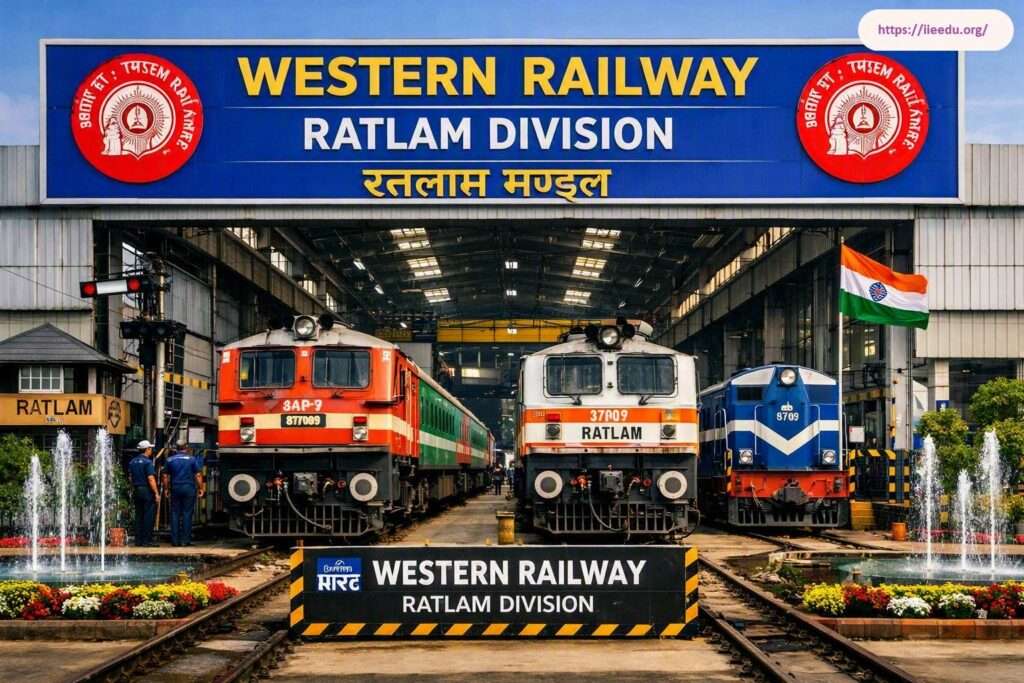
Western Railway Ratlam Division
- Western Railway Ratlam Division
- Chapter 1 – The Heart of a Railway Division
- Chapter 2 – Understanding the Need for Quality
- Chapter 3 – The Decision for Quality and the ISO 9001:2015 Journey
- Chapter 4 – Transforming the Running Room into a Quality Service Environment
- Chapter 5 – Catering, Hospitality and the Human Side of Quality
- Chapter 6 – Comfort, Cleanliness and Recovery
- Chapter 7 – Building a Culture of Responsibility
- Chapter 8 – From Certification to Continuous Improvement
- Chapter 9 – Growth, Recognition and the Expanding Role of Quality
- Chapter 10 – A Continuing Journey of Quality, Service and Commitment
- Take the Next Step Today

Chapter 1 – The Heart of a Railway Division
A railway is much more than tracks, locomotives, stations and timetables. At the center of every successful railway operation are people who work continuously, often behind the scenes, to keep trains moving safely and efficiently. Among these people, Loco Pilots (LPs) and Guards play a particularly important role. Their duties demand concentration, discipline, technical knowledge and physical as well as mental alertness. For this reason, the facilities provided to running staff between their duties are an essential part of railway operations.
Western Railway’s Ratlam Division occupies an important position in the railway network of central and western India. Ratlam is a significant railway location in Madhya Pradesh, connecting important routes and serving a large movement of passengers and goods. The division’s operational responsibilities require coordination among numerous departments, employees and supporting facilities. Within this environment, the LP & Guards Running Rooms at Ratlam, Indore and Ujjain have an important role in supporting railway personnel.
The story of these running rooms is therefore not simply a story about accommodation. It is a story about creating an environment in which railway employees can recover from demanding duties and prepare themselves for their next assignment.
The work associated with the project was centered on providing proper ambience for the rest of running staff, including boarding, catering and lodging. These three elements may appear straightforward, but together they represent a complex service responsibility. A running room must be clean, comfortable, organized and dependable. Food must be available when staff require it. Rooms and beds must be properly maintained. Linen and sanitation must be managed. Employees must be able to arrive, complete their necessary formalities and obtain rest without unnecessary difficulty.
For a Loco Pilot or Guard, rest is not simply a matter of personal comfort. It is connected with professional readiness. Railway duties can involve irregular working hours, long journeys and demanding operational conditions. When staff reach a running room after duty, the quality of the environment can influence their ability to relax and recover. A quiet room, clean bedding, hygienic surroundings, suitable food and reliable basic services can make the difference between an ordinary accommodation facility and a genuinely supportive running room.
This understanding created the foundation for a quality-oriented approach.
The Ratlam running-room environment was part of a wider system extending across important locations. Indore and Ujjain also served as important points for running staff. By considering these facilities within a common service framework, the organization could focus on consistency. Employees should experience an appropriate level of service regardless of which designated running room they used.
Quality, therefore, had to become a process rather than an isolated activity.
The importance of this philosophy becomes clearer when we consider the number of activities taking place every day. A running room involves reception and registration, room allocation, cleaning, linen management, kitchen operations, dining services, maintenance, water supply, electrical support and general housekeeping. Each activity depends upon people performing their responsibilities at the right time and in the right manner.
If one part of the system fails, the effect can be felt throughout the facility. Poor housekeeping can affect comfort. Delayed maintenance can affect availability. Inconsistent catering can affect employee satisfaction. Inadequate coordination can create confusion for staff arriving after duty.
A quality management system provides a way to bring these activities together.
The adoption of ISO 9001:2015, as identified in the project brief for the 2018 certification period, represented an important milestone in this journey. ISO 9001 is based on a systematic approach to quality management, emphasizing processes, customer focus, leadership, performance evaluation and continual improvement. For a service organization, its importance lies not merely in obtaining a certificate but in developing habits of consistency and accountability.
In the context of the running rooms, this meant looking carefully at what running staff needed and how those needs could be addressed through defined procedures.
The concept of “proper ambience” was consequently broader than decoration. It included cleanliness, order, hygiene, comfort, food service, accommodation and a sense of reliability. A well-maintained facility communicates respect to the people who use it. It tells the running staff that their recovery and comfort are important parts of the overall railway system.
This philosophy also creates a culture of responsibility among service personnel. When employees understand that every task contributes to a larger quality objective, housekeeping, catering, maintenance and reception are no longer isolated functions. They become interconnected elements of one service.
The journey toward quality at the Ratlam Division running rooms can therefore be understood as a journey from routine service toward systematic service. The objective was not merely to provide beds and meals, but to establish an environment capable of supporting railway personnel in a dependable and professional manner.
The facilities at Ratlam, Indore and Ujjain became part of this larger vision. Their purpose was closely connected to the human side of railway operations: giving running staff an appropriate place to pause, eat, sleep, refresh themselves and prepare for the next responsibility.
This is where the real story begins.
Behind every train that leaves a station is a team of people whose readiness matters. Behind those people are systems designed to support them. And behind those systems is a commitment to quality.
The ISO 9001:2015 milestone of 2018 can therefore be viewed as one chapter in a continuing journey—one in which Western Railway Ratlam Division sought to strengthen the environment in which its running staff rested and recovered.
The certificate may have marked a formal achievement, but the deeper achievement was the development of a quality mindset: service must be organized, performance must be monitored, shortcomings must be addressed, and improvement must continue.
#WesternRailway
Chapter 2 – Understanding the Need for Quality
The success of a railway operation depends not only on the movement of trains but also on the strength of the support systems that stand behind every journey. Among these support systems, running rooms occupy a special position because they directly serve the employees responsible for operating trains. For Loco Pilots and Guards, a running room is a place where duty temporarily gives way to rest, food and recovery. The quality of that environment can therefore become an important part of the larger operational framework.
For Western Railway Ratlam Division, the requirement for dependable running-room facilities was connected with the demanding nature of railway work. Running staff may work at different hours, arrive after long journeys and require rest before undertaking their next assignment. Unlike conventional accommodation, a running room must respond to an operational timetable. Its services need to be available when railway employees need them, not simply during conventional business hours.
This created a fundamental question: how could the facilities at Ratlam, Indore and Ujjain provide a consistent, hygienic and comfortable environment for the running staff who depended upon them?
The answer required more than occasional improvements. It required a systematic approach.
The scope of the project described for Western Railway Ratlam Division focused on providing proper ambience for the rest of running staff, including boarding, catering and lodging. Each component had its own requirements. Boarding involved providing suitable accommodation and ensuring that beds, linen and rooms were properly managed. Catering involved the preparation and service of food under appropriate hygienic conditions. Lodging required a clean, comfortable and well-maintained environment in which employees could obtain meaningful rest.
When these activities are considered individually, they appear relatively simple. However, when they are combined in a continuously operating railway environment, they become a significant management responsibility.
A running room may receive employees at different times of the day and night. Rooms must be prepared for incoming staff while previously occupied rooms are cleaned and restored. Food arrangements must correspond with staff requirements. Maintenance issues must be identified and addressed. Basic utilities must remain functional. Employees must have a straightforward method of obtaining assistance when problems occur.
Consistency is therefore essential.
A facility may be attractive on one day but fail to meet expectations on another if processes are not controlled. Similarly, excellent catering can lose its value if cleanliness is neglected. Comfortable accommodation cannot compensate for poor maintenance. Quality is achieved when all the elements work together.
This was one of the important reasons for adopting a structured quality-management philosophy.
ISO 9001:2015 emphasizes a process-based approach to managing quality. Instead of treating each activity as a separate task, an organization can identify how activities connect with one another, determine responsibilities, monitor results and take corrective action where necessary. For running-room services, this approach can provide a framework for converting everyday activities into measurable and manageable processes.
The concept of customer focus also has a particular meaning in this environment. The people using the running rooms are not conventional hotel guests. They are railway employees whose requirements arise from operational duties. Their expectations include cleanliness, food availability, comfort, safety, timely service and a suitable environment for rest.
Understanding these requirements is the starting point for improvement.
For example, a running staff member arriving after duty may not want unnecessary delays at reception. The employee may need a clean room immediately, a meal at an appropriate time and an environment that allows uninterrupted rest. These requirements can be translated into service procedures. The better those procedures are designed and followed, the more dependable the experience becomes.
The same principle applies to housekeeping.
Cleanliness should not depend entirely on individual initiative. A quality-oriented system encourages defined responsibilities and regular checks. Rooms, bathrooms, dining areas and common spaces can be maintained according to established procedures. Linen can be handled systematically. Maintenance concerns can be recorded and followed up.
Catering requires a similar discipline. Food quality is not simply about taste. It also includes hygiene, freshness, appropriate storage, preparation practices, cleanliness of utensils and reliable service. A systematic approach can help ensure that these factors receive regular attention.
The physical ambience of a running room also has an important psychological dimension. A clean and orderly environment can communicate professionalism. Proper lighting, ventilation, furniture, sanitation and organized common areas can help employees feel that their needs have been considered.
In this sense, improving the running room is also an investment in employee dignity.
The quality journey described for the Ratlam Division can therefore be understood as a movement toward greater consistency. The aim was not simply to make the premises look better. It was to create a service environment in which every important activity had a clear purpose and could be reviewed for effectiveness.
The three locations—Ratlam, Indore and Ujjain—were important parts of this service network. Each facility had its own operational circumstances, but the underlying expectation remained the same: running staff should receive a dependable standard of boarding, catering and lodging.
The 2018 ISO 9001:2015 certification milestone mentioned in the project brief provided formal recognition of this quality-oriented approach. More importantly, it represented an opportunity to establish continuous improvement as an ongoing responsibility rather than a one-time project.
Quality begins when an organization understands the needs of the people it serves.
For Western Railway Ratlam Division, that understanding began with a simple but powerful principle: the people who operate trains need proper conditions in which to rest and recover. Providing those conditions requires planning, discipline, monitoring and commitment.
#RatlamDivision
Chapter 3 – The Decision for Quality and the ISO 9001:2015 Journey

The decision to pursue a formal quality-management approach represents an important moment in the development of any service organization. It indicates that quality is no longer regarded as an occasional objective but as a structured responsibility. For the running-room facilities associated with Western Railway Ratlam Division, this approach was particularly relevant because the services provided directly supported railway personnel whose duties required discipline, alertness and reliability.
The project brief identifies ISO 9001:2015 as the applicable product or management standard, with an issue year of 2018 and validity stated through 2019. This milestone provides the foundation for understanding the quality journey of the Ratlam Division running-room facilities at Ratlam, Indore and Ujjain.
ISO 9001:2015 is an internationally recognized quality-management standard. Its fundamental philosophy is based on establishing processes that can be controlled, evaluated and continually improved. Certification is not simply an award for maintaining attractive premises. It requires an organization to demonstrate that its activities are managed through an organized quality system.
For a running room, this philosophy can have practical significance.
Consider the number of services that must function together every day. Employees arrive after duty. Their details need to be managed. Accommodation has to be available. Rooms need to be cleaned and prepared. Bedding and linen must be maintained. Food must be prepared and served. Common areas require housekeeping. Water and electricity must be available. Maintenance issues need attention. Complaints and suggestions may need to be recorded and addressed.
Without a systematic approach, such activities can become dependent on individual effort. When a process is clearly defined, however, responsibility becomes easier to understand and performance can be monitored.
This is one of the central ideas behind quality management.
The ISO 9001:2015 approach encourages organizations to understand their processes, identify risks and opportunities, establish responsibilities, monitor performance and seek improvement. In the context of running-room services, this can mean asking practical questions.
Are rooms cleaned according to an established schedule?
Is linen available and properly maintained?
Are food services delivered consistently?
Are hygiene practices being followed?
Are maintenance problems recorded and resolved?
Do employees know whom to contact when they encounter a problem?
Are complaints reviewed rather than simply forgotten?
These questions turn quality from an abstract concept into a daily management activity.
The certification journey also creates greater awareness among employees. When people understand that their work contributes to a formally recognized quality system, routine responsibilities can acquire greater importance. A housekeeping employee understands that cleanliness is not merely a personal preference. A catering employee recognizes that food handling is part of a controlled service process. A maintenance worker understands that timely corrective action contributes to service continuity.
Quality therefore becomes a shared responsibility.
Another important aspect is documentation. In a structured management system, important activities can be supported by records, procedures, checklists, inspections and reviews. Documentation provides evidence that processes are being followed and also helps identify areas where improvement may be necessary.
For a running room, records can be useful for monitoring occupancy, housekeeping, catering, maintenance and complaints. When information is recorded consistently, management can identify recurring issues rather than relying entirely on memory or informal communication.
This leads to another important principle: what is measured can be improved more effectively.
Suppose repeated maintenance complaints are recorded in a particular area. Management can study the pattern, determine the cause and introduce corrective action. If food-service feedback shows a recurring concern, the catering process can be reviewed. If housekeeping inspections identify repeated deficiencies, responsibilities or schedules can be adjusted.
This cycle—identify, analyze, correct and improve—is central to a mature quality culture.
The Ratlam Division running-room facilities also demonstrate why standardization matters. Ratlam, Indore and Ujjain are different locations, and their operational conditions may vary. Yet the basic expectation of service remains consistent. Running staff should be able to depend on suitable accommodation, catering and an appropriate environment for rest.
A common quality framework can help establish that consistency while allowing individual facilities to respond to their local requirements.
Certification can also influence organizational confidence. A formal quality system provides a recognizable framework for internal review and external assessment. It encourages an organization to examine its own processes and demonstrate that those processes are being managed systematically.
However, the true value of ISO certification lies beyond the certificate itself.
A certificate can be displayed on a wall, but quality must be visible in the rooms, kitchens, dining areas, reception areas and service interactions. It must be experienced by the employee who arrives after a difficult duty and expects a clean bed, hygienic surroundings and suitable food.
This distinction is crucial.
The objective of the ISO 9001:2015 journey was therefore not simply to achieve certification in 2018. The larger objective was to strengthen the systems supporting running staff. Certification could provide recognition and structure, but continued performance would depend upon employees, supervisors and management maintaining the established processes.
Quality is also closely connected with continual improvement. A process that worked yesterday may require modification tomorrow. Employee expectations can change. Operational requirements can change. Facilities can age. New technologies can become available. Therefore, a quality system must remain active and responsive.
The 2018 milestone can consequently be seen as the beginning of another stage rather than the conclusion of the journey.
For Western Railway Ratlam Division, the quality philosophy connected employee welfare with operational support. By focusing on boarding, catering and lodging, the running rooms addressed basic but important requirements of railway personnel. By introducing a systematic quality approach, these services could be organized around consistency, accountability and improvement.
The result was a stronger foundation for service delivery.
The journey toward ISO 9001:2015 demonstrated an important lesson: quality does not happen automatically. It requires intention, planning and discipline. It requires people to understand their responsibilities and management to provide the systems necessary for them to perform those responsibilities effectively.
Most importantly, it requires an organization to recognize that every service contributes to a larger mission.
For the Ratlam Division running rooms, that larger mission was the support of the people who keep railway operations moving. The certificate represented formal recognition, but the deeper achievement was the establishment of a culture in which quality became part of everyday work.
#RunningRoom
Chapter 4 – Transforming the Running Room into a Quality Service Environment

The achievement of ISO 9001:2015 certification was an important milestone, but certification itself could never be the final objective. The real challenge began when quality principles had to be translated into everyday activities. For Western Railway Ratlam Division, this meant ensuring that the running rooms at Ratlam, Indore and Ujjain were not simply places where railway employees could stay, but well-organized service environments designed around the needs of running staff.
A running room has a very different purpose from ordinary accommodation. The people who use it arrive because of their professional responsibilities. They may reach the facility during the day, late at night or in the early hours of the morning. Their schedules are determined by railway operations rather than conventional hospitality routines. Consequently, the running room must be prepared to serve employees whenever they arrive.
This requirement makes organization essential.
The first visible area of transformation is the overall ambience of the facility. Ambience does not mean expensive decoration. It means creating surroundings that are clean, orderly, comfortable and suitable for rest. A well-maintained entrance, organized reception area, clean corridors, hygienic rooms and properly managed common spaces can immediately create a sense of confidence.
For an employee returning from duty, such an environment can provide psychological relief. The transition from the operational pressure of railway work to a quiet place of rest becomes easier when the surroundings are orderly and welcoming.
Cleanliness is one of the most important components of this transformation.
A systematic housekeeping process can ensure that rooms are cleaned regularly, bathrooms receive appropriate attention and common areas remain presentable. Beds must be prepared properly for incoming staff. Linen should be maintained and changed according to established requirements. Waste must be removed and sanitation standards must be observed.
The significance of these activities becomes clear when the running room is viewed from the perspective of its users. Employees cannot fully relax if they are concerned about hygiene. Clean surroundings therefore contribute directly to the quality of rest.
The next important element is accommodation management.
A running room must balance occupancy requirements with the need to provide suitable rest. Rooms and beds need to be tracked, prepared and allocated efficiently. Reception and record-management procedures can help reduce confusion when staff arrive. A properly organized system also allows personnel to complete necessary formalities without unnecessary delays.
The quality-management philosophy encourages these activities to be treated as processes rather than informal arrangements.
Another major area of transformation is maintenance. Even a well-designed building can lose its effectiveness when minor defects are ignored. A leaking tap, damaged furniture, faulty lighting, poor ventilation or malfunctioning equipment can gradually affect the overall experience.
A preventive approach is therefore valuable. Instead of waiting for a breakdown, maintenance requirements can be identified and addressed before they become serious. Regular inspection helps discover problems early. Records can help management identify repeated failures and determine whether a permanent corrective action is needed.
This approach supports one of the important principles of quality management: prevention is generally more effective than repeatedly correcting the same problem.
Catering is another essential component.
Running staff require meals that are available according to their working patterns. Food service therefore needs planning and coordination. Kitchen cleanliness, food preparation, storage, serving arrangements and dining-area hygiene all contribute to the quality of the service.
A good catering system is not defined only by the menu. It is defined by reliability.
When an employee arrives at an unusual hour, the expectation is that appropriate arrangements will exist. When food is served, it should be prepared and handled responsibly. Dining areas should be clean and organized. Utensils should be properly maintained.
These seemingly ordinary details can have a significant effect on employee satisfaction.
The quality approach also encourages feedback.
Courtesy: MIKKU MUSAFIR
No service can improve effectively if management never listens to the people who use it. Running staff experience the facilities directly and can identify issues that may not always be visible during routine inspections. Feedback mechanisms can therefore provide valuable information about accommodation, food, cleanliness, maintenance and other services.
A complaint should not necessarily be viewed as a failure. When properly managed, it can become an improvement opportunity.
For example, if several employees identify the same problem, management can investigate its cause. If the issue is related to housekeeping, the cleaning process can be reviewed. If it concerns food service, catering procedures can be examined. If it concerns accommodation, maintenance or room allocation, the relevant process can be modified.
This creates a cycle of continual improvement.
Another important aspect is employee involvement. A quality system can provide procedures, but procedures are effective only when people understand and follow them. Housekeeping personnel, catering staff, reception personnel, supervisors and maintenance teams all contribute to the final service.
The running room is therefore a collective responsibility.
Leadership is equally important. Supervisors must communicate expectations, monitor performance and respond to problems. Management must ensure that employees have appropriate resources, training and guidance. Quality cannot be delegated entirely to one department.
The transformation following the certification initiative can thus be understood as a transformation in mindset.
The objective was not simply to provide a room, a meal or a bed. The objective was to provide these services consistently, hygienically and responsibly.
This distinction separates a basic facility from a quality-oriented facility.
Western Railway documentation has described features of the Ratlam running-room environment such as a computerized reception counter, furnished dining arrangements, fresh linen, kitchen facilities, water arrangements, lockers, standby power, recreation facilities and other employee-support amenities. These features illustrate how the concept of a running room extends beyond sleeping accommodation.
The broader lesson is that employee welfare and operational quality are closely connected. When running staff have access to a dependable environment for rest, food and recovery, the railway creates a stronger support structure around its operational workforce.
The ISO 9001:2015 milestone provided a framework for strengthening that structure. The real transformation, however, took place through daily discipline: cleaning a room correctly, preparing food responsibly, responding to a maintenance issue, recording a complaint and checking whether corrective action worked.
Quality is created through thousands of such small actions.
The running rooms at Ratlam, Indore and Ujjain therefore became more than physical facilities. They represented a commitment to service, comfort and consistency.
The transformation was not a single event completed in 2018. It was a continuing process—one in which every improvement created an opportunity for another.
And as the next chapter of the journey unfolded, particular attention turned toward one of the most important services provided to running staff: catering and hospitality.
#LocoPilots
Chapter 5 – Catering, Hospitality and the Human Side of Quality

Among all the services provided in a running room, catering has a particularly important place. Food is not simply an additional facility for railway employees. For Loco Pilots and Guards, who may complete duties at different hours and arrive after demanding journeys, reliable access to suitable meals is an essential part of a supportive rest environment.
For Western Railway Ratlam Division, the quality journey associated with the running rooms at Ratlam, Indore and Ujjain therefore extended naturally into catering and hospitality. The objective was to create an environment where running staff could obtain food, accommodation and rest in a manner that was organized, hygienic and dependable.
The ISO 9001:2015 philosophy provided an important framework for thinking about these services. Quality management requires an organization to understand the needs of the people it serves and then establish processes capable of delivering those requirements consistently. In the case of running-room catering, this means considering not only what food is served but how it is prepared, stored, handled, presented and made available.
A meal served at the right time can be a small comfort after a long duty. A meal that is delayed, unavailable or poorly managed can create additional inconvenience. Therefore, reliability becomes an important part of catering quality.
Running staff do not necessarily follow conventional meal schedules. Railway operations can bring employees to a running room during the morning, afternoon, evening or late night. Catering arrangements consequently need to be aligned with the working pattern of the staff rather than with an ordinary commercial restaurant schedule.
This requires planning.
Kitchen personnel need to understand expected demand. Food materials must be available. Preparation needs to be coordinated. Dining areas must be maintained. Utensils and equipment need to be cleaned. Food-handling practices must receive regular attention.
These activities demonstrate that catering quality is the result of a complete process.
Hygiene is another essential component. A professional catering environment requires cleanliness at every stage, from the kitchen and preparation surfaces to utensils and dining areas. Proper storage and handling practices help protect food quality. Clean uniforms, responsible personal hygiene and orderly working procedures can further strengthen confidence in the service.
The importance of hygiene becomes even greater in a railway running room because many employees may use the facility over a short period. A common dining environment therefore needs systematic cleaning and maintenance.
Western Railway documentation describing the Ratlam Division running-room facilities has highlighted features such as a furnished dining hall and separate vegetarian and non-vegetarian kitchen arrangements. It also records subsidized meal arrangements as part of the running-room service environment. These facilities demonstrate that catering was treated as an organized employee-support function rather than simply an informal food arrangement.
Hospitality extends beyond food.
When a railway employee enters a running room after duty, the first impression can influence the entire experience. A professional reception process, clear information, orderly surroundings and respectful interaction can make arrival easier. The employee should be able to understand where to go, where to rest and how to access the services required.
This is especially valuable when the employee is tired.
Hospitality in this environment therefore means reducing unnecessary difficulties. It means making the service predictable. It means ensuring that basic requirements can be fulfilled without confusion.
The role of reception becomes particularly important. A systematic reception arrangement can support registration, room allocation and communication. Western Railway documentation has referred to a computerized reception counter among the facilities associated with the Ratlam running room. Such systems illustrate how administrative organization can support physical comfort.
The dining environment also contributes to hospitality. A clean, furnished dining area can create a more pleasant experience than eating in an unorganized or poorly maintained space. The surroundings communicate the organization’s attitude toward its employees.
Quality is often visible in these small details.
A clean table, properly arranged dining area, fresh linen, organized reception desk or well-maintained room may appear insignificant individually. Collectively, however, they create an atmosphere of reliability and respect.
This is why the concept of “proper ambience” in the project scope is so meaningful. Ambience is not limited to appearance. It includes the total experience created by accommodation, food, cleanliness, service and surroundings.
The human side of quality becomes especially clear here.
Railway employees are not simply users of a facility. They are people performing demanding responsibilities on behalf of the organization. Providing them with an appropriate place to rest recognizes the importance of their contribution.
The running room consequently becomes part of employee welfare.
A quality-management system can strengthen this welfare function by making expectations clearer. Catering staff can follow defined procedures. Housekeeping can work according to schedules. Maintenance issues can be reported and tracked. Supervisors can conduct inspections. Feedback can be reviewed.
Each process contributes to a single objective: dependable service.
There is also an important connection between catering and rest. Food that is available and properly managed allows employees to meet their basic needs without leaving the running-room environment unnecessarily. When combined with comfortable accommodation, a suitable dining facility can make the entire recovery period more efficient.
This matters because running staff have limited time between duties.
The quality journey therefore involved creating a service environment that understood the realities of railway work. The goal was not luxury. It was suitability, cleanliness, reliability and comfort.
This approach also demonstrates the broader meaning of ISO 9001:2015. Quality management is not about making every service extravagant. It is about ensuring that requirements are understood and fulfilled consistently.
For the running rooms at Ratlam, Indore and Ujjain, the requirements were clear: running staff needed appropriate boarding, catering and lodging. The quality challenge was to deliver those services in a controlled and dependable manner.
The 2018 certification milestone represented recognition of this structured approach. But the real test of quality occurred every day thereafter—in the kitchen, dining room, reception area, bedrooms, bathrooms and maintenance activities.
Every properly prepared meal became part of the quality story.
Every clean room became part of the quality story.
Every satisfied employee became evidence that the system was serving its purpose.
The journey of the Ratlam Division running rooms thus shows that hospitality can have a practical role in railway operations. By supporting the physical and mental recovery of running staff, catering and accommodation become more than conveniences.
They become essential elements of a human-centered quality system.
And as the quality culture developed further, attention naturally moved toward another fundamental requirement: ensuring that the physical environment itself remained clean, comfortable, safe and capable of supporting genuine recovery.
#RailwayGuards
Chapter 6 – Comfort, Cleanliness and Recovery

The true purpose of a running room is to provide railway employees with an appropriate environment in which they can rest and recover between duties. For Loco Pilots and Guards, this purpose is especially important because their responsibilities demand continuous concentration, discipline and alertness. A running room must therefore be more than a place to sleep. It must provide an environment that supports physical comfort, mental relaxation and readiness for the next assignment.
For Western Railway Ratlam Division, the running-room facilities at Ratlam, Indore and Ujjain were designed around this fundamental requirement. The scope of work emphasized proper ambience for running staff, including boarding, catering and lodging. Behind these words was a much larger responsibility: creating an environment where employees could feel comfortable, secure and respected after completing their railway duties.
Comfort begins with cleanliness.
A clean room immediately creates a different atmosphere from an unclean or poorly maintained one. Clean floors, properly arranged beds, hygienic bathrooms, fresh linen and orderly common areas help employees relax. Cleanliness also contributes to confidence in the facility because users can see that regular care and supervision are being provided.
In a quality-oriented running room, housekeeping cannot depend entirely on occasional cleaning. It must be treated as a planned activity. Rooms need to be prepared for incoming staff, bathrooms require regular attention and common areas must remain presentable throughout the day. Waste needs to be removed promptly, and cleaning materials and equipment must be managed properly.
This is where systematic quality management becomes valuable.
Defined responsibilities allow employees to understand what needs to be done and when it needs to be completed. Supervisory checks can provide another level of assurance. When deficiencies are identified, corrective action can be taken.
The objective is consistency.
A running-room employee should not have to wonder whether the room will be clean on a particular day. The expected standard should remain stable.
Linen is another important part of comfort. After a demanding duty, a clean and properly maintained bed can contribute significantly to the quality of rest. Linen management therefore becomes an important operational process. Availability, cleanliness, replacement and proper storage all need attention.
The same principle applies to bathrooms and washing facilities. Hygiene in these areas directly affects the experience of the people using the running room. Regular cleaning, adequate water supply and functioning fixtures are basic requirements that need continuous monitoring.
Western Railway documentation describing the Ratlam Division running-room environment has recorded facilities such as fresh linen, water arrangements, washing and drying facilities, individual lockers, standby power and other employee-support amenities. These features demonstrate that the concept of a running room extends well beyond basic sleeping accommodation.
Security and personal convenience also matter.
Individual lockers can provide employees with a place to keep their belongings while they rest. Reliable electrical supply is important because lighting, fans and other essential services depend upon it. Standby power arrangements can help maintain continuity during interruptions.
These details may appear small, but together they contribute to a sense of stability.
A railway employee arriving after duty should be able to focus on rest rather than worrying about basic facilities.
Ventilation and environmental comfort are also important. A room used by tired employees should have suitable airflow and an environment conducive to relaxation. Good housekeeping, appropriate maintenance and functional equipment all contribute to this objective.
The psychological dimension of recovery should not be overlooked.
Railway work can involve responsibility, time pressure and changing operational conditions. When an employee reaches the running room, the environment should encourage a transition from work to rest. Excessive noise, disorder, poor cleanliness or unresolved maintenance problems can make this transition difficult.
A peaceful and organized environment, on the other hand, can communicate that the period of rest is important.
This is one reason why “proper ambience” is a meaningful expression in the project scope. Ambience includes the combined effect of cleanliness, lighting, ventilation, furniture, organization, food service and general atmosphere.
Recreation facilities can also contribute to recovery. Western Railway documentation has referred to recreation facilities and a reading room among the features associated with the running-room environment. Such facilities provide employees with opportunities to relax in ways other than sleeping.
The idea is simple: recovery is not identical for every person.
Some employees may prefer quiet reading. Others may want to sit in a common area or engage in light recreation. Providing suitable options can make the facility more supportive.
Quality management also requires attention to maintenance.
A comfortable running room cannot remain comfortable if equipment is allowed to deteriorate. Doors, windows, plumbing, electrical systems, furniture, lighting and other facilities require regular inspection. Small defects should be addressed before they become major problems.
This preventive approach can reduce inconvenience and improve service continuity.
Maintenance records can also help management identify recurring issues. If the same problem appears repeatedly, it may indicate that a deeper corrective action is necessary. In this way, maintenance becomes part of continual improvement.
Employee feedback is equally valuable.
Running staff use the facilities directly and may notice problems that are not obvious during routine inspections. Their comments can reveal opportunities to improve cleanliness, room arrangements, food service, maintenance or general ambience.
A quality culture encourages such feedback rather than treating it as criticism.
When employees know that their concerns are heard, trust can increase. When management responds to those concerns, the quality system becomes more dynamic.
The 2018 ISO 9001:2015 milestone can therefore be understood in the context of these everyday activities. The certificate represented a formal quality achievement, but the real value was reflected through continued attention to processes and service standards.
The running rooms at Ratlam, Indore and Ujjain illustrate how employee welfare can be integrated into an operational quality system. Every clean bed, every maintained bathroom, every functioning facility and every properly prepared room contributes to the recovery of running staff.
This recovery is ultimately connected to the wider railway mission.
A railway depends upon people who are prepared to perform their duties responsibly. Providing an appropriate environment between duties supports those people and recognizes the importance of their well-being.
The story of comfort and cleanliness is therefore not separate from the story of railway performance. It is part of it.
The quality journey demonstrates that a running room becomes truly valuable when every element works together: accommodation provides rest, catering provides nourishment, housekeeping provides hygiene, maintenance provides reliability and a welcoming ambience provides peace of mind.
When these elements are managed systematically, the running room becomes a dependable support system.
And from this foundation emerged another important aspect of quality: building a culture in which responsibility for service was shared by everyone involved.
#RailwaySafety
Chapter 7 – Building a Culture of Responsibility

A quality-management system becomes successful only when it moves beyond documents, procedures and certificates and becomes part of everyday behavior. For Western Railway Ratlam Division, the development of quality-oriented running-room services required more than improvements in buildings or facilities. It required people to understand that every task they performed contributed to the comfort, welfare and readiness of railway running staff.
This was the beginning of a culture of responsibility.
The running rooms at Ratlam, Indore and Ujjain brought together many different activities. Reception personnel, housekeeping teams, catering workers, maintenance staff and supervisors all had different duties, but their work ultimately served the same purpose: providing a dependable environment for Loco Pilots and Guards between their assignments.
When quality is viewed in this way, no task is insignificant.
A housekeeping employee cleaning a room is contributing to employee recovery. A catering worker preparing food is supporting the nutritional needs of running staff. A maintenance employee repairing a faulty facility is preventing inconvenience. A reception employee managing accommodation is helping staff move quickly from duty to rest.
Each individual responsibility becomes part of a larger system.
This understanding is one of the strengths of a quality-management approach such as ISO 9001:2015. The standard encourages organizations to establish clear processes, responsibilities and controls. When employees understand what is expected from them, work becomes more consistent.
Consistency is especially important in running-room services.
Railway staff may use the facilities at different times and under different circumstances. They should nevertheless receive a dependable standard of service. The room should be prepared correctly, food should be handled properly and essential facilities should function as expected.
Achieving this consistency requires discipline.
Consider housekeeping. A quality-oriented housekeeping process can define cleaning activities, responsibilities and inspection requirements. Instead of cleaning only when a room appears untidy, staff can follow a planned schedule. Supervisors can check results, and deficiencies can be corrected.
The same principle applies to catering.
Kitchen employees must understand the importance of hygiene, food handling and orderly preparation. The dining area must remain clean. Equipment needs proper care. Supplies must be managed. When these activities are treated as controlled processes, the quality of food service becomes less dependent on individual habits.
Maintenance provides another example.
A reactive organization waits for equipment to fail before taking action. A quality-oriented organization attempts to identify potential problems early. Regular inspections can reveal defects before they become serious. Maintenance records can help establish patterns. Repeated problems can be investigated for their root causes.
This approach changes the question from “How do we repair this?” to “Why did this happen, and how can we prevent it from happening again?”
That is the beginning of continual improvement.
Leadership plays an important role in creating this culture. Supervisors and managers must communicate expectations clearly and ensure that employees have the resources needed to perform their responsibilities. They must also monitor results and respond constructively when problems are identified.
A culture of responsibility does not mean blaming employees whenever something goes wrong. Instead, it means understanding the process, identifying the cause and taking appropriate corrective action.
Suppose a room repeatedly fails a housekeeping inspection. The response should not simply be to criticize the employee. Management should examine whether the cleaning schedule is adequate, whether sufficient manpower is available, whether cleaning materials are accessible and whether the required standard has been clearly communicated.
This approach focuses on improving the system.
Training is another important part of responsibility.
Employees cannot be expected to deliver consistent quality unless they understand the procedures and the reasons behind them. Training can help personnel understand hygiene requirements, housekeeping practices, safety expectations, customer interaction, record management and quality procedures.
When employees understand why their work matters, they are more likely to take ownership of it.
Ownership is a powerful component of quality.
An employee who sees cleaning as merely a routine task may complete it mechanically. An employee who understands that a clean room helps a tired Loco Pilot recover may approach the same task with greater care.
The difference is not necessarily in the task itself. It is in the mindset behind the task.
This human dimension is especially important in railway support services. The running staff who use the facilities are part of the same organizational mission. They are not simply customers in the commercial sense. They are colleagues whose operational duties contribute to railway functioning.
Providing them with a good environment therefore represents mutual responsibility.
Feedback also helps develop this culture.
Running staff can provide valuable information about what works well and what needs improvement. Their experiences can identify recurring problems that routine inspections may not reveal. A quality system can capture such feedback and convert it into corrective or preventive action.
For example, if staff repeatedly report difficulty with room allocation, management can review the reception process. If food-related concerns recur, catering procedures can be examined. If a particular maintenance issue appears repeatedly, a permanent technical solution may be required.
In this way, feedback becomes an input into improvement.
Records are equally important. Documentation creates accountability and helps management understand performance over time. Inspection records, maintenance reports, complaint registers and service-related records can provide evidence of what happened and what action was taken.
This does not mean that quality should become an excessive paperwork exercise. Records are valuable when they support better decisions.
The ultimate objective is improved service.
The 2018 ISO 9001:2015 certification milestone described for the Ratlam Division project therefore represents more than an administrative achievement. It reflects the importance of developing a structured approach in which people, processes and facilities work together.
A quality certificate can establish a framework, but employees bring that framework to life.
Every day, the quality system is tested by real circumstances: an unexpected arrival, a maintenance issue, a busy catering period, a room requiring urgent preparation or a complaint requiring attention.
The strength of the system is demonstrated by how effectively these situations are handled.
The running rooms at Ratlam, Indore and Ujjain therefore became examples of how service quality depends on shared responsibility. Their effectiveness was connected not to one individual or one department but to the coordinated efforts of everyone involved.
The culture of responsibility created an important foundation for the next stage of the journey.
Once processes were defined, responsibilities understood and feedback recognized as an opportunity, the organization could move toward a more mature concept of quality: continuous improvement.
Certification could mark the achievement of a standard.
Responsibility would determine whether that standard continued to live.
#ISO9001
Chapter 8 – From Certification to Continuous Improvement

ISO 9001:2015 certification can be an important achievement for an organization, but the real value of certification begins after the certificate is issued. A quality-management system is designed not merely to demonstrate that a particular standard has been achieved at one point in time, but to encourage an organization to maintain its processes, measure performance and continue improving them.
For Western Railway Ratlam Division, this principle was particularly relevant to the running-room facilities at Ratlam, Indore and Ujjain. The scope of work was centered on providing proper ambience for running staff, including boarding, catering and lodging. These services could never remain static because the needs of employees, operational requirements and facility conditions could change over time.
The certification milestone identified in the project brief for 2018 therefore represented the beginning of a continuing quality journey.
Continuous improvement begins with observation.
An organization must first understand how its services are performing. In a running room, this can involve examining cleanliness, accommodation, catering, maintenance, reception, utilities and employee feedback. If performance is satisfactory, the organization can seek ways to maintain and strengthen it. If deficiencies are discovered, corrective action can be taken.
This creates a cycle of improvement.
One of the simplest examples is housekeeping. Suppose inspections identify recurring cleanliness issues in a particular area. The immediate response may be to clean the area again. However, a quality-management approach encourages a deeper question: why does the problem keep occurring?
Perhaps the cleaning schedule is inadequate. Perhaps responsibilities are unclear. Perhaps the required materials are not readily available. Perhaps the facility experiences unusually high usage at certain times.
Identifying the underlying cause can lead to a more permanent solution.
The same principle applies to catering. If employees repeatedly report delays or inconsistency in food service, management can investigate the process rather than treating each complaint separately. Demand patterns, kitchen scheduling, food availability and service arrangements can all be reviewed.
Improvement therefore means learning from experience.
Maintenance offers another clear example. A breakdown may be repaired quickly, but repeated breakdowns suggest that corrective repair alone is not enough. Preventive maintenance, inspection schedules and replacement planning can reduce the likelihood of recurring failures.
This approach has a direct connection with operational reliability.
A running room must remain functional when employees need it. Unplanned failures can cause inconvenience and reduce confidence in the facility. Preventive action can therefore be more valuable than repeated emergency repairs.
Feedback is an important source of information in this process.
The people using a facility every day can identify practical issues that may not be obvious to management. Running staff can comment on room comfort, food, cleanliness, reception arrangements, maintenance and other services. When such feedback is collected systematically, it can help identify trends.
A single complaint may indicate an isolated problem. Repeated comments may indicate a process weakness.
The difference is important.
A mature quality system does not simply count complaints. It analyzes them.
If several employees raise similar concerns, management can investigate whether the issue is connected with a particular location, time period, service or process. The resulting analysis can guide corrective action.
This is one reason documentation matters.
Records allow an organization to look backward and identify patterns. Inspection records can reveal recurring housekeeping deficiencies. Maintenance records can identify frequently failing equipment. Catering records can help understand demand. Feedback records can highlight recurring concerns.
When information is organized, decision-making becomes more evidence-based.
Continuous improvement also requires review by management.
Quality should not remain the responsibility of one department. Leadership needs to understand whether the system is achieving its intended objectives. Performance information can be reviewed, shortcomings identified and resources allocated where necessary.
This creates a connection between day-to-day work and strategic management.
The 2018 certification milestone can also be viewed as an opportunity to strengthen standardization across the three identified running-room locations. Ratlam, Indore and Ujjain have their own operational environments, but the basic service expectations remain similar.
A common quality philosophy can help ensure that important principles are applied consistently while allowing each location to address its specific circumstances.
Standardization does not mean making every facility identical.
Instead, it means establishing common expectations for critical services such as cleanliness, accommodation, food hygiene, maintenance and employee support.
This creates greater predictability.
A running staff member should be able to expect a reasonable standard of service regardless of which designated running room is being used.
The broader Western Railway environment also demonstrates why continuous improvement is important. Railway operations change over time. Traffic patterns evolve. Infrastructure expands. Technology develops. Employee expectations change. Facilities require modernization.
A quality system must therefore remain adaptable.
The objective is not to preserve old procedures simply because they have always been used. The objective is to determine whether existing procedures remain effective and, when necessary, improve them.
This is the essence of continual improvement.
The historical record surrounding Ratlam Division provides an interesting example of this broader quality journey. Western Railway documentation has recorded that the Ratlam Division running room received recognition as the “Best maintained Running Room” in Western Railway for 2013–14 and 2018–19. Such recognition provides useful context for understanding the importance placed on maintenance and service standards.
The 2018–19 recognition is particularly relevant to the certification period described in the project brief. It illustrates how formal quality initiatives and practical facility maintenance can exist alongside one another.
However, it is important not to assume that every improvement or recognition was caused solely by ISO certification. Quality performance is usually the result of many factors, including leadership, employee commitment, resources, maintenance practices, operational management and continual attention to service.
ISO certification provides a framework.
People make the framework work.
This distinction is essential when evaluating the growth of an organization after certification.
The true measure of success is not the number of certificates or procedures but the experience of the people using the service. If employees receive cleaner rooms, more dependable catering, better maintenance, clearer processes and a more comfortable environment, then the quality system is achieving a meaningful purpose.
Continuous improvement is therefore ultimately human-centered.
The running rooms exist to support running staff. Their comfort and recovery are connected with the wider operational mission of the railway. Every improvement in accommodation, catering or maintenance contributes to that support.
The journey from certification to continuous improvement is consequently a journey from meeting a standard to living a standard.
The certificate marks recognition.
The process of continual improvement demonstrates commitment.
For Western Railway Ratlam Division, the quality journey associated with the running rooms at Ratlam, Indore and Ujjain shows how structured management can provide a foundation for better service. The work did not end when certification was achieved. Instead, certification created an opportunity to strengthen systems, listen to users, identify weaknesses and improve performance.
That continuing cycle is what turns quality from an event into a culture.
And as the organization moved forward, the impact of this culture could be considered not only in terms of individual rooms or services, but in terms of the broader growth and operational development of the division itself.
#QualityManagement
Chapter 9 – Growth, Recognition and the Expanding Role of Quality
Courtesy: mera shining india
Growth in a railway organization cannot be measured in the same way as growth in a conventional commercial company. A private business may measure growth through revenue, market share, production or customer numbers. A railway division has a broader responsibility. Its growth can be reflected through stronger infrastructure, improved operational capacity, better employee support, more efficient processes, improved service quality and the ability to respond to increasing demands.
For Western Railway Ratlam Division, the journey associated with the running rooms at Ratlam, Indore and Ujjain illustrates this broader meaning of growth.
The project focused on providing proper ambience for running staff through boarding, catering and lodging. These services were directly connected with the people responsible for important railway operations. As the operational environment developed, the importance of dependable support facilities also increased.
The 2018 ISO 9001:2015 certification milestone represented an important point in this journey. It established a structured quality-management framework and placed greater emphasis on consistency, process control and continual improvement.
But quality certification alone does not create organizational growth.
Growth occurs when the principles behind the certification influence everyday performance.
One of the most important areas of development was the understanding that employee welfare and operational performance are connected. Running staff require appropriate conditions for rest because their duties demand concentration and responsibility. A well-managed running room therefore supports more than employee comfort. It forms part of the operational support system of the railway.
This relationship between people and performance is fundamental.
A railway can have excellent infrastructure, modern locomotives and sophisticated technology, but it still depends upon trained employees who are physically and mentally prepared to perform their duties. Providing appropriate rest facilities is one way of supporting that human element.
The running rooms at Ratlam, Indore and Ujjain therefore occupied a strategic position within the wider service environment.
Quality also contributes to organizational confidence.
When processes are documented, responsibilities are understood and performance is monitored, management has greater visibility into operations. Problems can be identified more systematically. Corrective actions can be followed up. Feedback can be reviewed.
This can create a more predictable service environment.
Predictability is especially important for railway employees. A running staff member arriving at a designated facility should have confidence that accommodation, food and basic amenities will be available according to established requirements.
This confidence develops gradually through consistent performance.
Recognition can also reinforce a culture of quality. Western Railway documentation records that the Ratlam Division running room received the “Best maintained Running Room” shield in Western Railway for 2013–14 and again for 2018–19. Such recognition provides a useful indication of the importance placed on the condition and maintenance of the facility.
The 2018–19 recognition is particularly significant within the timeline of the project because it falls within the certification period identified in the supplied brief.
However, recognition should be viewed as encouragement rather than the final objective. A facility cannot depend permanently on past achievements. Standards must be maintained, and changing requirements must be addressed.
This is why continual improvement remains central to the quality philosophy.
Another dimension of growth is standardization.
When an organization develops common approaches to housekeeping, catering, maintenance, accommodation and feedback, it becomes easier to maintain consistent service levels. Standardization can reduce dependence on individual preferences and create clearer expectations for employees.
For Ratlam Division, the existence of running-room facilities at multiple important locations meant that quality principles could support a broader service network.
Ratlam served as the divisional headquarters environment, while Indore and Ujjain were also important locations for railway operations. Running staff moving through these locations could benefit from a consistent philosophy of service.
This does not mean that every facility must be identical. Local conditions differ. Building layouts, employee requirements and operational patterns may vary. What can remain consistent is the commitment to cleanliness, comfort, hygiene, responsible catering, maintenance and employee support.
Technology can also contribute to growth.
Western Railway documentation has referred to computerized reception arrangements at the Ratlam running room. Digital or computerized systems can help improve record management, accommodation allocation and administrative coordination.
The larger lesson is that technology should support service rather than replace human responsibility.
A computerized system is useful when it makes a process more efficient. It becomes truly valuable when employees use the information generated by that system to improve decisions.
The same principle applies to quality records.
Data can help management identify patterns. If certain rooms require frequent maintenance, if particular facilities generate repeated complaints or if specific service periods experience greater demand, the information can support better planning.
Growth therefore becomes increasingly evidence-based.
Infrastructure development in the wider railway network also increases the importance of support systems. As railway routes gain capacity and operational activity changes, the demands placed on employees and facilities can also change. A quality-oriented organization needs to anticipate such changes rather than reacting only after problems appear.
This is where the culture developed through quality management becomes valuable.
Employees learn to observe problems.
Supervisors learn to monitor performance.
Management learns to analyze information.
Corrective actions become part of normal operations.
Improvement becomes continuous.
This creates organizational resilience.
The growth story of Western Railway Ratlam Division can consequently be understood as a combination of operational development and service improvement. The running rooms form one part of a much larger railway system, but their importance should not be underestimated because they support the people who operate that system.
The quality journey also demonstrates that organizational growth is not always visible through large construction projects or major technological changes. Sometimes growth is reflected in smaller improvements repeated consistently over many years.
A cleaner room is an improvement.
A better-maintained facility is an improvement.
A more reliable meal service is an improvement.
A faster response to a maintenance complaint is an improvement.
A clearer process is an improvement.
Together, these improvements create a stronger organization.
The 2018 certification milestone therefore becomes meaningful when placed within this larger story. It represents a formal recognition of quality management, while the continued development of the running rooms represents the practical expression of that commitment.
The ultimate measure of success remains the people who use the facilities.
If a Loco Pilot or Guard can arrive after duty, receive appropriate accommodation, obtain a suitable meal, relax in a clean environment and prepare for the next assignment with confidence, then the running room is fulfilling its purpose.
That purpose contributes directly to the railway’s larger mission.
The journey from certification to growth is therefore not a story of a certificate changing an organization overnight. It is a story of systems, people, leadership and continuous improvement working together over time.
For Western Railway Ratlam Division, the running rooms demonstrate how quality can become part of a broader culture of service.
The certificate provided recognition.
The quality system provided structure.
Employees provided commitment.
Continual improvement provided momentum.
And together, these elements created the foundation for a stronger and more dependable support environment for railway running staff.
#EmployeeWelfare
Chapter 10 – A Continuing Journey of Quality, Service and Commitment
The story of Western Railway Ratlam Division and its running-room facilities is ultimately a story about people. Behind every train that departs from a station, every journey that reaches its destination and every railway operation completed successfully, there are employees whose skills, discipline and alertness make the system function. Among them, Loco Pilots and Guards carry responsibilities that demand concentration and readiness. Supporting their rest and recovery is therefore an important part of the railway’s larger operational environment.
The running rooms at Ratlam, Indore and Ujjain were established to meet this human requirement. Their purpose was not simply to provide accommodation. The scope of work focused on creating proper ambience for running staff through boarding, catering and lodging. This objective brought together comfort, cleanliness, food service, maintenance, administration and employee welfare.
The ISO 9001:2015 certification milestone identified in the project brief for 2018 marked an important stage in this journey. It represented a move toward a structured quality-management approach in which services could be organized around defined processes, responsibilities and continual improvement.
But the most important lesson is that certification is not the destination.
A certificate has a date. Quality has to be demonstrated every day.
The real success of a quality system is visible when an employee enters a clean room after a demanding duty, receives appropriate food, finds essential facilities functioning properly and is able to rest without unnecessary inconvenience. It is visible when a maintenance problem is identified and resolved. It is visible when a complaint is taken seriously. It is visible when employees understand their responsibilities and perform them consistently.
These everyday actions create the true meaning of quality.
The journey also demonstrates the importance of employee-centered management. Railway personnel are not simply resources within an operational system. They are people whose well-being has a direct relationship with their ability to perform demanding responsibilities. Providing suitable rest facilities recognizes this relationship.
A running room can therefore be viewed as part of railway infrastructure—not infrastructure made of steel and concrete alone, but infrastructure designed to support the human workforce.
This perspective changes the way quality is understood.
A clean bed is not merely a housekeeping achievement. It supports recovery.
A hygienic meal is not merely a catering achievement. It supports employee welfare.
A functioning electrical system is not merely a maintenance achievement. It supports comfort and continuity.
A well-organized reception is not merely an administrative achievement. It reduces unnecessary effort for tired employees.
Every individual service contributes to the larger purpose.
The journey of Ratlam Division also demonstrates the importance of consistency. A quality system becomes meaningful when employees can expect a dependable standard rather than an unpredictable experience. Whether a running staff member uses the facility at Ratlam, Indore or Ujjain, the underlying philosophy should remain the same: cleanliness, comfort, hygiene, appropriate catering and reliable service.
Consistency creates confidence.
Confidence creates trust.
Trust strengthens the relationship between employees and the organization.
The historical recognition of the Ratlam Division running room as the “Best maintained Running Room” in Western Railway for 2013–14 and 2018–19 provides an additional dimension to the story. It shows that maintenance and facility standards were significant enough to receive organizational recognition. The 2018–19 recognition also falls within the certification period described in the supplied project brief.
Such achievements, however, should not become reasons for complacency.
A facility that receives recognition today must continue working tomorrow. Buildings age. Equipment requires replacement. Employee expectations evolve. Railway operations change. Technology develops. New challenges emerge.
Therefore, continual improvement remains essential.
The quality-management philosophy encourages organizations to learn from their own performance. Every inspection, complaint, maintenance report and employee suggestion can become a source of knowledge. The objective is not to find fault but to find opportunities to make the system stronger.
This creates a positive cycle.
A problem is identified.
Its cause is examined.
Corrective action is introduced.
The result is monitored.
The process is reviewed again.
If the solution works, it becomes part of improved practice. If it does not work, another solution is explored.
This cycle is what keeps quality alive.
The story also demonstrates the importance of teamwork. No single employee can maintain the quality of a running room alone. Housekeeping, catering, reception, maintenance, supervision and management must work together. When one part of the service fails, the effect can be experienced by the entire facility.
Teamwork therefore becomes an essential quality principle.
Leadership must establish expectations.
Employees must perform their responsibilities.
Supervisors must monitor performance.
Management must provide resources and take corrective decisions.
Running staff must also be able to provide feedback.
Together, these groups create a service ecosystem.
The growth of Western Railway Ratlam Division should therefore be understood in this broader sense. Growth is not merely an increase in physical assets. It includes stronger processes, better coordination, improved employee support, greater reliability and the ability to adapt to future requirements.
The running rooms form one part of this larger development, but they represent something important: the recognition that railway performance depends on people and that people need appropriate support.
The ISO 9001:2015 milestone provided a structured framework for that support. Its greatest value was not the certificate itself but the discipline encouraged by the quality-management system.
The certificate could say that a standard had been achieved.
Daily service had to prove that the standard was meaningful.
That proof existed in ordinary moments.
It existed when a tired employee found a clean bed.
It existed when a meal was prepared and served properly.
It existed when a room was repaired before a defect became a serious problem.
It existed when a complaint resulted in improvement.
It existed when employees worked together to maintain the expected standard.
These moments may never appear in a major headline, but they form the real foundation of quality.
The story of Western Railway Ratlam Division’s running rooms is therefore a story of continuous service. It is a journey that connects certification with responsibility, responsibility with improvement and improvement with employee welfare.
The lesson extends beyond one division or three facilities.
Any organization can obtain recognition for meeting a standard. The greater achievement is creating a culture in which people continue to care about that standard after the recognition has been received.
That is the difference between certification and quality culture.
For the running rooms at Ratlam, Indore and Ujjain, the continuing objective remains clear: provide running staff with a clean, comfortable, hygienic and dependable environment for rest, boarding, catering and lodging.
The journey that began with a commitment to quality must therefore continue through every generation of employees, every operational change and every new requirement.
The certificate belongs to a particular period.
The commitment belongs to the future.
And that is the lasting legacy of the quality journey: better systems, better service, greater responsibility and a stronger human foundation for railway operations.
#ContinuousImprovement
#WesternRailwayRatlam #RatlamRailwayDivision #RunningStaffFacilities #RailwayEmployeeSupport #RailwayHospitality
Take the Next Step Today
Don’t wait to enhance your business’s quality and efficiency. Partner with International Institute Of Entrepreneurship (IIE) and experience the transformation that comes with expert consultancy and training. Contact us today to learn more about how we can help you achieve your business goals. Reach out via phone at +91-9322728183, visit our website at www.iieedu.org, or email us at info@iieedu.org Let us be your guide on the journey to excellence and innovation.