
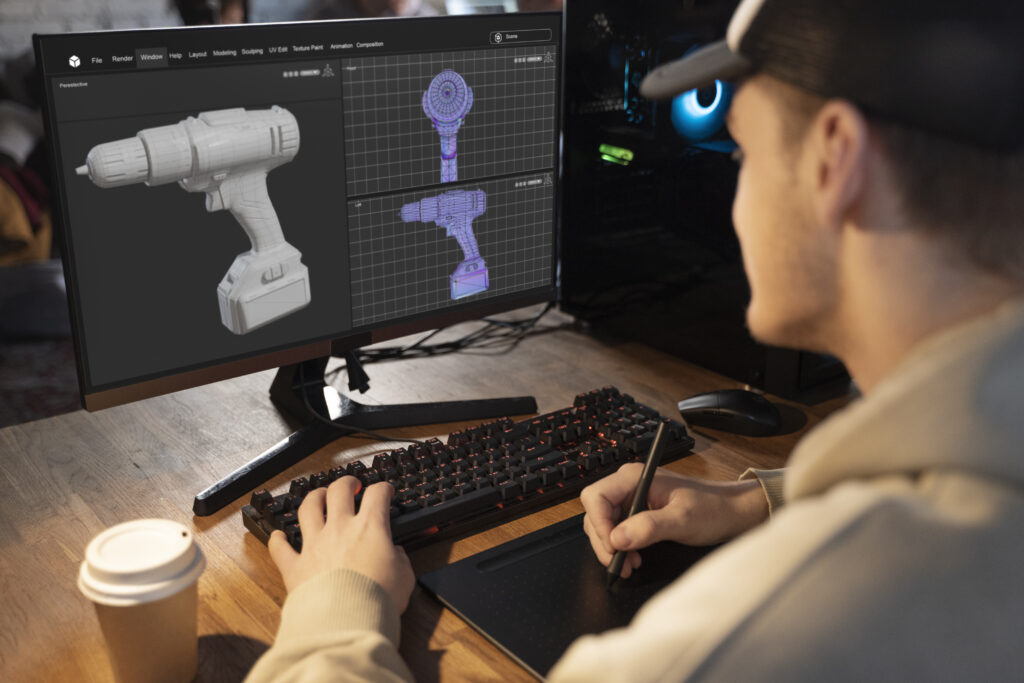
Digital Twins – Virtual replicas of physical systems for simulation and analysis.
Digital Twins: Virtual Replicas for Simulation, Analysis, and Optimization Digital Twins are dynamic, virtual replicas of physical assets, processes, systems, or even entire environments. They are not merely static 3D models, but living, evolving digital counterparts that continuously synchronize with their physical twins through real-time data. This deep connection between the physical and digital realms enables unprecedented levels of monitoring, analysis, simulation, and optimization throughout an asset’s entire lifecycle. Core Components of a Digital Twin System: A robust Digital Twin system comprises several interconnected components: Types of Digital Twins: Digital twins can be categorized based on their scope: How Digital Twins Work: Digital Twin Implementation in India (Mid-2025): India is rapidly adopting Digital Twin technology, driven by the government’s “Digital India” initiative, “Smart Cities Mission,” and the push for Industry 4.0. The market is projected for robust growth, with estimates ranging from USD 2.30 billion in 2025 to over USD 45 billion by 2034, reflecting a significant Compound Annual Growth Rate (CAGR). Key areas of implementation in India include: Key Drivers for Adoption in India: Challenges in India: High initial implementation costs, lack of standardized data management practices, data security and privacy concerns, and a shortage of skilled professionals remain significant hurdles. Benefits of Digital Twins: Digital Twins offer a transformative set of advantages: Conclusion: Digital Twins are at the forefront of the Fourth Industrial Revolution, bridging the physical and digital worlds to create intelligent, self-optimizing systems. For India, this technology is a powerful enabler for achieving its industrial modernization, smart city aspirations, and sustainable development goals. As the underlying technologies (IoT, AI, cloud, 5G) mature and become more accessible, the adoption of Digital Twins will accelerate, revolutionizing how products are designed, manufactured, operated, and maintained across the nation. What is Digital Twins – Virtual replicas of physical systems for simulation and analysis? A Digital Twin is a virtual, dynamic replica of a physical system, object, process, or even an entire environment. It’s much more than just a 3D model; it’s a sophisticated, continuously updated digital counterpart that mirrors its real-world “twin” through real-time data. Think of it as giving a physical asset (like a complex machine, a factory, or even a city) a constantly updated “digital shadow” that lives in a computer. This shadow receives all the operational data from its physical counterpart and can be used for a variety of purposes without affecting the real-world system. Key Characteristics and How They Work: Components of a Digital Twin System: Why are Digital Twins “Required”? (Benefits): Digital Twins are required because they offer transformative benefits across various industries: Examples of Digital Twins: In essence, Digital Twins are about creating a continuous, intelligent loop of information between the physical and digital worlds, enabling proactive decision-making, predictive capabilities, and a deeper understanding of complex systems. Who is require Digital Twins – Virtual replicas of physical systems for simulation and analysis? Courtesy: CET Electric Technology Inc. Digital Twins are required by any organization, industry, or even government entity that manages complex physical systems, processes, or assets and seeks to: Essentially, if you have something valuable and complex in the real world that you want to understand better, manage more efficiently, or improve proactively, a digital twin can be highly beneficial. Here’s a breakdown of who specifically requires Digital Twins: 1. Manufacturing and Automotive Industry 2. Infrastructure and Smart Cities 3. Energy and Utilities 4. Aerospace and Defense 5. Healthcare 6. Logistics and Supply Chain In essence, anyone seeking to gain deeper insights, make smarter decisions, and achieve greater control over their physical assets and processes, particularly in complex, high-value, or high-risk environments, will find digital twins to be an indispensable tool. The trend of adoption in India across diverse sectors clearly indicates this growing requirement. When is require Digital Twins – Virtual replicas of physical systems for simulation and analysis? Digital Twins are not required at a single point in time, but rather continuously throughout the entire lifecycle of a physical asset, system, or process, and also at specific critical junctures where data-driven insights and simulations are paramount. Here’s a breakdown of “when” Digital Twins are required: 1. During the Design and Prototyping Phase (Before Physical Creation): 2. During the Manufacturing and Production Phase (Real-time Operations): 3. During the Operation and Service Phase (Post-Deployment): 4. During Expansion, Renovation, or Scenario Planning: 5. For Continuous Improvement and Lifecycle Management: In Summary: Digital Twins are required whenever there’s a need for: For Indian industries aiming for greater efficiency, sustainability, and global competitiveness, the “when” for adopting Digital Twins is now and continuously, as they are becoming foundational to Industry 4.0 and advanced operational excellence. Where is require Digital Twins – Virtual replicas of physical systems for simulation and analysis? Digital Twins are required wherever complex physical systems, processes, or assets exist and their performance, efficiency, safety, or lifecycle management needs to be optimized through real-time data, simulation, and advanced analytics. In India, the adoption of Digital Twin technology is rapidly expanding across various sectors, driven by the push for digital transformation, Industry 4.0, and the need for greater operational efficiency and competitiveness. Here are the key “wheres” where Digital Twins are required: 1. Manufacturing and Industrial Plants (A Major Hub for Digital Twins in India) 2. Infrastructure and Smart Cities 3. Energy and Utilities Sector 4. Healthcare and Life Sciences 5. Aerospace and Defense 6. Logistics and Supply Chain Management In summary, Digital Twins are increasingly required across all sectors dealing with complex, high-value, or mission-critical physical assets and processes where the ability to gain real-time insights, predict future behavior, and simulate scenarios is crucial for operational excellence, innovation, and strategic decision-making. India’s rapid industrial and digital growth makes it a prime location for the widespread adoption of this transformative technology. How is require Digital Twins – Virtual replicas of physical systems for simulation and analysis? Digital Twins are “required” in a proactive sense – they are not something passively observed, but rather a strategic implementation chosen by organizations to achieve specific, high-value outcomes.